
Toilet Stain Remover: Powerful Tips to Tackle Common Toilet Bowl Stains Effectively
A clean toilet is an important part of a well-maintained bathroom, but toilet bowl stains can appear even when the rest of the space looks tidy. Mineral deposits, discoloration, residue and overlooked areas can gradually affect the appearance of the bowl.
A suitable toilet stain remover can become part of a regular cleaning routine when it is used according to the product label. The objective is not simply to deal with visible marks once they become noticeable, but to establish consistent toilet hygiene habits that make bathroom maintenance easier.
Understanding what causes stains, identifying areas that need attention and using appropriate cleaning products can make toilet cleaning more organized and practical.
Why Do Toilet Bowl Stains Develop?
Before choosing a toilet stain remover, it helps to understand why different types of stains develop. The appearance of a stain can vary depending on water quality, bathroom usage, cleaning frequency and the type of residue involved.
Mineral Buildup
Hard-water minerals can leave white, yellow, brown or chalky deposits around the waterline and other areas repeatedly exposed to moisture.
Over time, these deposits can become more noticeable if they are not addressed as part of routine cleaning.
Discoloration
When cleaning is delayed, residue and deposits can gradually change the appearance of the toilet bowl. Regular cleaning can help prevent small marks from becoming a more noticeable maintenance issue.
Everyday Residue
Frequent toilet use can result in residue accumulating on different surfaces. Regular toilet cleaning helps address these areas before buildup becomes more difficult to manage.
Overlooked Areas
The underside of the rim, around the waterline, flush handle and exterior surfaces may receive less attention during quick cleaning sessions.
This is one reason a complete bathroom-cleaning routine should go beyond simply brushing the visible inside portion of the bowl.
How to Remove Toilet Stains as Part of a Regular Routine
A practical cleaning process should be simple enough to repeat regularly. These steps can help organize your approach when dealing with toilet stains.
1. Prepare the Bathroom
Clear the area around the toilet so you can comfortably access the bowl, exterior surfaces and surrounding floor.
Use appropriate protective equipment where required and maintain suitable ventilation during cleaning.
2. Inspect the Bowl
Before applying a toilet stain remover, inspect the waterline, inner bowl, underside of the rim and other visible areas.
Identifying where stains are concentrated allows you to focus your cleaning instead of applying products unnecessarily.
3. Apply a Suitable Cleaner
Use a toilet-care product according to its label instructions. A toilet stain remover should be appropriate for the intended toilet surface and used in the recommended quantity and manner.
Avoid assuming that using more product will automatically provide better results.
4. Allow the Product to Work as Directed
Some cleaning products require a specific contact time. Follow the manufacturer’s instructions rather than leaving the product on the surface longer than recommended.
5. Brush the Bowl
Use an appropriate toilet brush to clean around the bowl, waterline and other areas where residue may collect.
Pay attention to the underside of the rim when the product instructions permit cleaning in that area.
6. Flush or Rinse as Instructed
Complete the cleaning process according to the product label. Make sure visible product residue and loosened material are removed as directed.
7. Clean the Surrounding Surfaces
Deep cleaning should also cover the toilet seat, lid, flush handle, exterior and nearby floor.
A complete routine helps address both visible and frequently touched areas.
Choosing the Right Toilet Stain Remover
Not every bathroom-cleaning product is designed for the same purpose. When choosing a toilet stain remover, consider the type of cleaning required and the instructions supplied by the manufacturer.
Look for a product specifically intended for toilet surfaces. If the main concern is mineral buildup, consider a product designed for the relevant type of deposit. For regular maintenance, ease of application and clear usage instructions can also be important considerations.
A good cleaning routine should focus on:
- Surface compatibility
- Intended cleaning purpose
- Application instructions
- Recommended quantity
- Contact time
- Safety precautions
- Ease of regular use
Rather than choosing a product based only on dramatic claims, consider how well it fits your actual toilet-care routine.
Common Toilet Bowl Stains to Watch
Understanding common bathroom stains can make it easier to identify areas that require additional attention.
Yellow Stains
Yellowish discoloration may appear around areas exposed to water and repeated use. Regular cleaning can help keep these marks from becoming a neglected part of toilet maintenance.
Brown Stains
Brown or darker marks may be associated with mineral deposits, residue or long-standing buildup. Identifying the cause can help determine the appropriate cleaning approach.
White or Chalky Deposits
Mineral-rich water can leave visible deposits, particularly around the waterline. These marks can become more noticeable over time when routine cleaning is inconsistent.
Rim Buildup
The underside of the rim is easy to overlook. However, it can collect moisture and residue and should be included in a thorough cleaning checklist.
Exterior Marks
Splashing, dust and moisture can affect the exterior of the toilet and surrounding surfaces. Cleaning the complete area helps maintain a more consistent appearance.
When tackling these issues, a toilet stain remover can be considered for targeted cleaning when appropriate for the surface and stain.
Bathroom Hygiene Goes Beyond the Toilet
Toilet hygiene is only one part of maintaining a clean bathroom. A complete bathroom-care routine should also cover sinks, faucets, mirrors, floors, fixtures and frequently touched surfaces.
The sink and faucet receive frequent contact with water and hands, making them important areas for regular cleaning.
Mirrors and glass surfaces can collect fingerprints, water spots and streaks. Floors can accumulate dust, moisture and everyday residue.
Door handles, flush handles, taps and other frequently touched fixtures should also be included in a cleaning checklist.
Different surfaces may require different products, so always use a cleaning solution according to its intended purpose.
Complete Toilet Cleaning Checklist
A simple checklist can make weekly cleaning more consistent.
Toilet Area
- Toilet bowl
- Waterline
- Underside of the rim
- Toilet seat
- Toilet lid
- Flush handle
- Exterior of the toilet
Surrounding Bathroom
- Sink
- Faucet
- Mirror
- Glass surfaces
- Bathroom floor
- Door handles
- Frequently touched fixtures
Cleaning Supplies
- Toilet brush
- Microfiber cloths
- Appropriate bathroom cleaning products
- Suitable toilet stain remover
- Protective cleaning equipment where required
A checklist is especially useful for busy households, shared bathrooms and commercial spaces where more than one person may be responsible for cleaning.
Mistakes to Avoid When Cleaning Toilet Stains
Even a regular cleaning routine can become less effective when basic precautions are ignored.
Don’t Mix Cleaning Chemicals
Never mix different cleaning chemicals unless the product instructions specifically state that they are compatible. Some combinations can create hazardous fumes or unwanted chemical reactions.
Don’t Use Products on Unsuitable Surfaces
A toilet stain remover should be used only according to its intended application. Read the label carefully and follow the manufacturer’s recommended quantity and safety instructions.
Don’t Rely Only on Aggressive Scrubbing
Excessive force or unsuitable tools can potentially damage certain surfaces. Let the cleaning product and appropriate cleaning method do the intended work.
Don’t Ignore Ventilation
Suitable ventilation can make the cleaning process more comfortable and is particularly important when using cleaning products with strong fumes.
Don’t Clean Only Visible Areas
The bowl may look clean while the underside of the rim, flush handle or exterior still requires attention.
A thorough toilet-care routine should include both obvious and overlooked areas.
How Often Should You Clean the Toilet?
The ideal cleaning frequency depends on household usage, the number of people using the bathroom and how quickly residue or mineral deposits appear.
For many households, a weekly deep-cleaning session can provide a useful baseline, while high-use bathrooms may require additional spot cleaning.
Between deeper cleaning sessions, addressing visible marks promptly can make future cleaning easier.
Using a toilet stain remover as part of targeted cleaning may be useful when visible buildup requires additional attention, provided the product is suitable for the surface and used according to its instructions.
Consistency is generally more practical than waiting until heavy buildup becomes obvious.
How to Make Toilet Cleaning More Efficient
Good organization can reduce the effort involved in a complete cleaning session.
Keep frequently used cleaning supplies together and follow the same sequence each time. For example, you can start with the toilet bowl, move to the seat and exterior, then clean the sink, mirror, fixtures and floor.
Following a repeatable sequence makes it easier to avoid forgotten areas.
You can also keep a simple weekly cleaning checklist so that everyone responsible for bathroom maintenance knows what needs to be completed.
For targeted toilet care, keeping an appropriate toilet stain remover available can make it easier to address visible marks when they appear.
Why the Right Cleaning Products Matter
Cleaning products are developed for specific purposes, and choosing the appropriate product category can make regular maintenance more practical.
A toilet-care product can be used for toilet surfaces, while separate solutions may be appropriate for glass, sinks, floors or other bathroom materials.
When selecting a toilet stain remover, consider the surface being cleaned, the type of buildup involved and the instructions provided with the product.
The right product combined with suitable tools and a consistent routine can make bathroom cleaning more systematic.
Naik Laboratories for Complete Toilet Care
Naik Laboratories offers cleaning solutions that can be incorporated into everyday home-care routines.
For regular toilet maintenance, a suitable toilet stain remover can be part of a broader approach to keeping the toilet bowl and surrounding surfaces clean.
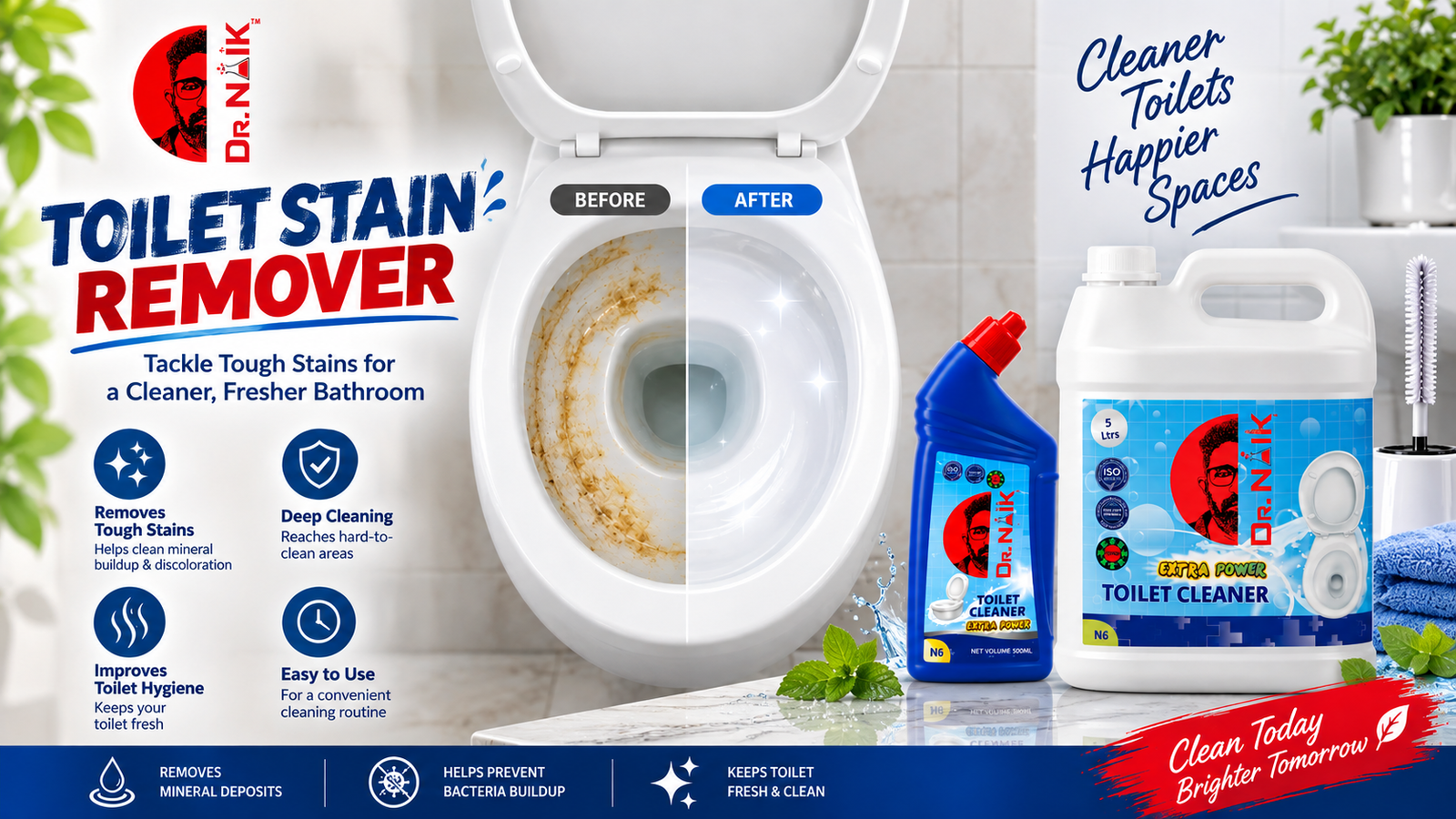
The Naik Laboratories Toilet Cleaner can be considered as part of a routine focused on toilet bowl maintenance and everyday bathroom care. Always follow the product’s label instructions and recommended precautions for proper use.
For households looking to organize their bathroom cleaning routine, using dedicated products for different cleaning requirements can make the process more convenient.
Conclusion
Keeping toilet bowl stains under control starts with understanding where buildup comes from and establishing a cleaning routine that is easy to repeat.
Regular inspection, suitable cleaning products, appropriate tools and attention to overlooked areas can all contribute to a more consistent bathroom-cleaning process.
A reliable toilet stain remover can be one useful part of this process when targeted cleaning is required. Combined with regular toilet cleaning and broader bathroom hygiene, it can help make weekly bathroom maintenance more systematic.
Make Naik Laboratories part of your complete toilet-care routine and explore its cleaning solutions for everyday home care.