
Hard Water Stain Remover: 7 Powerful Tips for Cleaner Taps and Tiles
Hard water marks can make taps and bathroom fixtures look dull even after regular cleaning. They may appear as pale deposits, cloudy patches or yellow marks around frequently used fittings. Choosing a hard water stain remover starts with identifying the surface, checking the product label and following the stated cleaning method.
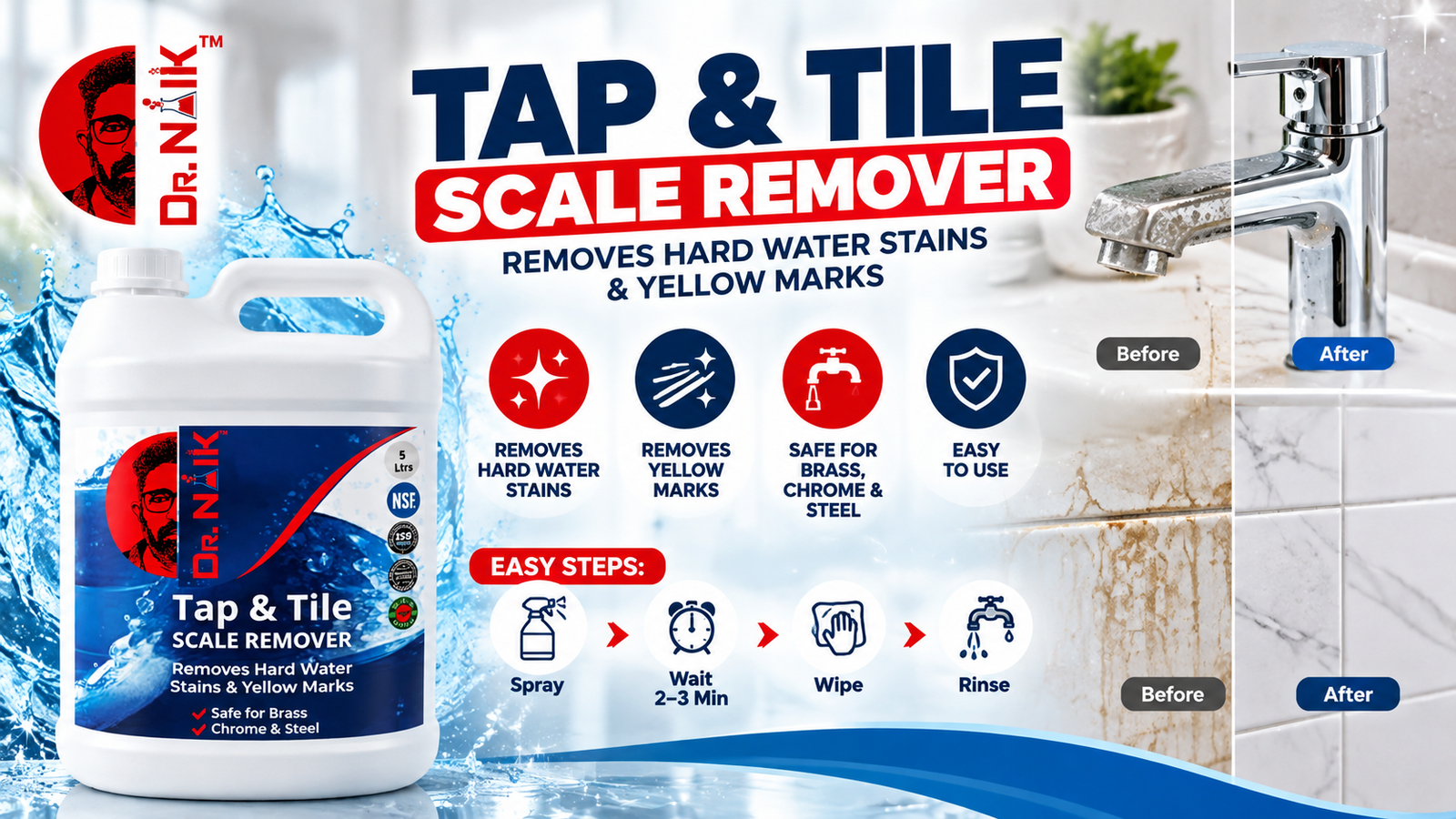
Dr. Naik Tap & Tile Scale Remover is labelled for hard water stains and yellow marks. Its label lists brass, chrome and steel as suitable materials and gives a spray, wait, wipe and rinse process. Use a hard water stain remover only according to its directions and stated surface restrictions.
What Causes Hard Water Stains?
Hard water contains dissolved minerals that can remain behind when water evaporates. Repeated splashes around taps and fixtures may leave visible deposits. Soap residue and everyday bathroom soils can also make a surface look cloudy.
The right cleaning approach depends on the material and type of deposit. A hard water stain remover should be selected based on its labelled applications, not assumed to be suitable for every tile, countertop or fixture.
Where Can Tap & Tile Scale Remover Be Used?
The Dr. Naik product label identifies Tap & Tile Scale Remover for hard water stains and yellow marks. It specifically lists brass, chrome and steel as suitable materials. Check the fixture material before use.
The label clearly warns: do not use on marble or granite. Do not apply the product to these surfaces. If you are unsure what a surface is made of, check with the surface manufacturer before using a cleaning chemical.
How to Use the Product According to Its Label
The label gives this process:
Spray: Apply the product as directed to the intended surface.
Wait 2–3 minutes: Follow the waiting time stated on the label.
Wipe: Wipe the treated area as instructed.
Rinse: Rinse the surface after wiping.
Do not extend the waiting time or change the application method without manufacturer guidance. Follow the full label, keep the product away from children, avoid eye contact and store it in a cool place as stated on the container.
Never mix a hard water stain remover with other cleaning chemicals unless the manufacturer explicitly instructs you to do so. Do not combine it with bleach, acids or other cleaners. Use the product only for its labelled purpose.
7 Tips for Managing Hard Water Marks
1. Identify the Surface First
Determine whether the fitting is brass, chrome, steel, tile, stone or another material. Check the product label for compatibility. The Dr. Naik label lists brass, chrome and steel, while warning against use on marble and granite.
2. Follow the Stated Waiting Time
More time does not automatically mean better cleaning. Follow the specified 2–3 minute wait, then wipe and rinse as directed. Do not leave the product on a surface longer than instructed.
3. Use the Correct Process
The labelled sequence is spray, wait, wipe and rinse. Follow each step rather than skipping the rinse or substituting an unlisted method. When selecting a hard water stain remover, use the directions supplied with that specific product instead of relying on general cleaning advice.
4. Avoid Mixing Cleaners
Combining cleaning chemicals can create hazardous reactions or damage surfaces. Use one product according to its instructions and do not mix it with another cleaner unless the label explicitly says to.
5. Protect Marble and Granite
The product label specifically says not to use Tap & Tile Scale Remover on marble or granite. Do not use this hard water stain remover on either material. Choose a product whose label expressly supports the surface.
6. Store the Product Safely
Keep the container closed and stored in a cool place, following the label. Keep it away from children and retain the original packaging so the instructions and warnings remain available.
7. Make Routine Care Part of Cleaning
Wipe away ordinary water splashes and dry compatible surfaces to help reduce visible buildup as water evaporates. For existing marks, choose a hard water stain remover only after checking its labelled use. Routine care and suitable cleaning methods can help you manage recurring marks without assuming every surface needs the same treatment.
How to Choose a Hard Water Stain Remover
When comparing products, review the surfaces listed on the label, the application method, waiting time, rinsing instructions and warnings. A product name alone does not confirm that a formula is suitable for every fixture or tile.
Dr. Naik Tap & Tile Scale Remover is labelled for hard water stains and yellow marks, with brass, chrome and steel listed as suitable materials. Its label gives spray, wait, wipe and rinse instructions and warns against use on marble and granite. These details should guide selection and use of a hard water stain remover.
If a surface is unlisted or its material is uncertain, do not guess. Check with the manufacturer or surface supplier before applying the product. Careful selection helps prevent use on unsuitable materials. Before buying a hard water stain remover, make sure its labelled applications match the surface you intend to clean.
Conclusion
Hard water marks can affect the appearance of taps and frequently splashed fixtures. Identify the surface, choose a product with matching labelled applications and follow the instructions carefully.
Dr. Naik Tap & Tile Scale Remover is labelled for hard water stains and yellow marks and lists brass, chrome and steel as suitable materials. Its instructions specify spraying, waiting 2–3 minutes, wiping and rinsing. The label warns not to use the product on marble or granite.
For more information about Dr. Naik Tap & Tile Scale Remover, refer to the product label or contact Naik Laboratories. Confirm surface compatibility and follow all directions and precautions before use.