
Fruit and Vegetable Wash: The Ultimate Guide to Safer, Cleaner Produce
Fresh fruits and vegetables are an important part of everyday meals. From apples and grapes to leafy greens, tomatoes and carrots, produce brings variety and nutrition to the table. However, fruits and vegetables can collect dirt, dust and other unwanted residues during harvesting, transportation, handling and storage. That is why proper produce hygiene deserves attention in every kitchen.
Using a suitable fruit and vegetable wash as directed can help make produce cleaning more systematic. While running water is an important part of everyday food preparation, some households and food-handling environments also consider a dedicated produce-cleaning solution as part of their hygiene routine.
Dr. Naik Laboratories offers Insta-Safe Fruit & Vegetable Wash, available in a 5-litre pack. The product is designed for fruit and vegetable treatment, with directions for preparing a diluted solution and treating produce before use.
Understanding how to clean produce properly, when to use a dedicated solution and how to follow its instructions can help households and food-handling teams build better routines.
Why Washing Fruits and Vegetables Matters
Fresh produce passes through several stages before reaching the kitchen. It may be harvested in fields, packed, transported, displayed in markets and handled by different people. During these stages, dirt and other contaminants can come into contact with its surface.
A consistent washing routine helps remove visible dirt and supports better food-handling practices. It is particularly important to wash produce before cutting, peeling or eating it, because knives and hands can transfer contaminants from the outside to the edible portion.
A suitable fruit and vegetable wash can form part of a structured produce-cleaning process when used according to its directions. However, no washing method should be treated as a guarantee that every possible contaminant has been eliminated.
Good produce hygiene also depends on clean hands, clean utensils, suitable storage and separation between raw foods and other materials.
What Is a Fruit and Vegetable Wash?
A fruit and vegetable wash is a product intended to help treat fresh produce as part of a cleaning routine. Different products have different formulations, applications and instructions, so consumers should always check the intended use before selecting one.
Dr. Naik Insta-Safe Fruit & Vegetable Wash is presented as an antimicrobial fruit and vegetable treatment. Its listed key ingredients are vinegar, vegetable glycerin and citric acid.
The product is supplied in a 5-litre container, making it an option to consider for settings that need a larger quantity for regular produce-handling routines.
The important point is to use a product specifically intended for fruits and vegetables rather than substituting a household surface cleaner, dishwashing liquid or bathroom cleaning product. Products intended for other surfaces are not automatically suitable for food-contact applications.
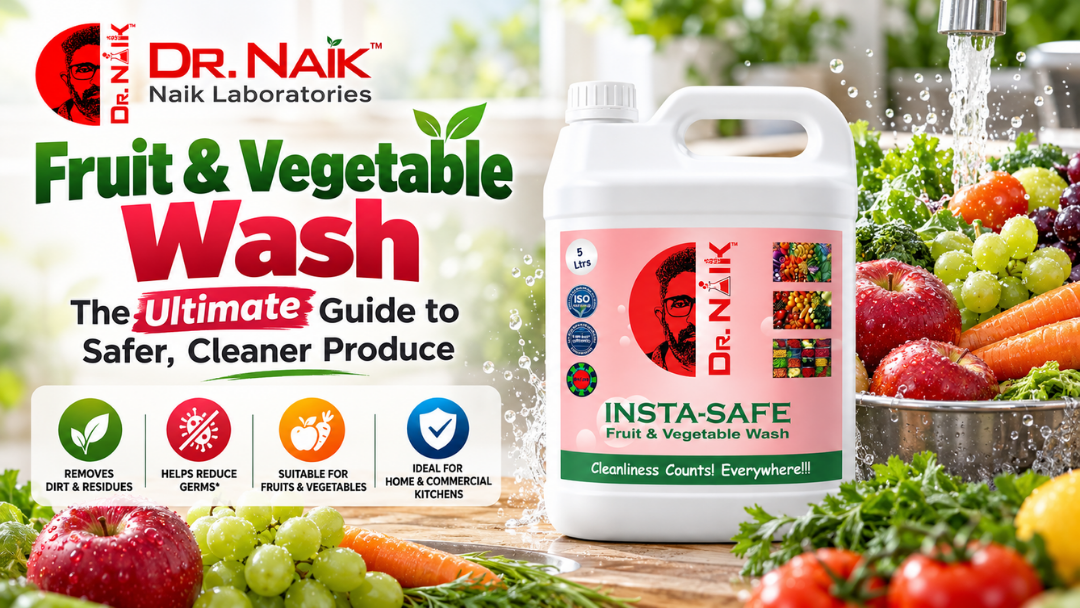
Meet Dr. Naik Insta-Safe Fruit & Vegetable Wash
Dr. Naik Insta-Safe Fruit & Vegetable Wash is designed for produce-treatment routines in which a prepared solution is used to treat fruits and vegetables.
Its key product details include:
Product name: Insta-Safe Fruit & Vegetable Wash
Pack size: 5 litres
Key listed ingredients: Vinegar, vegetable glycerin and citric acid
Application: Fruit and vegetable treatment
Preparation: 10 ml of product in 1 litre of water, according to the supplied directions
For homes, kitchens and food-handling operations, a clearly defined procedure makes it easier to maintain consistency. Staff should know how to prepare the solution, how long produce should be treated and how to drain it afterwards.
When choosing a fruit and vegetable wash, always consider its intended application and follow the product-specific directions instead of assuming that every produce-washing product works in the same way.
How to Use Fruit and Vegetable Wash Correctly
Correct preparation and handling are essential when using any produce-treatment solution. Follow the directions supplied for the particular product and avoid changing the concentration or treatment time without appropriate guidance.
For Dr. Naik Insta-Safe Fruit & Vegetable Wash, the supplied directions describe the following procedure:
1. Prepare the Solution
Measure 10 ml of the product and add it to 1 litre of water. Prepare the solution according to the stated ratio, using a clean container suitable for the task.
Accurate measurement helps maintain consistency between batches. Do not estimate the quantity by eye or increase the concentration in the belief that a stronger mixture will necessarily work better.
2. Allow the Specified Waiting Time
The supplied directions instruct users to wait 30 seconds after preparing the solution. Follow this step before proceeding to the produce-treatment stage.
A consistent procedure helps staff and household users repeat the process correctly.
3. Submerge and Agitate the Produce
Place the fruits and vegetables in the prepared solution and gently agitate them for a minimum of 90 seconds, following the product directions.
Ensure that the produce is handled appropriately and that the treatment is carried out in a clean container. Avoid using containers that have held cleaning chemicals or other unsuitable substances.
4. Drain Thoroughly
After treatment, drain the produce thoroughly as directed. The supplied instructions state that rinsing is not required and that the produce should be allowed to air-dry.
Follow these instructions for the specific product, and do not automatically apply the same procedure to a different cleaning solution. If the product instructions change, the procedure should be updated accordingly.
5. Maintain Clean Handling Practices
After washing, use clean hands and suitable utensils when transferring produce to storage containers or preparing it for meals. Keep treated produce away from unwashed items, dirty work surfaces and other potential sources of contamination.
A fruit and vegetable wash works best as one component of a broader food-hygiene routine, rather than as a replacement for clean handling and appropriate storage.
Is Water Alone Enough for Produce Cleaning?
Running potable water is an essential part of washing fresh produce. It can help remove loose dirt and some surface contaminants, especially when combined with gentle rubbing where appropriate.
A dedicated fruit and vegetable wash may be considered when a product is specifically intended for produce treatment and its directions suit the intended setting. Nevertheless, users should understand the product’s instructions and claims before deciding how it fits into their routine.
No washing method can make spoiled produce safe to eat or compensate for poor storage and handling. Discard fruits and vegetables that show signs of spoilage, and follow appropriate food-safety guidance for the particular type of produce.
It is also important not to use soap, laundry detergent, surface disinfectants or unrelated cleaning chemicals on food unless the product is specifically intended and authorised for that application.
Common Produce-Washing Mistakes to Avoid
Even a well-planned cleaning routine can become inconsistent when basic steps are overlooked. Avoid these common mistakes:
Using the wrong cleaning product: Household cleaners designed for floors, bathrooms or kitchen surfaces should not be substituted for a produce-treatment product.
Guessing the dilution: Measuring the recommended quantity accurately helps ensure the solution is prepared according to its directions.
Skipping the treatment time: Follow the specified waiting and treatment periods rather than shortening the process for convenience.
Using an unclean container: Residue from previous tasks can undermine a hygienic workflow. Use clean, appropriate containers and utensils.
Mixing products: Do not combine produce-treatment solutions with other cleaning products unless the manufacturer specifically instructs you to do so.
Ignoring storage and handling: Washing is only one step. Clean work surfaces, proper storage and separation of unwashed produce remain important.
Assuming all produce is identical: Different fruits and vegetables have different textures and handling requirements. Follow appropriate guidance for delicate produce and items that may be damaged by rough handling.
These practical habits help make a fruit and vegetable wash routine more consistent and easier to manage.
Fruit and Vegetable Hygiene at Home and in Commercial Kitchens
At home, produce cleaning can be included in meal preparation. Establish a clean area for washing fruits and vegetables, use potable water and keep the necessary utensils clean. Follow the instructions for any dedicated produce-treatment product before preparing or serving food.
In commercial kitchens, cafeterias and food-service environments, consistency becomes especially important. Staff turnover, busy preparation periods and large quantities of produce can make informal procedures difficult to maintain.
A written produce-washing procedure can specify solution preparation, treatment duration, container hygiene and post-treatment handling. Staff training can help reduce mistakes and make the process easier to repeat.
A larger pack of fruit and vegetable wash, such as the 5-litre Dr. Naik Insta-Safe option, may be worth evaluating for operations that regularly handle produce. The appropriate pack size depends on usage volume, storage conditions, operating procedures and product requirements.
Businesses should also ensure that their food-handling procedures meet the applicable local requirements and any relevant manufacturer instructions.
How to Choose a Suitable Fruit and Vegetable Wash
Before selecting a fruit and vegetable wash, consider the following factors:
Intended use: Confirm that the product is designed for treating fruits and vegetables.
Clear directions: Look for specific instructions covering dilution, treatment time and handling after treatment.
Ingredient information: Review the listed ingredients and any relevant safety information.
Pack size: Select a quantity appropriate for household needs or the expected volume of produce handled.
Storage and shelf life: Follow the product’s storage instructions and check its expiry or recommended usage period.
Reliable sourcing: Purchase from a dependable supplier and retain product information for reference.
The right choice is not simply the product with the strongest-sounding claim. It is a suitable product that can be used correctly as part of a responsible produce-hygiene process.
Build a Better Produce-Hygiene Routine with Dr. Naik Laboratories
Good food hygiene starts with repeatable everyday habits. Washing produce appropriately, keeping utensils clean, measuring products accurately and following storage guidance can all contribute to a more organised kitchen routine.
Dr. Naik Insta-Safe Fruit & Vegetable Wash is a dedicated option for fruit and vegetable treatment, supplied in a 5-litre pack with directions for dilution, treatment and draining. Use it according to the product instructions and combine it with clean handling practices.
For households and food-handling businesses reviewing their cleaning and hygiene supplies, choosing a suitable fruit and vegetable wash is one practical step towards a more consistent produce-preparation process.
Conclusion
Fresh produce deserves careful handling from the time it enters the kitchen until it is served. A reliable routine includes suitable washing practices, clean equipment, appropriate storage and attention to product instructions.
Dr. Naik Insta-Safe Fruit & Vegetable Wash offers a dedicated produce-treatment option with a defined dilution and treatment procedure. By following the directions carefully and maintaining good food-handling habits, households and commercial kitchens can make produce hygiene a more consistent part of everyday preparation.