
Floor Fragrance: 7 Powerful Ways to Maintain Fresher Spaces
A clean, welcoming space is about more than the appearance of its floors. In offices, hotels, washrooms, staff areas and other shared facilities, lingering odours can affect how comfortable a space feels. A suitable floor fragrance can be part of a planned cleaning routine, adding a fresh scent when used according to its label.
Different spaces have different needs. A busy entrance may need frequent cleaning, while washrooms and service areas may require more attention to odour sources. Fragrance should complement cleaning, not replace it. Remove dirt, address spills, maintain drains and follow the facility’s hygiene procedures before relying on scent.
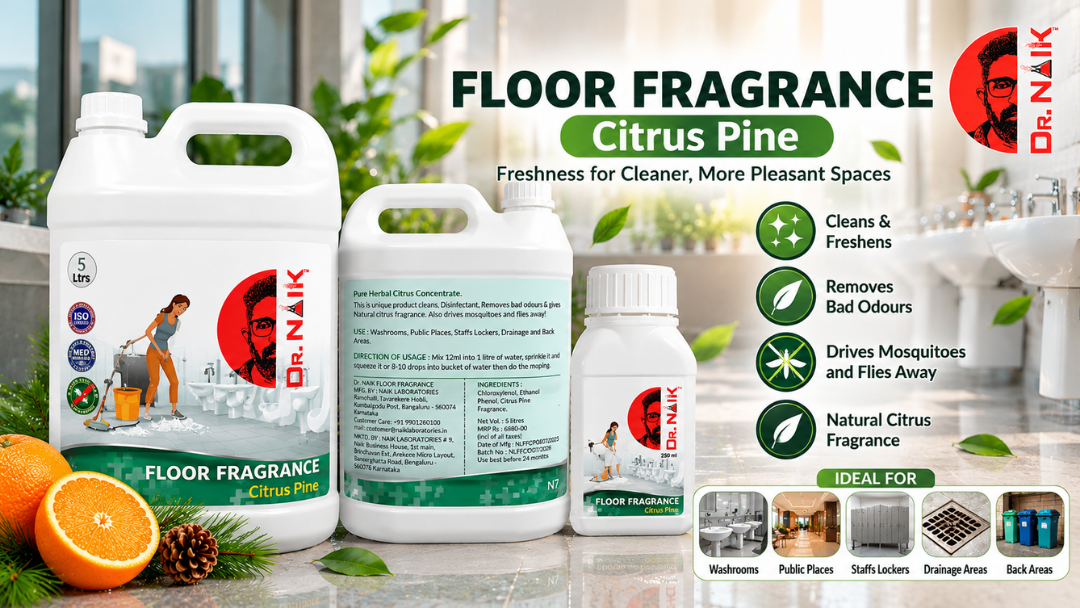
Dr. Naik Floor Fragrance — Citrus Pine is one option from Naik Laboratories. Its label lists use in washrooms, public places, staff lockers, drainage areas and back areas. The label also provides specific directions for use in water. This guide explains how to plan fragrance use responsibly and follow product instructions without making unsupported claims.
1. Understand What Floor Fragrance Does
A floor fragrance is intended to add scent to a cleaning routine or surrounding area, depending on the product’s directions. It should not be treated as a substitute for removing dirt, cleaning contaminated surfaces or correcting the source of an odour.
For example, a persistent smell near a drain may indicate that the area needs proper cleaning or maintenance. Simply adding fragrance may mask the smell temporarily without addressing the cause. In a workplace, establish a routine that includes cleaning, waste removal, ventilation where available and prompt attention to spills.
Dr. Naik Floor Fragrance — Citrus Pine is labelled for use in several shared and service areas. Check the label to confirm the intended application and follow its precautions. Do not assume every fragrance product is suitable for every floor material or space.
2. Identify Areas That Need More Attention
A practical plan begins by identifying where odours tend to develop. The right frequency depends on the building, the number of people using it and the activities taking place.
Washrooms: Follow a regular cleaning and waste-removal schedule.
Public spaces: Keep floors and nearby surfaces clean, particularly where foot traffic is high.
Staff lockers: Maintain housekeeping routines and remove damp items or waste.
Drainage and back areas: Inspect the source of persistent smells and arrange suitable cleaning or maintenance.
Entrances and corridors: Remove tracked-in dirt and deal with spills promptly.
The label for Dr. Naik Floor Fragrance — Citrus Pine lists washrooms, public places, staff lockers, drainage areas and back areas. Use this as a starting point, then confirm the proposed application matches the full label and site requirements.
3. Follow the Product’s Directions Carefully
The amount used and method of application matter. Using too much product does not automatically create a better result and may produce an overpowering scent or increase unnecessary chemical exposure. Using a product differently from its label may also be inappropriate for the intended surface or space.
The Dr. Naik Floor Fragrance — Citrus Pine label gives two directions:
For sprinkling, mix 12 ml into 1 litre of water.
For mopping, use 8–10 drops in a bucket of water.
Follow the direction for the application you are performing, and consult the complete label for additional instructions or precautions. Do not combine it with other cleaning chemicals unless the product labels explicitly permit this. Measure the specified quantity instead of estimating concentrated products by eye.
4. Make Fragrance Part of a Complete Cleaning Routine
Fragrance works best as one part of a broader housekeeping plan. Start by removing the source of the odour, cleaning the relevant area and allowing the space to dry or ventilate as appropriate. Only then use a fragrance product according to its label.
A repeatable routine can include:
Inspect the area and identify spills, waste or potential odour sources.
Clean the floor and nearby surfaces using products suitable for those materials.
Address drains, bins or other sources that need separate maintenance.
Use the fragrance product only as directed on its label.
Check the area afterward and record recurring problems that require further action.
This approach avoids relying on scent alone. If an odour returns quickly or remains strong, investigate its source instead of increasing the amount of floor fragrance.
5. Consider the Needs of Different Facilities
A consistent approach can be adapted to offices, hospitality venues, commercial buildings and other shared spaces. Each facility should choose a schedule that reflects occupancy, ventilation, floor type and its cleaning procedures.
Offices: Focus on shared washrooms, staff areas, waste points and busy corridors. Keep fragrance use moderate so it does not distract employees or visitors.
Hotels and hospitality facilities: Coordinate housekeeping routines with guest turnover. Follow site standards for product selection, surface compatibility and safe use.
Public and service buildings: Prioritise regular inspections of washrooms, drainage areas and high-traffic spaces. Make sure fragrance use does not replace required cleaning or maintenance.
Back-of-house areas: Pay attention to waste storage, drains and damp areas that may contribute to persistent smells. Correct the underlying issue whenever possible.
In every setting, use floor fragrance only where it is suitable and permitted by the product label and facility procedures.
6. Keep Safety and Surface Compatibility in Mind
Read the complete product label before use. Store the container securely, keep it away from children and follow the listed precautions. Avoid contact with eyes and skin, and use any personal protective equipment required by the label or workplace procedure.
Do not assume that a product intended for use around floors is automatically suitable for direct application to every surface. Check compatibility with the flooring material and follow instructions for the intended method. Keep people away from wet floors where necessary, use warning signs and allow the area to become safe before reopening it.
Never mix cleaning products unless their labels specifically say the combination is suitable. If staff have questions about a particular application, consult the product label and appropriate safety guidance.
7. Review Results and Improve the Routine
A simple inspection log can help facilities understand whether their cleaning routine is working. Record the area, the time it was cleaned, recurring odour concerns and whether maintenance was needed. This can reveal patterns, such as a drain that repeatedly causes problems or an entrance that needs more frequent attention.
Review fragrance use alongside housekeeping outcomes. If an area continues to smell unpleasant, check waste disposal, drainage, ventilation, dampness and cleaning frequency. Avoid responding by increasing the concentration beyond label instructions.
For teams using Dr. Naik Floor Fragrance — Citrus Pine, the label directions provide the starting point for application. Consistent measuring, staff training and clear responsibilities help keep the process controlled and repeatable.
How Dr. Naik Floor Fragrance — Citrus Pine Fits In
Dr. Naik Floor Fragrance — Citrus Pine is a Naik Laboratories product labelled for use in washrooms, public places, staff lockers, drainage areas and back areas. The label provides directions for sprinkling and mopping, including 12 ml per litre of water for sprinkling and 8–10 drops in a bucket of water for mopping.
Follow these instructions as written. Product-specific claims should be based on the label, and fragrance should not be presented as a replacement for cleaning, disinfection where required, or maintenance. Review the full directions, precautions and suitability for the intended application before use.
Conclusion
A fresh-smelling environment starts with a reliable cleaning routine. Identify the source of odours, clean the area properly, maintain drains and waste points, and use fragrance only as a complementary step. This helps facilities make informed decisions rather than relying on scent to cover a maintenance problem.
Dr. Naik Floor Fragrance — Citrus Pine can be considered for the areas listed on its label, provided staff follow the specified directions and precautions. By training staff, measuring carefully and reviewing recurring odour issues, businesses can maintain a more organised approach to housekeeping.