
Cleaning Product Safety: 10 Essential Rules for Safer Household Cleaning
Introduction
Keeping a home clean is an important part of everyday maintenance, but cleaning should never come at the expense of safety. From kitchen and bathroom cleaners to glass sprays, floor-care products and other household solutions, every product should be handled according to its intended use.
Good cleaning product safety starts with simple habits: reading labels, using the correct amount, keeping products in their original containers, maintaining ventilation and storing them away from children and pets. These precautions can make routine cleaning more controlled and responsible.
The goal is not to make cleaning complicated. Instead, cleaning product safety is about understanding that different products are formulated for different purposes and should be used exactly as directed. Poison Control and the U.S. Environmental Protection Agency both emphasize reading product directions, maintaining ventilation, storing products safely and avoiding the mixing of household cleaners.
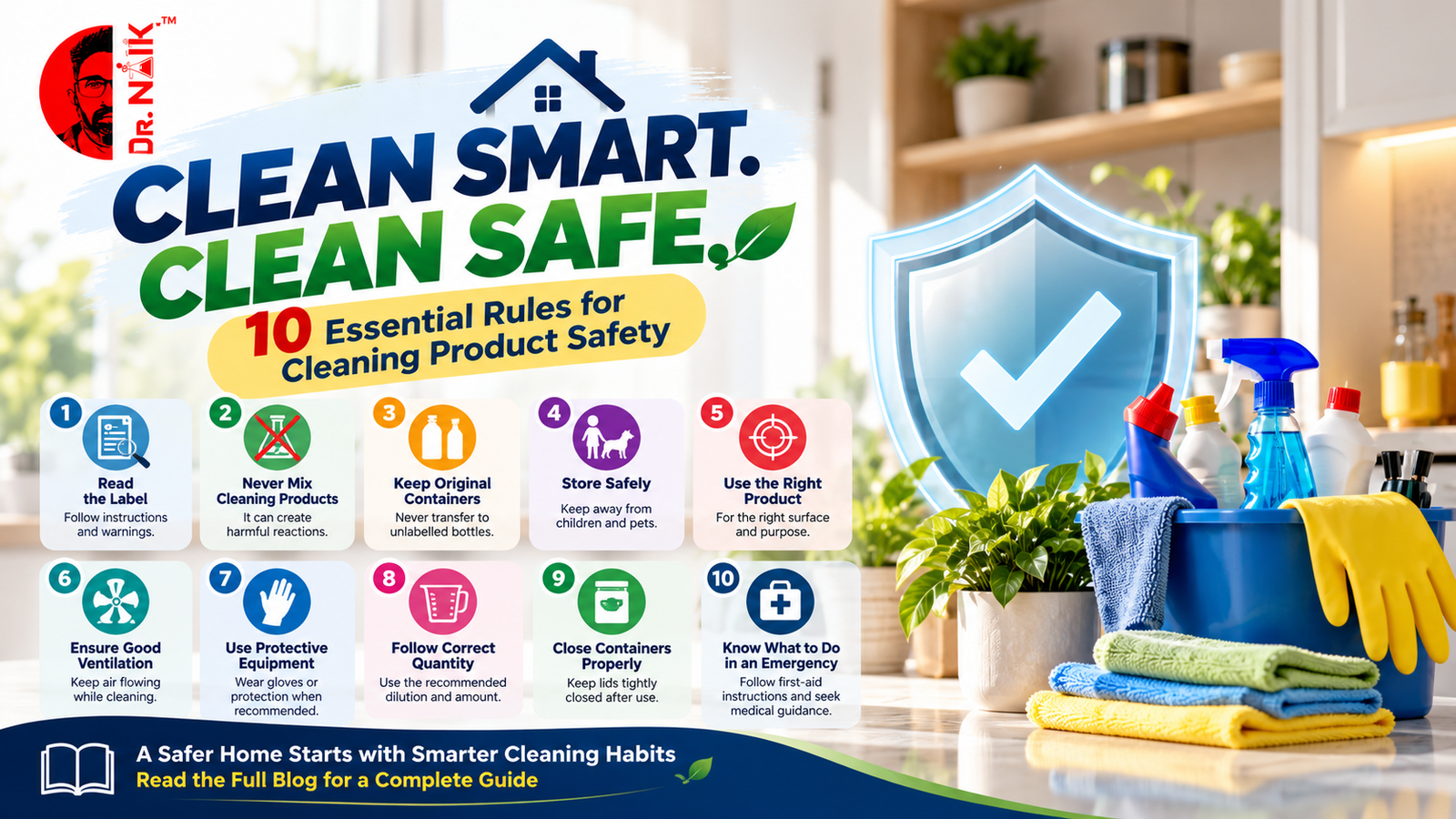
Here are 10 essential rules to help make everyday cleaning safer and more organized.
1. Always Read the Product Label
One of the simplest safe cleaning practices is also one of the most important: read the label before use.
Do not assume that every cleaner works in the same way. Product labels can provide important information about:
- Intended surfaces
- Recommended quantity
- Dilution instructions
- Contact or waiting time, where applicable
- Required protective equipment
- Ventilation requirements
- Storage instructions
- Warnings and precautions
Even if you have used a particular cleaner many times before, checking the label helps ensure that you are following the manufacturer’s current instructions.
The EPA specifically recommends reading and following directions and warnings on household products. US EPA
2. Never Mix Cleaning Products Unless the Label Specifically Allows It
This is one of the most important cleaning precautions in any home.
Different cleaning products may contain ingredients that react with one another. Combining them can potentially create irritating or hazardous fumes.
For example, mixing bleach with ammonia can produce chloramine gases, while mixing bleach with acidic products can produce chlorine gas. These fumes can cause serious irritation and breathing problems. Poison Control
Therefore:
Use one product according to its instructions rather than experimenting with combinations.
This is especially important in bathrooms, kitchens and other small spaces where fumes can accumulate quickly.
If a product label does not specifically instruct you to combine it with another product, do not mix them.
3. Keep Products in Their Original Containers
Never transfer a household cleaner into a water bottle, soft-drink bottle, food container or another unlabelled container.
Original packaging is designed to provide important product information, including instructions, warnings and first-aid guidance.
Transferring a cleaner can also create a serious identification problem. Someone may mistake the liquid for a drink or another household substance.
Keeping cleaning products in their original, properly labelled containers is therefore an important part of household cleaner safety. EPA guidance also recommends keeping household chemicals in their original containers. EPA NEPIS
4. Store Cleaners Away From Children and Pets
A safe cleaning routine continues even after the cleaning is finished.
Store household cleaners:
- In a secure cabinet
- Away from food and medicines
- Out of children’s reach
- Away from pets
- With caps or lids properly closed
- According to the manufacturer’s storage instructions
Products such as drain cleaners, toilet cleaners and oven cleaners may require additional care because some formulations can be highly corrosive. Poison Control
If young children regularly access a room, consider using a secure or locked storage area for household chemicals.
5. Use the Right Cleaner for the Right Job
Using a product outside its intended purpose can create unnecessary risks and may damage surfaces.
For example:
- Use a kitchen cleaner on surfaces specified by its label.
- Use a glass cleaner on compatible glass or mirror surfaces.
- Use a toilet cleaner only as directed for toilet-bowl applications.
- Use floor-care products according to their surface instructions.
Do not assume that a stronger-looking cleaner is automatically better for every cleaning task.
Good cleaning product safety means matching the product to the job and following the manufacturer’s instructions.
The EPA also advises checking product labels for compatible and incompatible surfaces because some products can damage particular materials. US EPA
6. Maintain Good Ventilation While Cleaning
Ventilation is an important part of safe cleaning practices, particularly when using products in enclosed areas.
Before cleaning a bathroom, kitchen or other enclosed space, consider opening an appropriate window or door and using an exhaust fan when available and suitable.
Good airflow can help reduce the buildup of vapours from products that release airborne substances during use.
The EPA recommends increasing ventilation when using products that may release pollutants, while Poison Control also recommends ventilating cleaning areas, particularly small spaces such as bathrooms. Poison Control
Always follow the product label if it provides specific ventilation instructions.
7. Use Protective Equipment When the Label Recommends It
Not every cleaning task requires the same level of protection.
Depending on the product and instructions, protective equipment may include:
- Household cleaning gloves
- Eye protection
- Protective clothing
Gloves can help reduce direct skin contact with certain formulations, while eye protection may be appropriate when the label identifies a splash or irritation risk.
Do not assume that protective equipment is unnecessary simply because a product is commonly used at home.
For stronger cleaners, follow the label’s specific recommendations. Poison Control advises using gloves, safety goggles and protective clothing when working with very strong cleaners. Poison Control
8. Follow Recommended Dilution and Quantity Instructions
More product does not necessarily mean better cleaning.
If a product is designed to be diluted, use the dilution instructions provided by the manufacturer. If it is ready-to-use, use it according to its directions.
Avoid creating your own dilution ratios unless the manufacturer provides guidance for doing so.
Using excessive amounts can lead to unnecessary residue, stronger exposure or surface damage, while using too little may prevent the product from performing as intended.
Proper quantities are therefore an important part of cleaning product safety and effective cleaning.
9. Close Containers Properly After Use
Once a cleaning task is complete, do not leave bottles open or unattended.
Before putting a product away:
- Make sure the container is properly closed.
- Check for spills around the cap or bottle.
- Return it to its designated storage area.
- Keep it away from food, medicines and personal-care products.
- Wash your hands after completing the cleaning task when appropriate.
Keeping containers properly sealed is particularly important for products that may release vapours or present a chemical exposure risk.
EPA guidance recommends keeping household products tightly closed and stored according to manufacturer instructions. US EPA
10. Know What to Do If an Accidental Exposure Happens
Even with careful habits, accidents can happen.
If a cleaner gets into the eyes, on the skin, is inhaled or is swallowed, do not guess at a treatment. Check the product label for first-aid instructions and seek appropriate medical or poison-control guidance for the specific exposure.
Move away from fumes and get into fresh air if the product instructions or situation indicates this is appropriate. For serious symptoms, seek emergency medical assistance immediately.
Keep the product container or label available when seeking help. The exact product and its ingredients can be important when determining what assistance is appropriate.
The correct response depends on the substance and type of exposure, so product-specific guidance is preferable to relying on general home remedies. Poison Control
A Simple Cleaning Safety Checklist
Before starting your next cleaning session, use this quick checklist:
| Safety Check | What to Do |
|---|---|
| Read | Check the product label and directions |
| Choose | Select the product intended for the task |
| Separate | Never mix cleaners unless specifically directed |
| Ventilate | Maintain appropriate airflow |
| Protect | Use gloves or other protection when instructed |
| Measure | Follow quantity or dilution directions |
| Store | Keep products secure and away from children and pets |
| Close | Secure containers immediately after use |
| Keep Original | Never transfer cleaners into food or drink containers |
| Respond | Follow label first-aid guidance if an exposure occurs |
Common Cleaning Habits to Avoid
Understanding what not to do is just as important as knowing what to do.
Don’t mix cleaners
Combining household chemicals can create dangerous fumes. Avoid experimenting with combinations. Poison Control
Don’t use unlabelled containers
A cleaner should remain identifiable from the moment you purchase it until the container is empty.
Don’t leave bottles open
Close containers properly after dispensing or using a product.
Don’t ignore warning symbols
Warnings such as Danger, Warning or Caution communicate important information about handling and use. EPA NEPIS
Don’t assume every surface is compatible
Always check whether the product is suitable for the surface you intend to clean.
Don’t store cleaners with food
Cleaning chemicals should have a separate storage area away from food and medicines. Poison Control
Building Better Cleaning Product Safety Habits at Home
You do not need a complicated system to improve cleaning product safety.
Start by creating a designated storage area for household cleaners. Keep products organized, clearly labelled and separated from food and medicines.
You can also group products according to their intended use—for example, kitchen care, bathroom care, glass care and floor care. This makes it easier to select the appropriate cleaner rather than using whatever bottle is closest.
Before every cleaning session, take a few seconds to check the label. Make sure you have the correct product, understand how it should be used and have any recommended protective equipment available.
These small habits can turn safe cleaning practices into a natural part of your everyday home routine.
Choosing Quality Cleaning Products Responsibly
Good cleaning product safety begins with responsible product selection as well as responsible use.
When choosing household cleaners, look for products from established manufacturers that provide clear information about:
- Intended use
- Directions
- Precautions
- Storage
- Product quantity
- Manufacturer information
- Appropriate surfaces
A clear label helps users understand how a product should be handled and used.
Quality-focused cleaning products should not only be selected for their cleaning performance; consumers should also pay attention to the information provided by the manufacturer.
At Naik Laboratories, the focus should be on choosing suitable cleaning solutions for specific household applications and using each product according to its instructions.
Why Cleaning Safety Matters
A clean home is valuable, but responsible cleaning makes the routine better.
Cleaning product safety helps households approach everyday cleaning with greater awareness. Reading labels, avoiding chemical combinations, using appropriate protection and storing products correctly are simple actions that can reduce avoidable risks.
The most important principle is straightforward:
Use every cleaning product only for its intended purpose and always follow the manufacturer’s instructions.
You do not need complicated cleaning methods to maintain a safer home. Consistent attention to basic precautions can make everyday cleaning more responsible and organized.
Conclusion
Cleaning product safety is ultimately about developing good habits.
From reading labels and selecting the right product to maintaining ventilation and storing cleaners securely, each step contributes to safer household cleaning. Most importantly, never mix cleaning products unless the manufacturer specifically instructs you to do so.
Choose quality-focused cleaning solutions, understand how they are intended to be used and follow the product instructions every time.
Choose quality-focused cleaning solutions and always follow product instructions.