
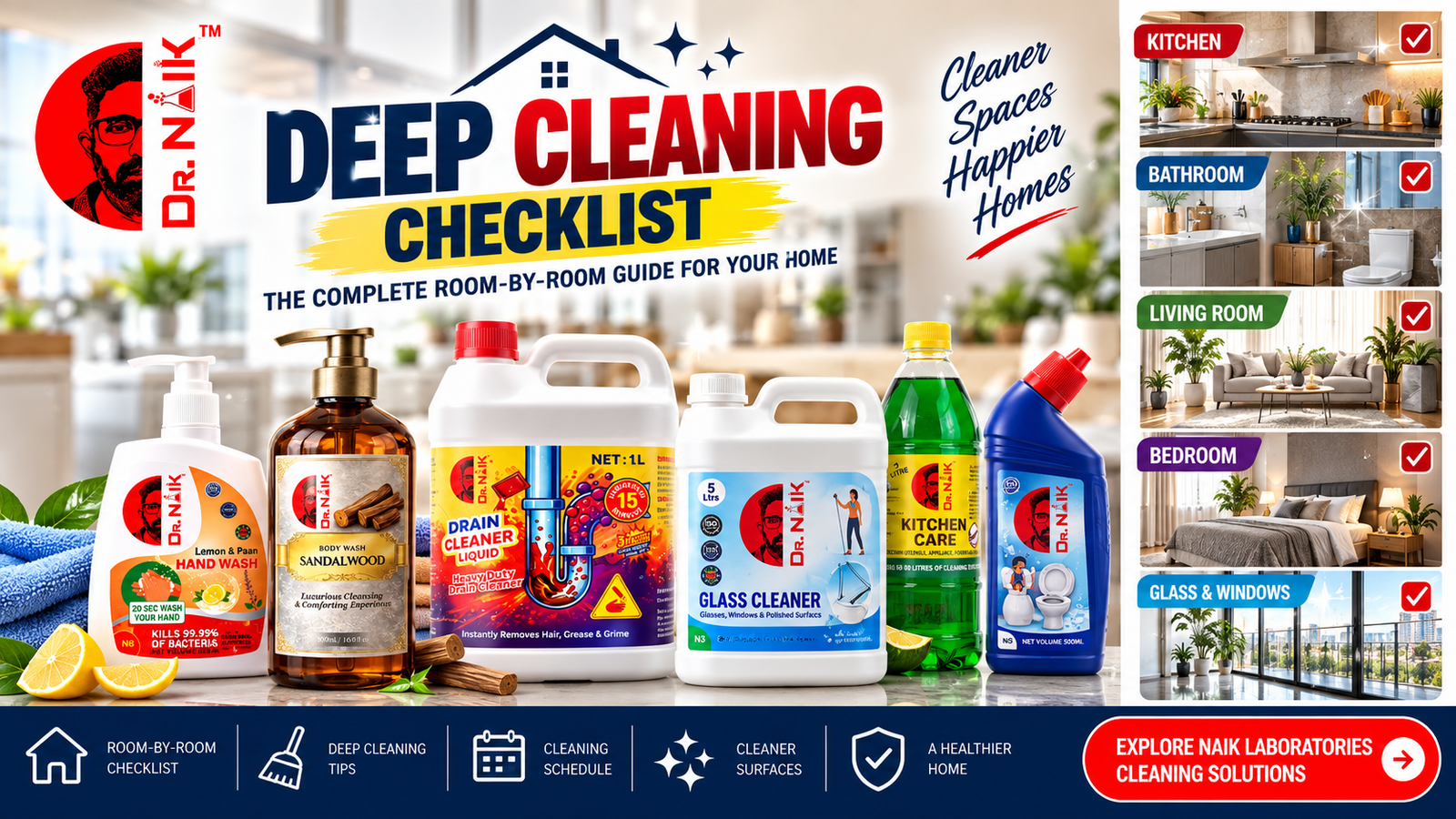
Deep Cleaning Checklist: The Complete Room-by-Room Guide for Your Home
A regular cleaning routine helps keep everyday dirt under control, but some areas of the home need more attention than routine dusting and wiping. Floors, bathroom surfaces, kitchen appliances, glass, corners, handles and other frequently used areas can gradually collect buildup that may be overlooked during everyday cleaning.
That is where a structured deep cleaning checklist becomes useful.
Instead of trying to clean everything at once, homeowners can divide the house into different zones and work through them systematically. A room-by-room approach makes home deep cleaning easier to organize and can also help ensure that commonly missed areas receive attention.
Whether you are preparing for a seasonal clean, moving into a new home, getting ready for guests or simply refreshing your regular house cleaning routine, having a practical plan can make the process more manageable.
Why Use a Deep Cleaning Checklist?
Deep cleaning is different from everyday cleaning.
Daily or regular cleaning usually focuses on visible dirt, spills, dust and frequently used surfaces. A deeper routine allows you to look beyond the obvious areas and clean surfaces, corners and fixtures that may not be addressed every day.
A well-planned deep cleaning checklist can help you:
- Organize cleaning tasks by room
- Avoid overlooking less-visible areas
- Maintain kitchens and bathrooms more consistently
- Include glass and high-touch surfaces
- Create a repeatable cleaning schedule
- Select appropriate cleaning products for different surfaces
The goal is not necessarily to clean the entire home in one session. Instead, the checklist can be divided across several days or weekends depending on the size of the home and the amount of work required.
1. Start With a Cleaning Plan
Before beginning your home deep cleaning session, prepare the supplies you are likely to need.
Depending on the areas being cleaned, your supplies may include:
- Surface cleaning products
- Toilet or bathroom cleaner
- Kitchen cleaner
- Glass cleaner
- Microfiber cloths
- Scrubbing brushes
- Sponges
- Mop and bucket
- Gloves
- Waste bags
- Suitable tools for hard-to-reach areas
Keeping everything together can reduce unnecessary movement between rooms.
A useful deep cleaning checklist should also identify which products are intended for particular surfaces. Always read the product label and follow the manufacturer’s instructions, especially when working with concentrated or specialized cleaning products.
Important: Do not mix different cleaning chemicals unless the product manufacturer specifically states that they are compatible.
2. Kitchen Deep Cleaning
The kitchen is one of the most frequently used areas of a home, so grease, food residue, dust and spills can accumulate quickly.
Your kitchen cleaning routine should go beyond wiping the countertop.
Kitchen deep cleaning checklist:
- Clean countertops and work surfaces
- Wipe cabinet doors and handles
- Clean the stovetop
- Clean backsplash areas
- Wipe appliance exteriors
- Clean around appliance controls
- Wash the sink and surrounding area
- Check corners and edges for buildup
- Clean frequently touched handles
- Sweep and mop the floor
- Inspect the sink drain area
For everyday kitchen maintenance, a suitable kitchen cleaner can help simplify cleaning of appropriate surfaces.
Naik Laboratories’ Kitchen Care solution can be naturally incorporated into a kitchen-care routine where suitable for the intended surfaces.
Don’t Forget the Kitchen Sink
The sink area deserves special attention because food particles, grease and residue can collect around the drain and surrounding surfaces.
Regular sink maintenance can complement your overall cleaning checklist and help keep the kitchen cleaning routine organized.
If you notice persistent drainage problems or buildup, use a suitable drain-cleaning product according to its label directions rather than relying only on surface cleaning.
3. Bathroom Deep Cleaning
Bathrooms require consistent cleaning because multiple surfaces are exposed to water, soap residue and everyday use.
A bathroom-focused deep cleaning checklist should include more than the toilet.
Bathroom cleaning checklist:
- Clean the toilet bowl and exterior
- Wipe the toilet seat and surrounding surfaces
- Clean the washbasin
- Clean faucets and fixtures
- Wipe bathroom counters
- Clean shower-area surfaces
- Remove visible soap residue
- Clean mirrors
- Wipe bathroom doors and handles
- Clean corners and edges
- Wash or mop the floor
- Check drains and surrounding areas
For toilet-specific cleaning, a dedicated toilet cleaner can be more appropriate than using a general-purpose product on every surface.
You can also include toilet cleaning as a recurring part of your house cleaning routine rather than waiting until visible buildup becomes difficult to manage.
4. Clean Glass, Windows and Mirrors
Glass surfaces can make a room look noticeably cleaner when they are properly maintained.
However, fingerprints, dust, water marks and incorrect cleaning techniques can leave glass looking cloudy or streaked.
Include the following in your deep cleaning checklist:
- Windows
- Glass doors
- Mirrors
- Glass tables
- Shower glass
- Glass partitions
- Frequently touched glass surfaces
A suitable glass cleaner and clean microfiber cloth can make this task easier.
For larger glass areas, work systematically from one section to another instead of repeatedly wiping the same surface.
Simple glass-cleaning routine
- Remove loose dust first.
- Apply an appropriate glass-cleaning solution.
- Wipe using a clean microfiber cloth.
- Pay attention to edges and corners.
- Check the surface from different angles.
- Re-clean any visible streaks or marks.
Naik Laboratories offers glass-cleaning solutions that can be considered as part of a broader home and facility cleaning routine.
5. Living Room Deep Cleaning
The living room often receives regular dusting, but deeper cleaning can uncover areas that are easy to overlook.
Your deep cleaning checklist can include:
- Dusting shelves
- Cleaning tables
- Wiping furniture surfaces
- Cleaning remote controls
- Wiping door handles
- Cleaning light switches
- Dusting decorative items
- Cleaning window areas
- Vacuuming or cleaning upholstery as appropriate
- Cleaning under furniture
- Sweeping and mopping floors
Pay special attention to areas behind furniture and objects that are rarely moved.
A room can appear clean while dust accumulates underneath tables, behind cabinets or around decorative objects.
6. Bedroom Deep Cleaning
Bedrooms benefit from a structured cleaning schedule because many tasks are performed less frequently than daily surface cleaning.
Bedroom checklist:
- Change and wash bed linen
- Dust bedside tables
- Clean wardrobes externally
- Organize storage areas
- Clean mirrors
- Dust lamps and fixtures
- Clean windows
- Wipe door handles
- Clean under the bed where accessible
- Vacuum or sweep the floor
- Mop appropriate flooring
Decluttering is also useful during a deeper cleaning session. Removing unnecessary items makes surfaces easier to clean and can make future maintenance simpler.
7. High-Touch Areas
Some surfaces are touched repeatedly throughout the day but may not receive enough attention during ordinary cleaning.
Add these areas to your deep cleaning checklist:
- Door handles
- Cabinet handles
- Light switches
- Drawer pulls
- Remote controls
- Appliance handles
- Stair railings
- Frequently touched furniture surfaces
The exact cleaning method should depend on the surface material. Use a suitable product and follow its directions rather than applying the same chemical to every material in the home.
8. Floors and Hard-to-Reach Areas
Floors are obvious cleaning targets, but deep cleaning should also consider edges and areas that are difficult to reach.
Look at:
- Corners
- Behind furniture
- Under beds
- Around appliances
- Along skirting boards
- Behind doors
- Stair edges
- Floor-to-wall joints
Move furniture only when it is safe and practical to do so.
For a more complete house cleaning routine, consider dividing floor-related tasks into regular maintenance and occasional deeper cleaning.
9. Don’t Forget Handles, Edges and Corners
One of the most common mistakes during home deep cleaning is focusing only on large visible surfaces.
Small areas can accumulate dust and residue too.
Check:
- Door frames
- Window frames
- Cabinet edges
- Furniture joints
- Switch plates
- Appliance edges
- Bathroom corners
- Kitchen backsplash edges
These areas may take only a few minutes each, but including them makes the overall cleaning process more thorough.
10. Build a Practical Cleaning Schedule
A deep cleaning checklist becomes much easier to follow when it is connected to a realistic cleaning schedule.
Instead of attempting every task in one day, divide responsibilities according to frequency.
Daily
Focus on:
- Kitchen spills
- Countertops
- Sink area
- Bathroom surfaces that need immediate attention
- Frequently used areas
- Visible dust and dirt
Weekly
Include:
- Bathroom cleaning
- Floor cleaning
- Kitchen surface cleaning
- Glass and mirror cleaning
- Dusting furniture
- High-touch surfaces
Monthly or Periodically
Consider:
- Windows and larger glass surfaces
- Behind furniture
- Cabinet interiors
- Hard-to-reach areas
- Detailed appliance cleaning
- Deeper bathroom maintenance
- Less frequently used rooms
The exact frequency should depend on household size, usage, occupancy and the specific cleaning needs of each space.
11. Common Deep Cleaning Mistakes to Avoid
Even a detailed deep cleaning checklist can become ineffective if cleaning practices are inconsistent.
Using one product for everything
Different materials and surfaces can require different cleaning approaches. Always check product directions and surface compatibility.
Cleaning around clutter
Move suitable items before cleaning underneath or behind them. This allows you to reach more of the actual surface.
Ignoring high-touch surfaces
Handles, switches and frequently used fixtures should have a place in your regular cleaning schedule.
Using dirty cloths
A dirty cloth can spread residue from one surface to another. Use clean cloths and replace or wash them regularly.
Rushing glass cleaning
Glass often requires a clean cloth and proper technique to achieve a clear finish.
Mixing cleaning chemicals
Avoid combining cleaning products unless the manufacturer specifically confirms that they can be used together.
Forgetting product instructions
Read the label before use, especially for specialized cleaners. Follow recommended usage, contact time, dilution and safety instructions.
12. Choosing Cleaning Products for Home Deep Cleaning
The right products can make a structured cleaning routine more convenient.
When selecting cleaning products, consider:
Surface compatibility
Choose a product designed or recommended for the surface you intend to clean.
Cleaning requirement
A glass surface, toilet, kitchen countertop and drain may require different solutions.
Ease of use
Products that fit naturally into your routine can make regular maintenance easier.
Packaging and storage
Choose packaging that is practical for your household and store cleaning products safely away from children and pets.
Clear instructions
Products with clear usage directions can help users apply them correctly.
Naik Laboratories provides a range of cleaning solutions that can be incorporated into different cleaning routines, depending on the product and intended application.
13. How Naik Laboratories Can Fit Into Your Cleaning Routine
A complete cleaning routine often requires several product categories rather than one product for every task.
For example, your cleaning plan may include:
- Kitchen Care for suitable kitchen surfaces
- Toilet Cleaner for toilet-cleaning tasks
- Glass Cleaner for windows, mirrors and appropriate glass surfaces
- Drain Cleaner for suitable drain-maintenance applications
- Hand Wash for everyday hand-washing areas
This category-based approach makes it easier to organize cleaning supplies according to the areas and tasks they are intended for.
For households looking to create a repeatable deep cleaning checklist, keeping products organized by application can also make future cleaning sessions more efficient.
14. Turn Deep Cleaning Into a Routine
Deep cleaning does not have to be a once-a-year activity.
Once you have completed your first deep cleaning checklist, use it as a reference for future sessions.
You can create a simple rotation:
Week 1: Kitchen and dining area
Week 2: Bathrooms
Week 3: Bedrooms and living areas
Week 4: Windows, glass and less-used areas
Then repeat the cycle according to your household’s needs.
This approach can prevent cleaning tasks from becoming overwhelming and helps maintain a more consistent house cleaning routine.
Concluion
A well-organized deep cleaning checklist turns a large cleaning task into a series of manageable steps.
From kitchens and bathrooms to glass surfaces, bedrooms, living areas, floors and high-touch zones, a room-by-room approach helps ensure that important areas are not overlooked.
The most effective routine is one that fits your home, your schedule and the surfaces you need to maintain. Rather than trying to complete everything at once, divide tasks into daily, weekly and periodic activities.
With the right cleaning schedule and suitable products for different applications, maintaining a cleaner and more organized home becomes easier to manage.
Complete Your Cleaning Routine With Naik Laboratories
Looking for suitable solutions for your home-care routine?
Explore Naik Laboratories cleaning solutions and choose the products that fit your cleaning needs.
CTA: Complete your deep-cleaning routine with Naik Laboratories solutions.