
Pet Shampoo: 7 Essential Tips for Cleaner, Healthier-Looking Fur
Bathing is an important part of a pet’s grooming routine, but the right approach depends on the animal, its coat and its individual needs. A suitable pet shampoo can help remove everyday dirt and keep a coat feeling clean when used according to its label. Good grooming also involves gentle handling, thorough rinsing and making bath time as comfortable as possible. Choosing a suitable pet shampoo is an important part of that routine.
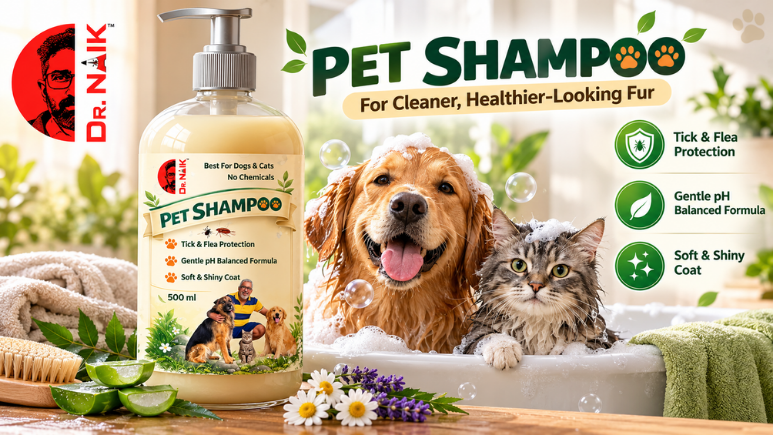
Dr. Naik Pet Shampoo is labelled for dogs and cats. Its label describes a formula intended to help remove dirt, ticks and fleas while leaving the coat soft, shiny and fresh. It also lists a gentle pH-balanced formula and ingredients including purified water, neem extract, aloe vera extract, oat extract, chamomile extract, lavender oil, mild cleansing surfactants, conditioning agents, fragrance and preservatives.
This guide covers practical bathing habits, product selection and safe use. It does not replace veterinary advice, and a grooming product should not be treated as a substitute for veterinary treatment when a pet has a skin condition or parasite infestation.
1. Choose a Product Intended for Pets
A pet’s skin and coat need different care from human skin and hair. Choose a product labelled for the animal you are bathing, and read its directions before use. Avoid assuming that a product suitable for one species is automatically suitable for another.
Dr. Naik Pet Shampoo is labelled for dogs and cats. When choosing a pet shampoo, consider the animal’s coat length, skin sensitivity, age and grooming needs. If your pet has irritated skin, open wounds, persistent itching or a known allergy, ask a veterinarian before introducing a new product.
When comparing a pet shampoo, do not choose solely by scent or packaging. Check the intended use, ingredients, directions and warnings. If the label does not answer a question about suitability, seek advice from a qualified veterinary professional.
2. Prepare Before Bath Time
Preparation helps make bathing calmer and more organised, whatever pet shampoo you use. Gather the shampoo, towels, a non-slip surface and any grooming tools you need before wetting your pet. Choose a warm, draft-free space and keep the water at a comfortable, lukewarm temperature.
Brush the coat first when appropriate to loosen debris and remove tangles. Take extra care around sensitive areas, and avoid pulling at knots. Keep the bathing area secure so your pet cannot slip or jump from a height.
A calm routine can help pets become more comfortable with grooming over time. Speak gently, move slowly and pause if your pet becomes distressed. If bathing causes intense fear or aggression, ask a veterinarian or qualified groomer for guidance rather than forcing the process.
3. Follow the Label’s Directions
Using the right amount and following the product instructions are essential parts of grooming. More shampoo does not necessarily mean a better clean. Using a product differently from its label can also increase the chance of irritation or leave residue in the coat.
The Dr. Naik Pet Shampoo label gives these directions:
Wet your pet’s coat thoroughly with clean water.
Apply an adequate amount of shampoo.
Gently massage to form a rich lather.
Leave it for 2–5 minutes, as stated on the label.
Rinse thoroughly with clean water.
Dry your pet with a towel.
Follow the complete label and avoid contact with the eyes. The label states that the product is for external pet use only and advises avoiding eye contact. Do not let your pet swallow the product or lick wet shampoo from its coat. If contact with the eyes occurs or irritation develops, follow the label’s safety guidance and seek veterinary advice if necessary.
4. Rinse Thoroughly and Dry Carefully
Rinsing is an important step because shampoo left in the coat may cause discomfort or irritation. This applies regardless of which pet shampoo you choose. Use clean water and continue rinsing until the coat feels free of product. Take care around the belly, legs, paws and other areas where shampoo can be missed.
After rinsing, use a clean towel to absorb excess water. Keep your pet in a comfortable environment while it dries, and use any additional drying method only if it is safe and well tolerated. Avoid hot air or excessive heat, particularly near the face and ears.
Do not allow a pet to go outside in unsuitable weather while its coat is still very wet. The appropriate drying routine will depend on coat type, room temperature and the animal’s comfort.
5. Make Bathing Frequency Fit Your Pet
There is no single bathing schedule that suits every dog or cat. The right frequency depends on coat type, lifestyle, activity level, skin health and veterinary guidance. Bathing too often may dry or irritate some pets’ skin, while some animals may need more frequent cleaning because of their activities or individual needs.
For routine grooming, check your pet’s coat between baths and clean small areas when appropriate. If your pet gets unusually dirty, has a persistent odour or develops skin changes, consider whether a veterinary assessment is needed rather than simply increasing bath frequency.
A pet shampoo should be one part of a broader grooming routine that includes brushing, checking the skin and coat, and keeping bedding and grooming tools clean. Record any changes you notice after bathing, especially if your pet has a history of sensitivity.
6. Understand Coat Care and Ingredient Information
The Dr. Naik Pet Shampoo label lists purified water, neem extract, aloe vera extract, oat extract, chamomile extract, lavender oil, mild cleansing surfactants, conditioning agents, fragrance and preservatives. The label describes the formula as gentle and pH-balanced and claims it helps leave the coat soft and shiny.
Ingredient lists can help owners understand what a product contains, but they do not guarantee that every animal will tolerate every ingredient. Natural-origin ingredients can still cause reactions in some pets. Introduce a new product carefully and stop using it if you notice redness, unusual scratching or other signs of irritation.
Do not assume that a grooming shampoo can treat every skin concern. If your pet has ongoing itching, hair loss, sores, scaling or a suspected infection, consult a veterinarian. A cosmetic grooming product is not a substitute for diagnosis or prescribed treatment.
7. Treat Tick and Flea Concerns Responsibly
The Dr. Naik Pet Shampoo label includes a tick and flea protection claim. Read the full packaging for the exact scope of that claim and use the product only as directed. Do not assume that a shampoo alone will prevent or eliminate every parasite or provide long-lasting protection.
If you find ticks or fleas, check your pet carefully and speak with a veterinarian about an appropriate control plan. The best approach can depend on the pet’s species, age, weight, health and home environment. Use only parasite-control products specifically intended for that animal, and never combine treatments unless a veterinarian or the product directions confirm that it is appropriate.
Wash pet bedding as directed, clean commonly used resting areas and check other pets where relevant. Persistent infestations may require a coordinated plan for the animal and its environment.
How Dr. Naik Pet Shampoo Fits into a Grooming Routine
Dr. Naik Pet Shampoo is a 500 ml product labelled for dogs and cats. Its label highlights tick and flea protection, a gentle pH-balanced formula and a soft, shiny coat. It lists botanical extracts and other cleansing and conditioning ingredients, and provides a bathing process that includes wetting the coat, applying shampoo, gently lathering, leaving it for 2–5 minutes, rinsing thoroughly and towel drying.
Use the product according to its label, avoid eye contact and observe your pet after bathing. Claims printed on the label should not be interpreted as a guarantee of a particular result for every animal. If your pet has a skin condition, is very young or unwell, or reacts to grooming products, ask a veterinarian about suitable bathing options.
Conclusion
A good grooming routine combines a suitable pet shampoo, calm handling, careful rinsing and appropriate drying. Choose a pet shampoo labelled for your animal, read the instructions and adapt the bathing schedule to your pet’s coat and needs. Watch for signs of irritation and seek veterinary advice for persistent skin problems or parasite concerns.
Dr. Naik Pet Shampoo is labelled for dogs and cats and includes directions for routine bathing. Follow the product’s instructions and precautions, and remember that grooming products do not replace veterinary care when it is needed.