
Kitchen Degreaser: A Powerful Guide to Cleaning Grills, Ovens and Kitchen Surfaces
Grease is a regular challenge in kitchens. Cooking oils, food residue and repeated use can leave deposits on grills, tawas, ovens, chimneys, gas stoves and nearby surfaces. Choosing a suitable kitchen degreaser starts with identifying the surface, reading the product label and following the specified cleaning method.
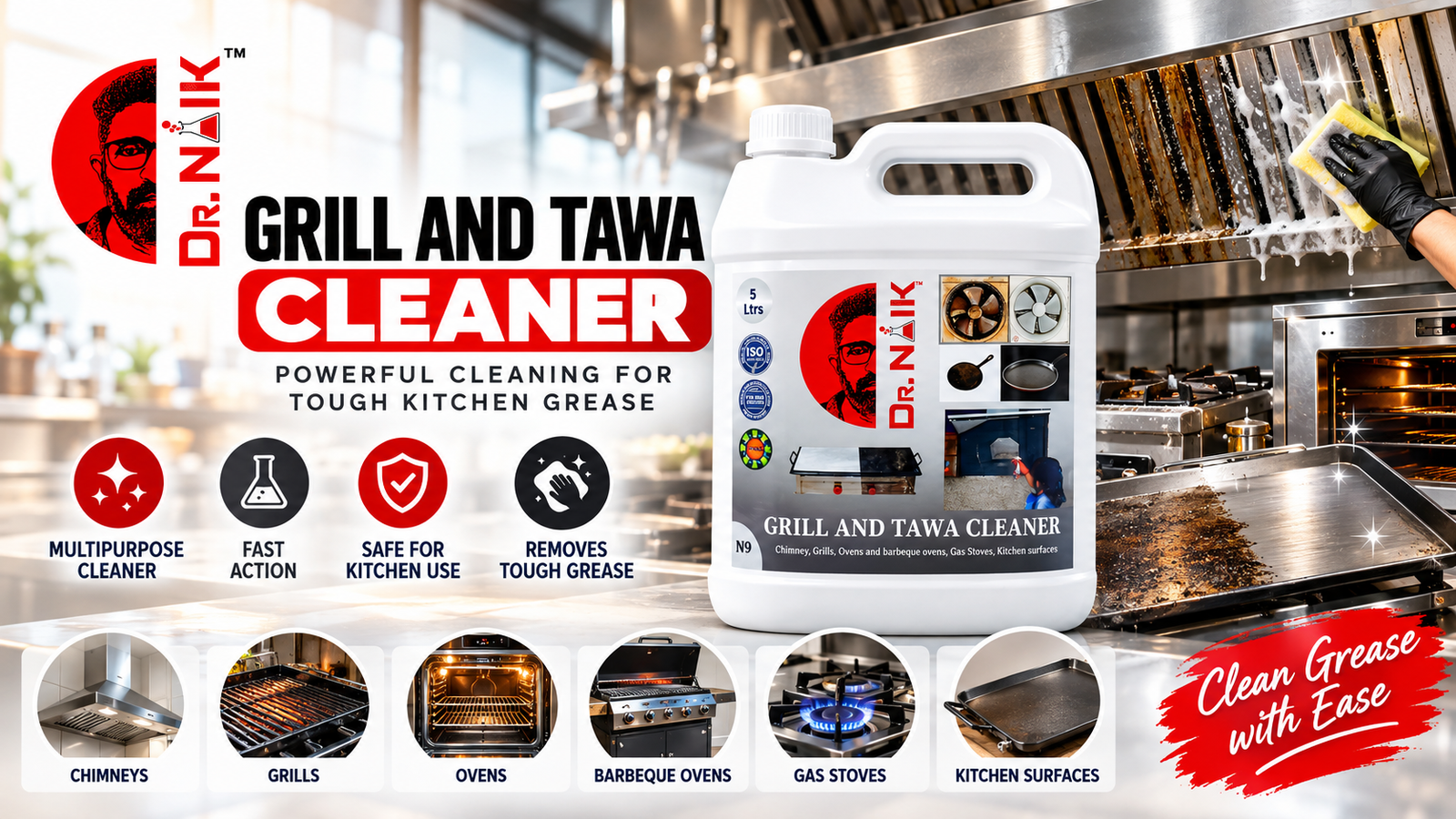
For households, restaurants, hotels and food-service teams, a planned cleaning routine helps keep tasks organised. The right product should be selected for its stated application rather than assuming that every cleaner works on every surface. Naik Laboratories’ Grill and Tawa Cleaner label lists applications including chimneys, grills, ovens, barbecue ovens, gas stoves and kitchen surfaces.
What Is a Kitchen Degreaser?
A kitchen degreaser is a cleaning product intended to help remove grease and oily residue from surfaces specified by the manufacturer. Different products have different directions, ingredients and application limits. Always check the label to determine where and how the product should be used.
A kitchen degreaser should not be selected by name alone. Confirm the surface, the type of residue and the recommended application method. If the material or use is not listed, seek clarification before applying the product.
Where Can Grill and Tawa Cleaner Be Used?
The Naik Laboratories Grill and Tawa Cleaner label lists chimneys, grills, ovens, barbecue ovens, gas stoves and kitchen surfaces as applications. The label also shows examples involving grills, tawas and related cooking equipment.
These applications can help kitchens plan cleaning tasks for equipment where grease accumulates. Before cleaning, follow the equipment manufacturer’s guidance and make sure the surface is suitable for the product. Do not assume compatibility with every metal, coating or finish unless the instructions confirm it.
Product Information
Dr. Naik Grill and Tawa Cleaner is a highly concentrated alkaline solution. It lists the ingredients as alkaline, mild acid and surfactant. These are details stated on the supplied label; for the correct product handling method, use the full current container instructions.
The direction for use states: “1 litre into 10 litres of boiling water.” It then instructs users to soak the item for a minimum of 10 minutes and clean it, and separately describes direct spraying on industrial tawas, leaving it for a few minutes, gently scrubbing and rinsing with water. Because the wording and methods differ by application, follow the complete label directions for the specific task rather than combining the methods or improvising a dilution.
How to Use a Kitchen Degreaser Responsibly
Before starting, read all directions and safety information. Prepare only the quantity required for the task and use the product only for listed applications. Keep the work area organised and follow any instructions for soaking, scrubbing and rinsing.
The label specifically warns users to wear safety gloves, a mask and goggles while using the product. It also instructs users to transfer the required quantity to the dispenser and close the container properly. Keep the original label available so that anyone handling the product can check the directions and precautions.
Never mix cleaning chemicals unless the product instructions explicitly require it. Do not combine this product with bleach, acids or other cleaners. Store the container as directed and keep it away from unauthorised users. For food-contact surfaces, follow the product label and the kitchen’s applicable food-safety procedures; do not assume a surface is ready for food preparation unless the required cleaning and rinsing steps have been completed.
How to Choose the Right Kitchen Degreaser
Start by identifying the equipment or surface that needs cleaning. A grill, tawa, oven, chimney and gas stove may have different materials and care requirements. Confirm that the product label includes the intended application, then follow the instructions for preparation, contact time, scrubbing and rinsing.
Consider the scale of the task and the amount of product required. The supplied Grill and Tawa Cleaner container is labelled as 5 litres. Businesses should plan storage and dispensing carefully, and staff should avoid transferring chemicals into unlabelled containers.
A kitchen degreaser should be part of a consistent routine, not a substitute for checking the surface or reading instructions. Clear task lists can help kitchen teams know which product to use, what precautions are required and who is responsible for completing the work.
Common Kitchen Cleaning Mistakes to Avoid
Ignoring product directions: Read the full label before use and follow the stated method for the intended application.
Guessing dilution: Use the dilution and water instructions on the container. Do not estimate quantities or combine different methods.
Skipping protective equipment: Follow the label’s safety instructions, including the specified gloves, mask and goggles.
Using a product on an unlisted surface: Check compatibility before use, especially for coated or unfamiliar materials.
Leaving containers open or unlabelled: Close the container properly and keep product identification and safety instructions available.
Build a Practical Kitchen-Cleaning Routine
A simple checklist can list the area, the cleaning product, the method specified on the label, the required protective equipment and any rinsing or inspection step. In commercial kitchens, the schedule should reflect the equipment used, the volume of cooking and the site’s own procedures.
Train staff to identify the correct product and follow the label every time. Review the routine if equipment changes or if the cleaning task is different. A kitchen degreaser is most useful when the product, surface and method are matched correctly.
Conclusion
Choosing a kitchen degreaser starts with understanding the task and checking the product’s labelled applications. Naik Laboratories’ Grill and Tawa Cleaner label identifies chimneys, grills, ovens, barbecue ovens, gas stoves and kitchen surfaces, and provides directions for dilution and use alongside safety precautions.
Use the full label as the primary reference, follow the specified protective measures and do not improvise with dilution or chemical mixing. For product information or questions about an intended application, contact Naik Laboratories before use.