
Commercial Cleaning Products: A Powerful Guide to Smarter Facility Cleaning
Maintaining clean and presentable commercial spaces requires a consistent approach to everyday housekeeping. Offices, hotels, restaurants, institutions and facility-management teams all deal with different cleaning requirements, from floors and glass to washrooms, kitchens and drains. Choosing suitable commercial cleaning products helps businesses organise these tasks according to the surfaces and areas they need to maintain.
For purchasing teams, selecting cleaning supplies involves more than comparing containers or prices. Businesses need to consider intended applications, product directions, pack sizes, storage requirements and staff training. A well-planned cleaning routine helps teams manage their responsibilities consistently while following the instructions provided for each product.
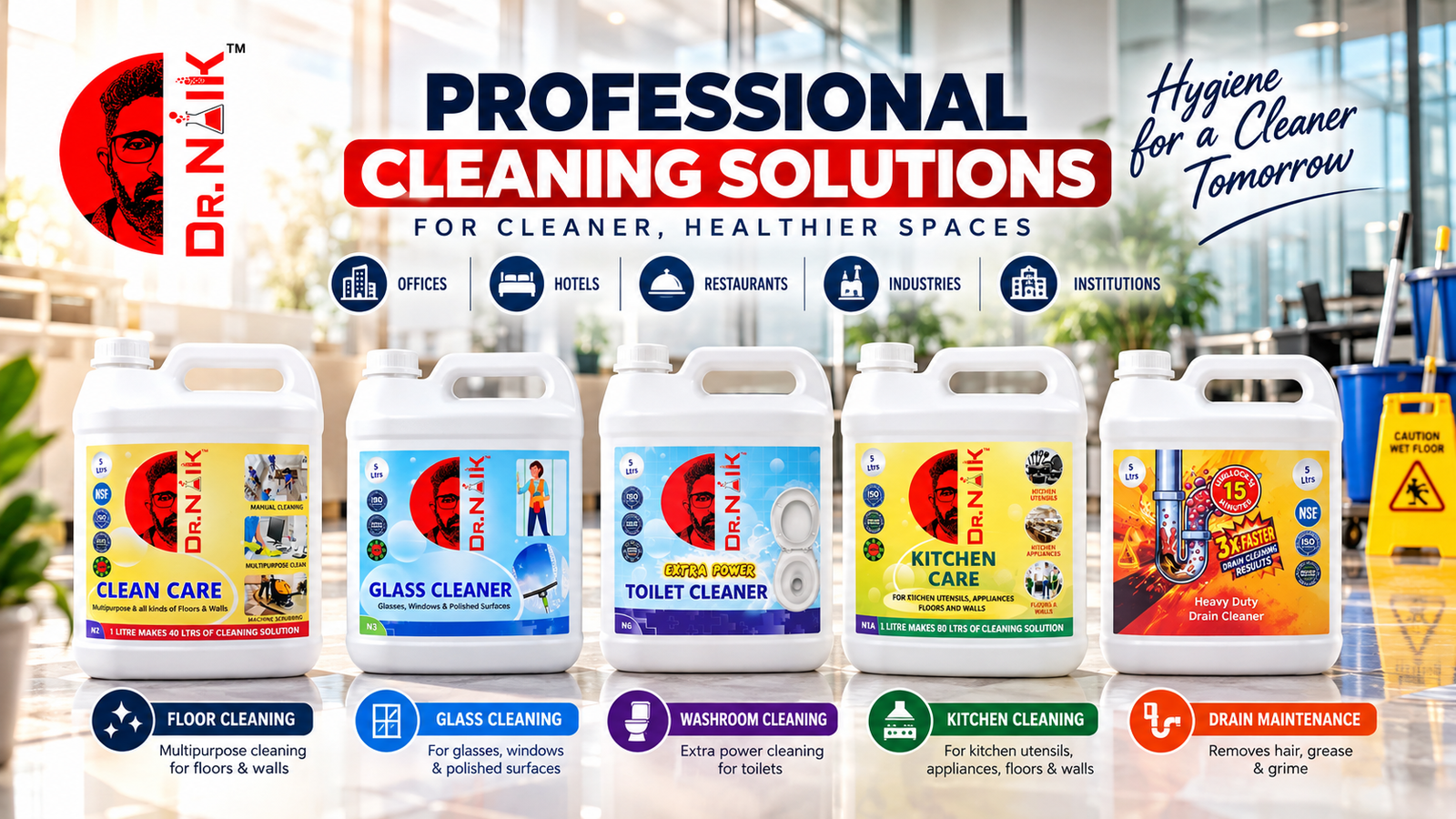
Naik Laboratories offers products for several everyday cleaning applications, including Clean Care, Glass Cleaner, Toilet Cleaner, Kitchen Care and Drain Cleaner Liquid. These five products provide a practical starting point for businesses reviewing their cleaning supplies for offices, hospitality environments and other commercial facilities.
Why Choosing the Right Commercial Cleaning Products Matters
Commercial premises contain multiple areas with different cleaning requirements. Reception areas may need regular floor and glass cleaning, washrooms require dedicated toilet-cleaning routines, and kitchens need products intended for their specific cleaning applications. Drain maintenance may also form part of a property’s housekeeping schedule.
Using commercial cleaning products according to their labelled purposes helps teams organise tasks and avoid assuming that one cleaner is suitable for every surface. It can also simplify purchasing, stock management and staff training.
Before selecting a product, businesses should identify the intended surface, review the label and check the recommended application method. Product directions and surface compatibility should always guide the decision.
1. Clean Care for Floors and Multipurpose Cleaning
Floors and walls are prominent features of offices, hotels and other commercial premises. Regular cleaning helps businesses maintain these areas as part of their wider housekeeping routines.
Naik Laboratories’ Clean Care label identifies the product for multipurpose use and for floors and walls. The label also illustrates manual cleaning and machine scrubbing applications.
Facility teams can consider Clean Care for the applications specified on its label. Before use, staff should check the instructions for dilution, application and surface suitability.
The product label states that 1 litre makes 40 litres of cleaning solution. Staff should follow the stated directions when preparing the solution rather than estimating the dilution independently.
When evaluating commercial cleaning products for floors and walls, businesses should consider the surfaces present, the cleaning method used, the frequency of cleaning and the quantity required for their routine.
2. Glass Cleaner for Windows and Polished Surfaces
Glass doors, windows and other glass surfaces are common in offices, hotels and customer-facing spaces. Dust, fingerprints and visible marks can affect the appearance of reception areas, meeting rooms and other frequently used spaces.
Naik Laboratories’ Glass Cleaner label identifies its intended applications as glasses, windows and polished surfaces. Businesses can consider the product for these listed applications, subject to its directions and the requirements of the particular surface.
A practical glass-cleaning routine should identify which areas need frequent attention and which can be included in periodic cleaning. Staff should follow the product’s application instructions and check suitability whenever the surface or application is uncertain.
For businesses comparing commercial cleaning products, selecting a designated cleaner for the intended glass-cleaning task can help keep housekeeping supplies organised and make staff procedures easier to communicate.
3. Toilet Cleaner for Commercial Washrooms
Washrooms in offices, hotels, restaurants and other facilities need a clearly defined cleaning schedule. A routine can specify the areas to be cleaned, the frequency of each task and how staff record completed work.
Naik Laboratories’ Toilet Cleaner is one option to consider for the toilet-cleaning stage of a facility’s housekeeping process. Staff should use it according to the full product label and the applicable workplace procedures.
Cleaning chemicals should never be mixed unless the product instructions explicitly require it. Containers should remain properly labelled and be stored as directed. Staff should also follow the specified safety precautions and protective-equipment requirements.
Choosing appropriate commercial cleaning products is only one part of washroom management. Reliable replenishment, suitable cleaning tools, clearly assigned responsibilities and regular checks are also important elements of an organised routine.
4. Kitchen Care for Kitchen Areas and Equipment
Commercial kitchens have varied cleaning requirements involving utensils, appliances, floors and walls. Different surfaces may require different methods, so teams should verify the product’s intended application before use.
Naik Laboratories’ Kitchen Care label identifies its applications as kitchen utensils, appliances, floors and walls. The label also states that 1 litre makes 80 litres of cleaning solution.
Staff should follow the directions on the container for dilution and application. They should also verify suitability for the intended surface and follow the site’s food-safety procedures, particularly where food-contact surfaces are involved.
Hotels, restaurants and catering businesses can benefit from separating kitchen-cleaning tasks from general housekeeping. A written checklist can identify the area, the relevant product, the required method and the responsible team member.
When selecting commercial cleaning products for kitchen environments, businesses should prioritise the product’s labelled applications and instructions rather than assume that a general-purpose cleaner is suitable for every kitchen task.
5. Drain Cleaner Liquid for Drain Maintenance
Drain maintenance can be an important part of a commercial property’s housekeeping and maintenance schedule. Naik Laboratories’ Drain Cleaner Liquid label describes the product as a heavy-duty drain cleaner and identifies hair, grease and grime among the material it is intended to address.
Staff must read and follow the complete label instructions, including directions for use, safety warnings, first-aid information and storage guidance.
The product label includes safety precautions. Users should follow the specified protective measures, keep the product away from children and store it as directed. Never mix drain cleaner with bleach, acids or other cleaning chemicals.
If a blockage persists, or if the plumbing material or application is uncertain, consult a qualified maintenance professional rather than improvising a treatment.
Among commercial cleaning products, drain cleaners require particular care because incorrect handling or mixing can create serious hazards. Clear instructions, appropriate staff training and responsible storage are essential parts of a facility’s maintenance process.
How to Choose Commercial Cleaning Products for Your Facility
Before placing an order, assess the areas your team cleans and the tasks performed most frequently. A structured selection process can help purchasing and housekeeping teams make more consistent decisions.
Identify the cleaning applications
List the main areas that need attention, such as floors and walls, glass, washrooms, kitchens and drains. Match each task to a product whose label confirms the intended application.
This approach helps businesses organise their commercial cleaning products around actual requirements instead of purchasing supplies without a clear use plan.
Check directions and surface compatibility
Read the product label before introducing a cleaner into your routine. Check the specified dilution, application method, rinsing instructions, safety precautions and any other directions provided.
Surface manufacturers may also specify care requirements. If the instructions are unclear, seek clarification from the supplier before use.
Select suitable pack sizes
Pack size affects storage, handling and purchasing frequency. The five Naik Laboratories products featured in this guide are shown in 5-litre containers.
Businesses should estimate their requirements based on actual usage, storage capacity, handling procedures and replenishment needs. A larger container may be practical for some sites, but the appropriate quantity depends on the facility and the product’s instructions.
Train cleaning staff
Written procedures help staff understand which product is intended for each task. Procedures should identify the cleaning area, product name, label instructions, necessary precautions and the process for reporting problems.
Training is particularly important when staff handle concentrated products or products with specific safety warnings. Employees should never combine chemicals unless explicitly directed by the relevant product instructions.
Plan stock and replenishment
For businesses managing several floors, buildings or properties, coordinating cleaning supplies can become complicated. Reviewing consumption, available storage, delivery requirements and product availability can help purchasing teams plan replenishment more effectively.
A clear list of commercial cleaning products also makes it easier to track which supplies are required for each cleaning task and when stock needs to be reordered.
Creating a Practical Commercial Cleaning Checklist
A cleaning checklist connects each task to a location, product and responsible team member. For example, a facility may schedule:
Floors and walls: Clean Care, where the product label confirms suitability.
Glass and windows: Glass Cleaner for the applications listed on its label.
Washrooms: Toilet Cleaner according to its instructions.
Kitchen areas: Kitchen Care for its labelled applications.
Drain maintenance: Drain Cleaner Liquid, following the complete directions and safety precautions.
The appropriate frequency depends on the facility’s layout, foot traffic, operating hours and cleaning requirements. An office, hotel and restaurant will not necessarily need identical schedules.
Review the checklist periodically and adjust it when building usage or operational requirements change. Keep product labels accessible to staff and make sure cleaning procedures remain consistent across shifts.
An organised checklist, combined with suitable commercial cleaning products, can help businesses structure everyday housekeeping without relying on unsupported performance claims or inappropriate product applications.
Why Consider Naik Laboratories?
Naik Laboratories offers products covering several cleaning applications that businesses may need to manage, including floor and wall cleaning, glass cleaning, toilet cleaning, kitchen cleaning and drain maintenance.
The five products discussed in this guide give commercial buyers a starting point when reviewing supplies for their facilities. Each product should be selected according to its labelled applications, instructions and safety requirements.
Before purchasing, businesses should confirm that the product is appropriate for the intended surfaces and cleaning process. For larger facilities or specialised requirements, contacting the supplier can help clarify product applications, available pack sizes and usage directions.
Conclusion
Choosing suitable commercial cleaning products starts with understanding the cleaning tasks a facility needs to complete. Clean Care, Glass Cleaner, Toilet Cleaner, Kitchen Care and Drain Cleaner Liquid address five distinct areas that businesses can consider when organising their housekeeping supplies.
The most practical approach combines appropriate product selection with clear procedures, staff training, sensible stock planning and regular checks. Following product directions and safety precautions helps facility teams manage their cleaning responsibilities more consistently.
Contact Naik Laboratories to discuss your facility’s cleaning requirements and explore suitable products for your intended applications. Always confirm product directions, pack sizes and suitability before use.