
Cleaning Products Manufacturer: Building a Reliable Cleaning and Hygiene Product Ecosystem
Businesses that purchase cleaning and hygiene products need more than a supplier offering individual items. They need a product portfolio that matches their customers’ requirements, clear product information, consistent quality processes and a dependable supply arrangement. Choosing the right cleaning products manufacturer can therefore be an important part of building a sustainable purchasing and distribution strategy.
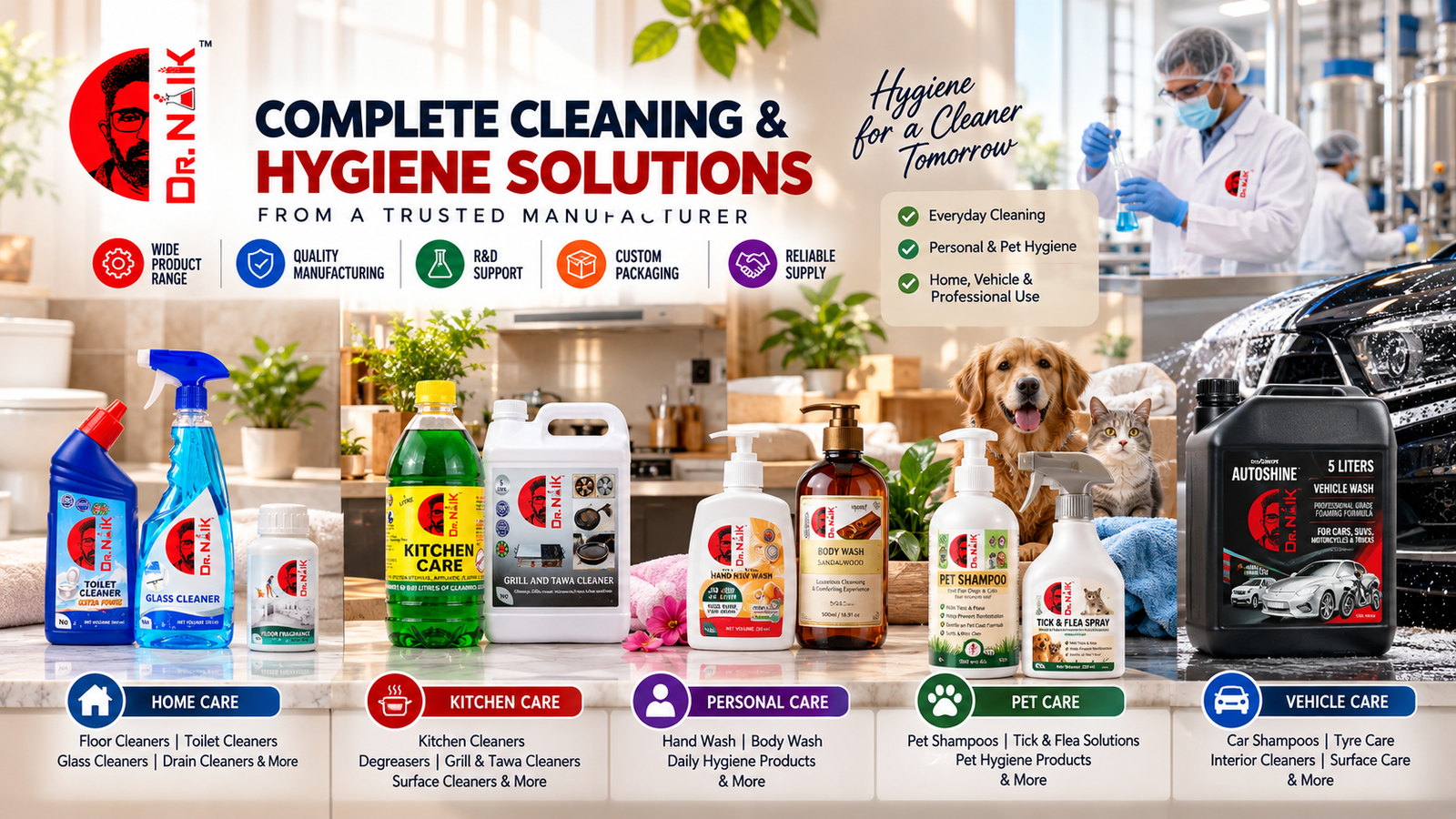
From household surface cleaners and kitchen care products to personal care, pet care, vehicle care and professional cleaning applications, different markets require different product categories. A well-organised product ecosystem helps businesses evaluate these requirements and identify suitable products for their operations.
For distributors, retailers, institutional buyers and other commercial customers, the selection process should consider product range, quality control, manufacturing capabilities, documentation, packaging and communication. Price matters, but it should not be the only factor influencing a long-term business relationship.
This guide explains what businesses should look for when evaluating a cleaning products manufacturer and how a broader cleaning and hygiene portfolio can support different commercial requirements.
Why Choosing the Right Cleaning Products Manufacturer Matters
A business’s choice of manufacturing partner can influence purchasing efficiency, product availability, customer satisfaction and the ability to expand into new categories.
Working with a suitable cleaning products manufacturer gives buyers an opportunity to assess product options, understand specifications and establish a supply arrangement that fits their business model.
For example, a distributor serving retail outlets may need household cleaning and personal care products, while a facility management company may prioritise products intended for institutional cleaning. A retailer may focus on packaging and product variety, whereas a commercial procurement team may place greater emphasis on technical documentation and supply planning.
Before entering a business relationship, consider the following factors:
Product portfolio: Does the manufacturer offer categories relevant to your target market?
Quality processes: Can the company explain how products are checked and controlled?
Documentation: Are appropriate product specifications, instructions and safety information available?
Supply capability: Can expected order quantities and delivery requirements be discussed clearly?
Packaging options: Are available pack sizes and formats suitable for your sales channels?
Communication: Can the supplier respond clearly to product, commercial and operational questions?
Evaluating these areas provides a practical starting point for identifying a manufacturing partner that matches your business requirements.
1. Household Cleaning Products for Everyday Applications
Household cleaning is a broad category covering routine cleaning tasks in kitchens, bathrooms, living spaces and other domestic areas. Products may include floor cleaners, toilet cleaners, glass cleaners, kitchen cleaners and drain cleaners, depending on the manufacturer’s portfolio.
A household cleaning products manufacturer should be evaluated according to the applications its products are designed for and the information provided to buyers.
Commercial buyers should examine product descriptions, intended uses, packaging formats, usage instructions and surface compatibility. These details help retailers and distributors explain product differences and select suitable products for their customers.
For businesses developing a household cleaning portfolio, consider whether the available categories address common domestic cleaning requirements without creating unnecessary overlap.
It is also important to distinguish products according to their intended applications. A toilet cleaner, for example, should not automatically be promoted for kitchen surfaces or other materials unless the product instructions permit those uses.
2. Kitchen Care and Surface Cleaning Solutions
Kitchen care products serve cleaning requirements associated with cooking areas, worktops, appliances and other compatible surfaces. Depending on the portfolio, this category may include products intended for removing everyday residue and grease from specified surfaces.
When assessing a cleaning solutions manufacturer, buyers should understand how the available products differ in their applications, instructions and material compatibility.
For commercial procurement, useful questions include:
Which kitchen surfaces is the product intended for?
What are the recommended application and rinsing instructions?
Is the product supplied ready to use or intended for dilution?
What packaging sizes are available?
What product documentation can the manufacturer provide?
Food-contact surfaces require particular attention. Products should be used according to their labels, including any rinsing or residue-removal requirements before food preparation resumes.
Clear product information helps distributors, retailers and institutional buyers select suitable options and communicate their intended uses accurately.
3. Toilet, Bathroom and Drain Care
Bathrooms and drainage systems have different cleaning requirements, so these applications should be considered separately when evaluating a product range.
Toilet cleaners are intended for specified toilet-cleaning applications, while other bathroom surfaces may require different products. Drain cleaners are designed for particular drainage problems, with suitability depending on the formulation, blockage and plumbing system.
A cleaning products manufacturer serving these categories should provide clear usage instructions and relevant handling precautions.
Commercial buyers should review the intended application, packaging, safety information and compatibility guidance before including these products in their range.
Products containing different cleaning chemicals must not be mixed unless the manufacturers explicitly confirm that the combination is safe. In particular, toilet cleaners and drain cleaners should not be combined with bleach or other cleaning products.
Understanding these distinctions helps businesses organise their product catalogues and provide customers with more accurate product information.
4. Glass Cleaners and Specialised Surface Care
Glass cleaners are commonly used for compatible windows, mirrors and glass surfaces. Their intended applications may vary, making it important to review product instructions before selecting a product for resale or commercial use.
A reliable cleaning products manufacturer should be able to explain the intended applications of its products and provide the information buyers need to evaluate them.
For this category, commercial buyers may consider:
Suitable glass surfaces and application methods.
Packaging and dispensing formats.
Instructions for wiping and reducing visible streaks.
Precautions for coated, tinted or delicate materials.
Product specifications and available supporting documentation.
The same evaluation principle applies to other specialised surface-care products: the intended use should be clear, and product claims should be supported by appropriate information.
5. Personal Care and Hygiene Products
A broader hygiene portfolio may extend beyond household surface cleaning to products used for personal hygiene. Depending on the manufacturer’s range, this can include hand wash and body wash.
These products serve different purposes from household surface cleaners and should be evaluated according to their intended personal-care applications.
Businesses considering a personal care manufacturer should review product specifications, ingredient information, labelling requirements, packaging and the applicable regulatory obligations for the products involved.
For commercial buyers, other considerations may include pack sizes, retail presentation, available product variants and the manufacturer’s ability to discuss supply requirements.
Personal care and household cleaning products can complement one another in a wider commercial portfolio, but they should remain clearly separated by category, intended use and applicable product requirements.
6. Pet Care Products for a Distinct Market Segment
Pet-owning households and pet-related businesses may have requirements for products intended for animal care or the maintenance of pet-associated environments.
However, pet care is not a single product category. Products intended for animal grooming, animal hygiene and cleaning floors or surfaces around pets can have very different applications.
When assessing a cleaning products manufacturer that offers pet-related products, buyers should verify the specific product categories, intended users, labelling and relevant safety information.
Avoid assuming that a household cleaner is suitable for direct use on animals. Products should only be used for the applications indicated by their manufacturers.
For distributors and retailers, clearly separating pet care from general household cleaning helps customers identify the right product for their needs.
7. Vehicle Care and Professional Cleaning Applications
Vehicle care and professional cleaning introduce additional requirements that may differ from everyday domestic cleaning.
Vehicle care products may be designed for particular automotive surfaces or maintenance tasks. Institutional and professional cleaning products may instead be intended for offices, commercial premises, facilities or other managed environments.
A cleaning solutions manufacturer should clearly communicate the applications of its products, including any surface limitations, dilution requirements and precautions.
For professional buyers, evaluating these categories may involve:
Identifying the surfaces and environments being maintained.
Understanding product application and handling requirements.
Reviewing available packaging formats and consumption needs.
Checking relevant product documentation.
Discussing expected order volumes and replenishment arrangements.
Commercial users should select products according to the manufacturer’s instructions and the requirements of their particular environment.
8. Quality Control, Documentation and Product Consistency
Product quality is an important consideration when selecting a long-term manufacturing partner. Buyers should understand how the manufacturer manages specifications, production checks, packaging and product identification.
Rather than relying on broad marketing statements, businesses should ask specific questions about the quality processes relevant to their proposed product categories.
These may include:
How are product specifications documented?
What checks are performed during production or before dispatch?
How are batches identified and recorded?
What procedures address reported quality issues?
Which product documents and safety information are available?
The appropriate requirements depend on the product category, intended market and applicable regulations.
A cleaning products manufacturer should be able to explain its relevant processes and provide supporting information where available. Buyers should independently verify any certifications, testing claims or compliance statements that are important to their purchasing decision.
Consistency also involves clear communication about product changes, packaging specifications and order requirements. These details can help businesses plan purchases and manage their own customer commitments.
9. Supply Reliability, Packaging and Commercial Coordination
A suitable manufacturing partner should be evaluated not only on its products but also on its ability to coordinate with commercial buyers.
Supply arrangements may involve order quantities, lead times, dispatch schedules, packaging requirements and replenishment planning. These factors are particularly important for distributors and retailers managing multiple products or serving recurring customers.
Before placing an order, discuss expected demand, minimum order quantities where applicable, available pack sizes, delivery arrangements and the process for handling shortages or delays.
Businesses should also clarify whether specialised packaging, private-label arrangements or product customisation are offered. These services should never be assumed to be available without confirmation from the manufacturer.
Comparing these operational details helps buyers understand the full commercial arrangement rather than evaluating products on purchase price alone.
10. How to Evaluate a Cleaning Products Manufacturer in India
When selecting a cleaning products manufacturer India businesses can work with, buyers should consider product suitability alongside commercial and operational requirements.
Start by defining the intended market. A retail distributor, hotel procurement team, facility management company and vehicle-care retailer may require different product categories and packaging formats.
Next, prepare a shortlist based on relevant capabilities. Review product information, quality processes, documentation, order requirements and the manufacturer’s communication during the evaluation.
A practical assessment can include the following steps:
Define your product requirements: List the categories, applications and pack sizes your business needs.
Review the portfolio: Identify which products match your intended market and customer base.
Request product information: Obtain available specifications, usage instructions and relevant safety documentation.
Discuss supply arrangements: Clarify order quantities, lead times and delivery expectations.
Verify important claims: Check certifications, regulatory information and other claims relevant to your purchasing decision.
Confirm commercial terms: Understand pricing, payment conditions, packaging and responsibilities before committing.
These steps create a more structured purchasing process and help businesses compare prospective manufacturing partners on relevant criteria.
11. Building a Connected Cleaning and Hygiene Product Portfolio
A connected product ecosystem allows businesses to consider several related categories through a coordinated purchasing strategy.
For example, a distributor might evaluate household cleaners, kitchen care, bathroom products and glass cleaners for retail customers. A broader buyer may also require hand wash, body wash, pet care or vehicle care products, depending on its business model.
The goal is not to purchase every category from a single source regardless of suitability. It is to determine whether a manufacturer’s actual capabilities align with the business’s requirements.
When reviewing a portfolio, consider product relevance, category coverage, packaging options, available documentation and the practicality of managing orders across the proposed range.
A well-planned portfolio can help businesses organise their catalogues, assess opportunities for category expansion and make purchasing decisions based on a clearer understanding of their needs.
Explore Naik Laboratories’ Cleaning and Hygiene Product Range
Selecting the right manufacturing partner begins with a clear understanding of the products, applications and commercial arrangements a business requires.
Naik Laboratories is a starting point for businesses interested in exploring cleaning and hygiene product categories. Prospective buyers can review the available range and contact the company to discuss product information, intended applications and commercial requirements.
Whether your business is evaluating household cleaning, kitchen care, bathroom products, personal hygiene or other relevant categories, begin by identifying the products that match your market and operational needs.
Contact Naik Laboratories to discuss cleaning, hygiene and sanitation product requirements. Request the relevant product information and clarify available options before making purchasing or partnership decisions.