
Household Cleaning Products: Build a Complete Home Cleaning System
Maintaining a clean and hygienic home requires more than occasional sweeping and mopping. Kitchens, bathrooms, glass surfaces, floors and frequently touched areas each have different cleaning requirements. Choosing suitable household cleaning products can help make everyday home maintenance more organised, convenient and consistent.
For Indian households, a practical cleaning system should consider daily cooking, dust accumulation, bathroom use, flooring materials and the number of people living in the home. Instead of depending on one product for every task, homeowners can select specific solutions for different applications.
The right household cleaning products collection may include a kitchen cleaner, toilet cleaner, glass cleaner, hand wash, body wash and drain cleaner, depending on individual requirements. Understanding what each category is designed to do can help you compare available options and build a home-care collection that suits your routine.
This guide explores essential product categories, practical selection criteria and ways to organise a complete home cleaning system.
Why Household Cleaning Products Matter for Everyday Home Care
A home contains many different surfaces, materials and areas that require regular attention. Cooking can leave grease on kitchen surfaces, bathrooms need routine cleaning, and windows and mirrors can accumulate dust and fingerprints.
Using suitable household cleaning products for these tasks helps create a more organised cleaning routine. Product selection should always be based on the intended application, surface compatibility and manufacturer’s directions.
A well-planned home cleaning system offers several practical advantages:
Better organisation: Different products can be assigned to specific household cleaning tasks.
Convenience: Keeping essential cleaning supplies accessible can simplify routine maintenance.
Surface-specific care: Products can be selected according to the materials and areas being cleaned.
Consistent routines: A defined set of household cleaning products makes it easier to plan daily, weekly and periodic tasks.
Informed purchasing: Understanding product categories helps households compare available options more effectively.
The objective is not to purchase every product available. It is to identify the solutions that match your household’s actual needs.
1. Kitchen Cleaner: Supporting Everyday Kitchen Hygiene
The kitchen is one of the busiest areas in an Indian home. Cooking oils, food splashes, spice residue and everyday handling can leave marks on countertops, stovetops and other surfaces.
A kitchen cleaner intended for the relevant surface can help with routine kitchen maintenance. When comparing household cleaning products for kitchen use, check whether the formulation is suitable for the specific material and type of cleaning required.
Consider these factors when choosing a kitchen cleaner:
Whether it is intended for grease and everyday kitchen residue.
Compatibility with the countertop or appliance surface.
Instructions for application, wiping and rinsing.
Precautions concerning utensils and food-contact surfaces.
Not every kitchen cleaner is appropriate for every surface. Follow the product label, particularly when cleaning areas used for food preparation. Rinse or remove residue as directed before using those surfaces again.
Regularly cleaning suitable kitchen surfaces, handles and areas around cooking equipment can help keep routine maintenance manageable.
2. Toilet Cleaner: A Dedicated Solution for Bathroom Care
Toilets require regular cleaning as part of a household hygiene routine. Toilet cleaners are formulated for their intended toilet-cleaning applications and should be used according to the manufacturer’s instructions.
When evaluating household cleaning products for bathroom care, distinguish between toilet bowl cleaners and products intended for other bathroom surfaces.
Before selecting a toilet cleaner, consider:
The intended application and cleaning instructions.
Recommended contact time and any rinsing requirements.
Compatibility with the surfaces being treated.
Storage and handling precautions.
Toilet cleaners should not automatically be used on taps, metal fittings, natural stone, bathroom floors or decorative surfaces unless the label permits those applications.
Never mix toilet cleaner with bleach or other cleaning chemicals. Such mixtures can release dangerous gases. Keep products in their original labelled containers and store them safely away from children and pets.
A dedicated toilet cleaner, used correctly, can form one part of a more organised bathroom maintenance routine.
3. Glass Cleaner: For Windows, Mirrors and Compatible Glass Surfaces
Windows, mirrors and glass panels can develop fingerprints, water marks and visible dust. A suitable glass cleaner can help maintain the appearance of compatible surfaces.
When comparing household cleaning products for glass care, review the label to understand which surfaces are supported. A product suitable for ordinary glass may not be suitable for tinted windows, specialised coatings or electronic displays.
Useful selection criteria include:
Compatibility with the glass surface.
Recommended application and wiping method.
Instructions for reducing visible streaks.
Precautions for surrounding painted, coated or delicate materials.
Using a clean, suitable cloth can help achieve a neat finish. Avoid applying glass cleaner to screens or specialised surfaces unless the manufacturer confirms that it is appropriate.
Glass cleaning can be incorporated into a weekly schedule or performed whenever fingerprints and dust become noticeable.
4. Hand Wash: An Essential Personal Hygiene Product
Home hygiene also involves personal hygiene. Handwashing is an important everyday practice, particularly before eating, after using the toilet and after activities that leave hands visibly dirty.
Hand wash products are designed for hand cleansing and should be selected for their intended purpose.
When choosing a hand wash, consider:
The product’s intended use and directions.
Packaging that suits your bathroom or kitchen wash area.
Convenient dispensing and storage.
The needs of household members who will use the product.
Hand wash is different from a surface cleaner. Products designed for toilets, floors and kitchen surfaces should never be used as substitutes for handwashing products.
Including hand wash in your household supplies helps address personal hygiene alongside the cleaning of household surfaces.
5. Body Wash: Personal Care Within a Complete Home-Care Collection
A complete home-care collection may also include products for personal care. Body wash is designed for washing the body and serves a different purpose from household surface cleaners.
Although body wash and hand wash may both be found in bathrooms, they should be evaluated according to their intended use, directions and suitability for the person using them.
When comparing these products, consider packaging, ease of dispensing and the manufacturer’s usage information.
Keeping personal care products separate from household cleaning chemicals also helps prevent confusion and inappropriate use.
A useful home-care collection therefore distinguishes between products for cleaning the home and products intended for personal hygiene.
6. Drain Cleaner: Understanding a Specific Household Cleaning Need
Drains may occasionally develop blockages or unpleasant odours due to accumulated residue, hair, grease or other material. Drain cleaners are designed for particular drain-maintenance applications, but the appropriate product depends on the issue and the plumbing system.
Before purchasing a drain cleaner, check:
The type of blockage or problem the product is intended to address.
Compatibility with the pipework and drainage system.
Application instructions and required precautions.
Whether professional plumbing assistance may be more appropriate.
Not every drainage problem can be resolved with a cleaning product. Persistent or recurring blockages may require mechanical cleaning or a plumber’s assessment.
Never combine drain cleaner with toilet cleaner, bleach or another chemical product. Follow the label carefully, use the recommended protective equipment and keep the product away from children and pets.
Including a drain cleaner in your collection is a matter of household need rather than a requirement for every home.
7. How to Build a Complete Home Cleaning Kit
Selecting household cleaning products becomes easier when you begin with the tasks that occur most frequently in your home.
Rather than buying products at random, create a list of cleaning requirements and match each task to an appropriate product category.
Start With Essential Cleaning Tasks
For many households, the initial list may include floor maintenance, kitchen cleaning, toilet care and glass cleaning. These categories cover several common cleaning activities without requiring an unnecessarily large collection.
Add Personal Hygiene Products
Hand wash and body wash may be included in the wider home-care collection, but they serve personal hygiene needs rather than household surface cleaning.
Keeping these categories distinct makes product selection and storage more organised.
Consider Specific Requirements
A drain cleaner may be useful when a suitable product is needed for a particular drainage problem. Other specialised products should be considered only when they match the home’s surfaces or cleaning requirements.
Review Product Instructions
Before adding a product to your routine, read the label, check surface compatibility and understand the recommended method of use.
The most suitable household cleaning products are those that address genuine cleaning needs and can be used correctly within your household routine.
8. What to Compare Before Buying Household Cleaners
Different products can vary in their intended applications, packaging, instructions and suitability for particular surfaces. A structured comparison helps buyers focus on practical requirements instead of relying on broad product claims.
Intended Application
Identify the job the product is designed to perform. A kitchen cleaner, toilet cleaner, glass cleaner and drain cleaner are not interchangeable.
Surface Compatibility
Different materials can require different cleaning approaches. Check compatibility before applying a product to natural stone, coated glass, delicate finishes or unfamiliar surfaces.
Directions for Use
Review the application method, dilution instructions, contact time and rinsing requirements. Do not assume that using more product will deliver better results.
Packaging and Storage
Choose packaging that suits your usage frequency and storage space. Keep products in their original, labelled containers and follow the manufacturer’s storage guidance.
Safety Precautions
Read the warnings before use. Avoid mixing cleaning chemicals, use any recommended protective equipment and store products away from children and pets.
Overall Suitability
When comparing household cleaning products, prioritise intended use, clear instructions, compatibility and the requirements of your home. A product’s suitability matters more than simply choosing the largest pack or the most extensive set.
9. Organising a Practical Household Cleaning Schedule
A regular schedule can help you maintain your home without trying to complete every task at once.
Daily tasks: Address visible spills, maintain frequently used kitchen areas and clean up messes as they occur.
Weekly tasks: Schedule routine floor cleaning, bathroom maintenance, mirror cleaning and dust removal according to your household’s needs.
Periodic tasks: Review less frequently used areas, accessible storage spaces and drainage concerns that may require attention.
The frequency of each task depends on household size, cooking habits, traffic through the home and the type of surfaces involved.
Keep cleaning supplies organised by purpose, and store products safely. Using separate cloths or cleaning tools for different areas can also help prevent transferring dirt between surfaces.
A practical schedule makes it easier to use your chosen household cleaning products consistently and avoid purchasing supplies that rarely serve a purpose.
10. Explore Naik Laboratories’ Home-Care Product Range
Building a complete home cleaning system starts with understanding the different requirements of household maintenance and personal hygiene.
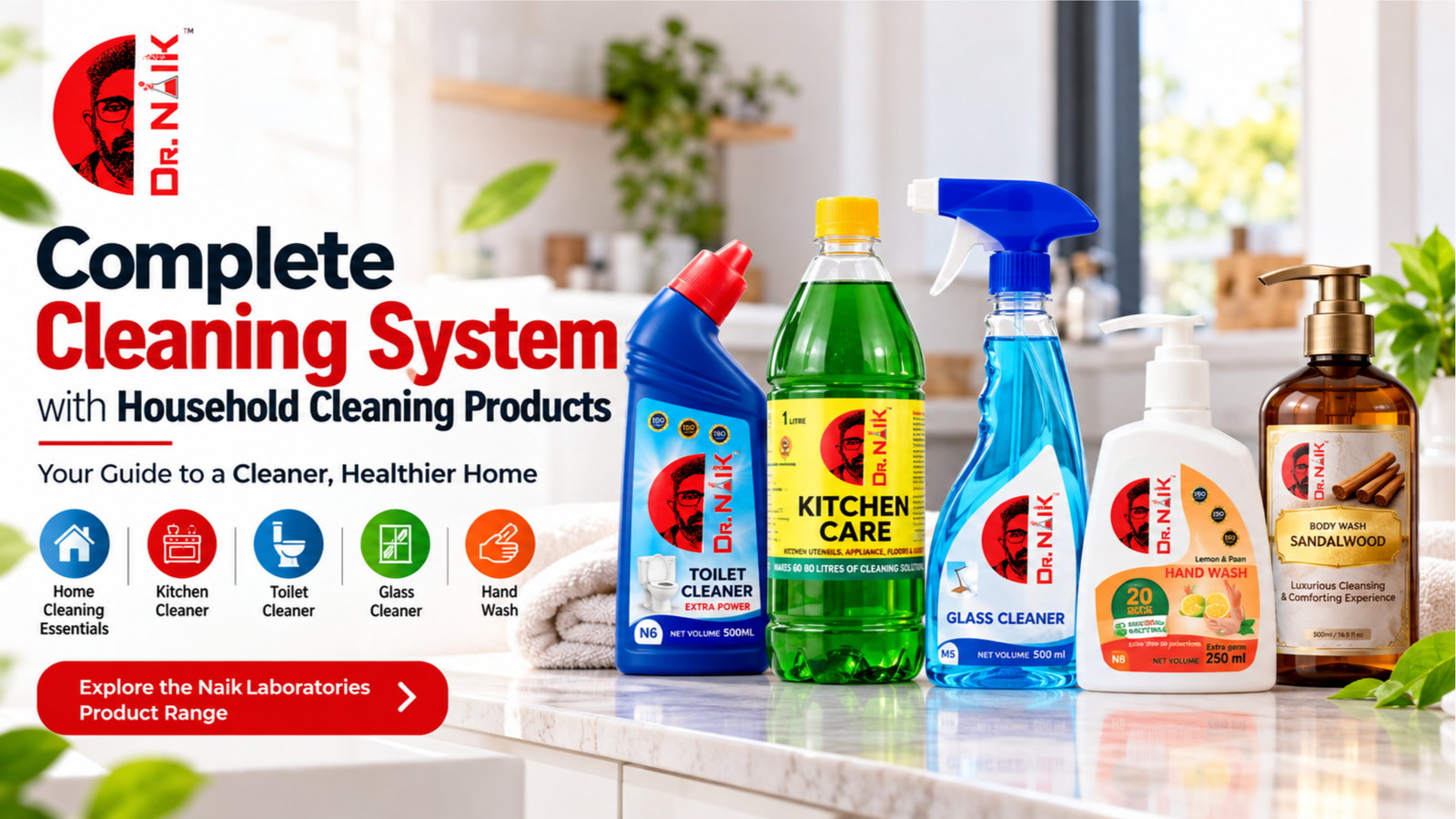
From kitchen cleaner and toilet cleaner to glass cleaner, hand wash, body wash and drain cleaner, each category serves a distinct purpose. Reviewing the available product range can help households and buyers identify the options relevant to their needs.
Naik Laboratories provides a starting point for exploring its cleaning and hygiene offerings. Before choosing a product, review its available product information, intended application, packaging and directions for use.
For distributors, retailers and other commercial buyers, understanding the range of available categories can also support product selection and portfolio planning.
Explore the Naik Laboratories product range and build your complete home-care kit. Choose products according to your household requirements and follow the manufacturer’s guidance for appropriate use.
Conclusion
A clean, organised home depends on matching the right products to the right tasks. Kitchen surfaces, toilet bowls, glass, drains and personal hygiene each have different requirements, so one product should not be expected to perform every function.
By comparing household cleaning products according to intended application, surface compatibility, directions and storage needs, you can build a practical collection that suits your routine.
Start with essential cleaning tasks, add personal hygiene products where needed and consider specialised solutions for specific problems. This approach helps you create a more organised home-care system without purchasing unnecessary products.
Explore Naik Laboratories’ product range to discover available cleaning and hygiene solutions for your home-care requirements.