
Bathroom Hygiene: 9 Essential Areas for a Cleaner, Fresher Bathroom
A clean bathroom is about more than a spotless toilet or shiny floor. Everyday use means that many smaller surfaces can collect dust, moisture, soap residue and everyday grime without immediately looking dirty. That is why a consistent bathroom hygiene routine should cover the entire space rather than focusing on only the most visible areas.
From flush handles and taps to sink edges, mirrors and floor corners, overlooked surfaces can easily become part of the cleaning routine that gets forgotten.
The good news is that maintaining a clean bathroom does not necessarily require an unnecessarily complicated schedule. A practical approach is to identify the areas that need regular attention, choose suitable bathroom cleaning products and follow a simple routine.
Here are nine areas worth including in your regular cleaning checklist.
Why Bathroom Hygiene Matters
Bathrooms experience frequent contact with water, hands, toiletries and cleaning products. Moisture can also remain around sinks, shower areas and corners if surfaces are not dried or cleaned regularly.
Good bathroom hygiene starts with consistency. Instead of waiting until the entire room looks dirty, divide cleaning into smaller tasks that can be completed regularly.
A useful routine should cover:
- Frequently touched surfaces
- Toilet and surrounding areas
- Sink and countertop
- Mirrors and glass
- Taps and fixtures
- Floor edges and corners
- Door and cabinet handles
- Shower areas
- Frequently used accessories
This approach makes bathroom maintenance more manageable and helps keep the space looking fresh between deeper cleaning sessions.
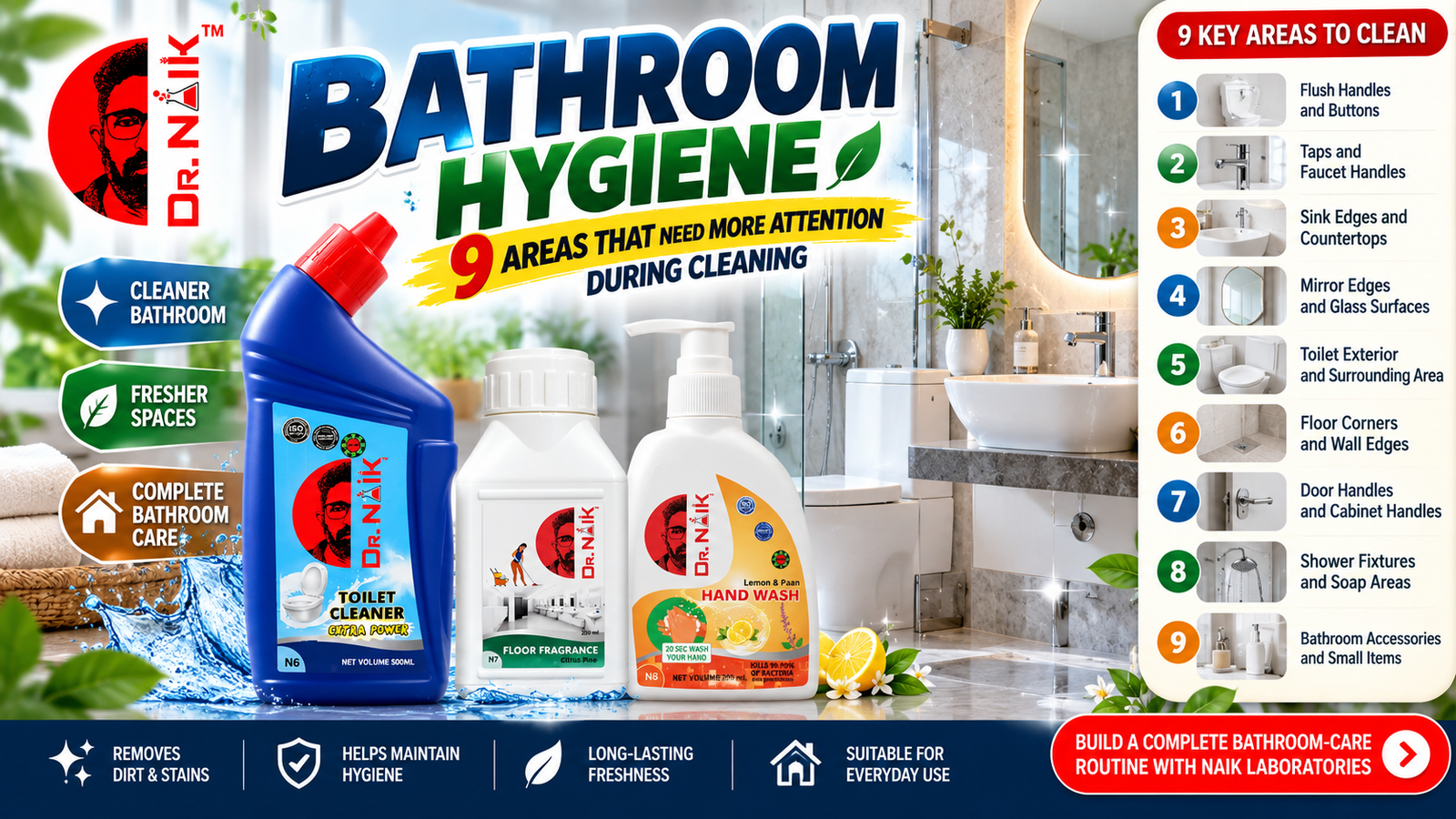
9 Often-Overlooked Areas to Include in Your Cleaning Routine
1. Flush Handles and Buttons
The toilet flush handle or button is one of the most frequently touched parts of a bathroom, yet it is easy to overlook during cleaning.
Include the flush mechanism in your regular cleaning routine. Wipe around the handle, button and surrounding surface with a suitable cleaner and clean cloth.
For shared bathrooms, paying attention to frequently touched surfaces can make the overall bathroom hygiene routine more complete.
2. Taps and Faucet Handles
A shiny faucet can make an immediate difference to the appearance of a bathroom. However, taps can accumulate water spots, soap residue and fingerprints.
Clean the faucet body as well as the handles. Pay attention to the areas around joints and the base where the fixture meets the sink.
After cleaning, drying the surface can help reduce visible water marks and maintain a cleaner appearance.
Tip: Use a product appropriate for the material and always follow the manufacturer’s instructions before applying any cleaning solution.
3. Sink Edges and Countertop Corners
The main sink bowl often receives attention, but the edges surrounding it can be missed.
Look closely around:
- Sink rims
- Countertop edges
- Areas behind the faucet
- Corners near walls
- Spaces around soap dispensers
These areas can collect small amounts of soap residue, water and dust over time.
A regular wipe-down is a simple part of maintaining bathroom cleanliness, particularly in bathrooms that are used several times a day.
4. Mirror Edges and Glass Surfaces
A mirror may look clean from a distance while fingerprints, water spots and dust remain around the edges.
Use a suitable glass-cleaning product and a clean microfiber cloth. Work systematically across the surface rather than repeatedly wiping the same area.
For better results:
- Remove loose dust first.
- Apply the appropriate glass cleaner.
- Wipe using a clean microfiber cloth.
- Pay attention to corners and edges.
- Finish with a dry section of the cloth if required.
Clean mirrors contribute significantly to the overall appearance of a clean bathroom.
5. Toilet Exterior and Surrounding Area
Toilet cleaning should not stop inside the bowl.
Include the exterior surfaces, lid, seat, hinges, base and the surrounding floor area in your routine. Different surfaces may require different cleaning methods, so use suitable bathroom cleaning products according to their directions.
The area immediately around the toilet can also collect dust and moisture, making it important to include this section in regular cleaning.
Good toilet hygiene is therefore part of a broader bathroom-care routine rather than a single cleaning task.
6. Floor Corners and Wall Edges
The centre of the bathroom floor is usually easy to notice, while corners and edges can quietly collect dust, hair and residue.
During floor cleaning, move attention toward:
- Corners
- Behind the toilet
- Around the sink pedestal
- Along wall edges
- Areas underneath bathroom furniture
A small brush can help reach narrow spaces before mopping.
Including these less-visible areas in your routine helps create more consistent bathroom hygiene throughout the room.
7. Door Handles and Cabinet Handles
Door handles, cupboard handles and drawer pulls are frequently touched but are often absent from basic bathroom cleaning checklists.
Add them to your regular wipe-down routine.
Do not forget the inside edge of the bathroom door, especially around the handle and areas that receive frequent hand contact.
If the bathroom is shared by several people, regularly cleaning high-touch surfaces can be particularly useful for maintaining everyday cleanliness.
8. Shower Fixtures and Soap Areas
Shower areas can accumulate soap residue, water spots and product buildup.
Clean the shower fittings, handles, shelves and surrounding surfaces according to the material and manufacturer’s recommendations.
Also inspect areas where shampoo bottles, body wash containers and soap dishes sit. Water trapped underneath containers can leave residue on shelves and countertops.
Keeping these areas dry and organized can make routine bathroom maintenance easier.
9. Bathroom Accessories and Small Items
Small bathroom accessories are easy to forget because they are not permanent fixtures.
Include items such as:
- Soap dishes
- Toothbrush holders
- Small shelves
- Storage trays
- Waste-bin lids
- Toilet-brush holders
- Bathroom organizers
Clean these items according to their material and use. Empty and clean waste bins regularly, and avoid allowing moisture to remain inside containers.
These small details can make a noticeable difference to the overall feel of the room.
How to Build a Simple Bathroom Cleaning Schedule
One of the easiest ways to maintain bathroom hygiene is to divide cleaning tasks by frequency.
Daily or Frequent Tasks
Depending on household use, consider:
- Wiping wet sink surfaces
- Removing visible water from counters
- Keeping toiletries organized
- Checking the toilet area
- Emptying the waste bin when necessary
Weekly Tasks
A weekly routine can include:
- Cleaning the toilet thoroughly
- Cleaning mirrors and glass
- Washing bathroom floors
- Cleaning taps and fixtures
- Wiping handles and frequently touched surfaces
- Cleaning sink edges and countertops
Periodic Deep Cleaning
A deeper cleaning session can cover:
- Floor corners
- Wall edges
- Shower areas
- Cabinet interiors
- Bathroom accessories
- Less-accessible surfaces
The exact frequency depends on household size, bathroom usage, ventilation and the type of surfaces in the room.
Choosing the Right Bathroom Cleaning Products
Using the right product for the right surface is an important part of effective cleaning.
When selecting bathroom cleaning products, consider:
1. Surface Compatibility
A product suitable for one surface may not be appropriate for another. Check the product label and manufacturer’s instructions before use.
2. Cleaning Purpose
Different products can be designed for different cleaning needs, such as toilets, floors, glass or general surfaces.
3. Ease of Use
A practical product should fit naturally into your existing cleaning routine.
4. Instructions and Safety
Always read the directions before use. Avoid mixing different cleaning chemicals unless the product instructions specifically state that it is safe.
Using suitable products correctly is more useful than simply using a larger quantity of cleaner.
Common Bathroom Cleaning Mistakes to Avoid
Even a regular cleaning routine can become less effective when simple mistakes are repeated.
Cleaning Only What Is Visible
A shiny sink does not mean every part of the bathroom has been cleaned. Include edges, handles and corners.
Using the Same Product Everywhere
Different materials may require different products. Always check compatibility.
Ignoring Cleaning Tools
Dirty cloths, brushes and sponges can make cleaning less effective. Wash or replace reusable cleaning tools regularly.
Leaving Surfaces Wet
Where appropriate, drying surfaces after cleaning can help reduce water marks and keep the room looking tidier.
Forgetting High-Touch Areas
Handles, flush buttons and faucet controls should have a place in the regular routine.
Overusing Cleaning Products
More product does not automatically mean better cleaning. Follow the recommended directions and dosage.
Make Bathroom Maintenance Easier With a Simple Routine
The most effective approach to bathroom hygiene is one that is realistic enough to follow consistently.
Instead of treating bathroom cleaning as one large task, break it into smaller activities.
For example:
Daily:
Quickly check the sink, toilet area and visible surfaces.
Weekly:
Clean the toilet, sink, mirrors, floor, taps and frequently touched areas.
Periodically:
Focus on corners, shower fixtures, cabinets, accessories and less-accessible areas.
This simple structure can help prevent small cleaning tasks from becoming a much larger job.
Bathroom Hygiene Is About the Whole Space
A bathroom can appear clean while several small areas still need attention. Flush handles, faucet bases, sink edges, mirror corners, floor edges and door handles can all be forgotten when cleaning is focused only on the most obvious surfaces.
A complete bathroom hygiene routine looks at the room as a whole.
With the right cleaning schedule, suitable products and attention to overlooked areas, maintaining a cleaner bathroom becomes easier and more systematic.
Build a Better Bathroom-Care Routine With Naik Laboratories
A well-planned bathroom-care routine combines regular cleaning with products suited to the surfaces and tasks involved.
Naik Laboratories offers cleaning solutions designed for different cleaning needs, making it easier to build a more organized household-care routine.
From toilet-care tasks to floor and surface cleaning, selecting the appropriate product for each job can help simplify your regular cleaning schedule.
Explore Naik Laboratories solutions and build a complete bathroom-care routine for a cleaner, fresher home.