
Office Glass Cleaning: Powerful Tips for Spotless Windows and Glass Partitions
In modern offices, glass is everywhere. From entrance doors and conference-room partitions to windows, reception areas and interior panels, glass surfaces help create an open and professional environment. However, they also show fingerprints, dust, smudges, water marks and streaks very easily.
That makes office glass cleaning an important part of an effective commercial cleaning routine.
For facility managers, housekeeping teams and office administrators, maintaining clear glass is not simply about appearance. A consistent cleaning process can make routine maintenance easier, improve the presentation of shared spaces and help keep frequently touched surfaces part of an organized workplace-cleaning schedule.
The right commercial glass cleaner, suitable tools and a repeatable process can make a significant difference.
Why Office Glass Cleaning Matters
Glass can quickly become one of the most noticeable surfaces in a workplace.
A glass entrance covered with fingerprints or a conference-room partition marked with smudges can make an otherwise clean office appear poorly maintained. Windows can also collect dust and environmental residue, while frequently touched doors may require more regular attention.
A structured office glass cleaning routine helps housekeeping teams identify which surfaces need daily attention and which can be included in weekly or scheduled maintenance.
Key areas can include:
- Entrance glass doors
- Reception-area glass
- Office windows
- Glass partitions
- Conference-room doors
- Interior glass panels
- Display glass
- Frequently touched glass surfaces
The objective is simple: maintain clear, presentable glass throughout the workplace without making the cleaning process unnecessarily complicated.
Common Problems Found on Office Glass
Before choosing a cleaning method, it helps to understand what is actually making the surface look dirty.
1. Fingerprints and Smudges
Glass doors, handles and partitions are frequently touched throughout the working day. Natural oils from hands can leave visible marks that become more noticeable under office lighting.
2. Dust
Windows and glass partitions can accumulate dust, particularly around frames, corners and edges. If dust is not removed properly before wiping, it can spread across the surface.
3. Water Marks
Glass near washrooms, kitchens or areas exposed to moisture may develop water spots. Regular maintenance can help prevent buildup from becoming more difficult to remove.
4. Cleaning Streaks
Sometimes the surface is clean but still looks untidy because of streaks left behind during cleaning. Excess product, unsuitable cloths or incomplete wiping can contribute to this problem.
5. Greasy Residue
Glass doors around cafeterias, meeting spaces and high-traffic areas can sometimes develop oily or greasy marks.
Understanding these problems makes it easier for housekeeping teams to select the appropriate cleaning process.
How to Create an Effective Office Glass Cleaning Routine
A good cleaning routine should be practical enough for housekeeping teams to follow consistently.
Step 1: Remove Loose Dust First
Before applying a cleaning solution, remove loose dust from the glass and surrounding frame.
A clean microfiber cloth can help lift surface dust without unnecessarily spreading it across the panel.
For larger windows, housekeeping teams should also pay attention to frames, corners and edges.
Step 2: Choose a Suitable Commercial Glass Cleaner
The cleaning product plays an important role in the final result.
A suitable commercial glass cleaner should be selected according to the type of glass surface, workplace requirements and manufacturer’s directions.
For professional environments, the product should be easy for cleaning teams to use consistently and should fit into the organization’s broader cleaning process.
The goal is not simply to use more product. The goal is to use the appropriate amount and follow the recommended application method.
Step 3: Use a Clean Microfiber Cloth
The cleaning cloth can have a major effect on the final appearance.
A microfiber cloth is commonly used for glass because it can help remove dust, fingerprints and residue while reducing unnecessary lint.
Housekeeping teams should avoid using a cloth that is already heavily soiled. A dirty cloth can redistribute residue instead of removing it.
For larger facilities, maintaining a proper supply of clean cleaning cloths can make routine office glass cleaning more efficient.
Step 4: Work in an Organized Pattern
Avoid randomly wiping the surface.
Instead, use a consistent pattern such as:
Top → Middle → Bottom
or
Left → Right
A systematic approach makes it easier to see which areas have already been cleaned and reduces the chance of leaving untreated sections behind.
Step 5: Pay Attention to High-Touch Areas
Not every glass surface needs the same cleaning frequency.
Entrance doors, conference-room doors and frequently handled partitions may need more regular attention than glass panels in low-traffic areas.
Facility teams can identify high-touch surfaces and include them in their daily workplace-cleaning schedule.
This is where office glass cleaning becomes part of a broader facility-maintenance strategy rather than an occasional task.
Office Windows Need a Consistent Schedule
Windows are among the most visible glass surfaces in an office.
A good office window cleaning schedule should consider:
- Building location
- Outdoor dust levels
- Traffic and environmental exposure
- Window accessibility
- Office usage
- Seasonal conditions
- Overall facility requirements
Interior glass may require frequent cleaning in busy offices, while exterior windows may follow a separate maintenance schedule.
The important point is consistency.
Instead of waiting until windows become visibly dirty, facility managers can establish planned cleaning intervals and adjust them according to actual workplace conditions.
Cleaning Glass Partitions Without Leaving Streaks
Glass partitions are popular in modern offices because they allow natural light to move through workspaces while maintaining separation between areas.
However, their large surface area makes fingerprints and streaks particularly visible.
For effective maintenance:
- Remove loose dust.
- Apply the appropriate glass-cleaning solution according to its instructions.
- Wipe using a clean microfiber cloth.
- Work systematically across the panel.
- Check the glass from different angles under office lighting.
- Re-clean visible marks where necessary.
Good glass maintenance also means keeping frames, edges and surrounding surfaces clean.
A spotless center panel can still look unfinished if fingerprints and dust remain around the edges.
How to Reduce Streaks on Office Glass
Achieving streak free glass is usually more about technique and consistency than simply using a large amount of cleaning solution.
Here are some practical considerations:
Avoid Overusing Product
Applying excessive product can leave unnecessary residue.
Use the amount recommended for the particular product and surface.
Use Clean Cloths
A cloth carrying old residue can leave marks behind even after the glass has been wiped.
Don’t Ignore Edges
Liquid can accumulate around the edges of glass and frames. Wiping these areas properly helps create a more complete finish.
Check Under Different Lighting
A surface may look clean from one angle but reveal streaks when viewed against sunlight or overhead office lights.
A final visual inspection should therefore be part of the cleaning process.
Office Glass Cleaning Tips for Facility Managers
Facility managers can make glass maintenance more efficient by establishing simple procedures for housekeeping teams.
Create a Surface List
Identify all major glass areas in the building.
For example:
- Main entrance
- Reception
- Meeting rooms
- Executive offices
- Glass partitions
- Cafeteria areas
- Internal doors
- Windows
Assign Cleaning Frequencies
Not every surface needs identical treatment.
High-traffic areas may require daily attention, while other areas can be maintained according to a weekly or periodic schedule.
Keep Supplies Organized
Cleaning teams should have easy access to:
- Appropriate glass-cleaning solution
- Clean microfiber cloths
- Suitable cleaning tools
- Gloves and other required protective equipment
- Waste collection supplies
Follow Product Instructions
Different cleaning products may have different application requirements. Staff should always follow the manufacturer’s label and safety instructions.
Why the Right Commercial Glass Cleaner Matters
Choosing the right commercial glass cleaner can simplify routine maintenance.
In professional environments, cleaning teams often need products that fit into a broader facility-cleaning system covering multiple areas.
A dedicated glass-cleaning product can be incorporated into scheduled maintenance for:
- Office windows
- Glass doors
- Glass partitions
- Reception areas
- Meeting rooms
- Display surfaces
The product should be selected according to the surface, cleaning requirement and manufacturer’s directions rather than simply choosing a product based on fragrance or packaging.
Common Mistakes to Avoid
Even experienced cleaning teams can encounter problems when glass maintenance is not standardized.
Cleaning With a Dirty Cloth
This can spread residue across the surface.
Using Too Much Product
More cleaning solution does not automatically mean better cleaning.
Ignoring Frames
Dust and residue around frames can make otherwise clean glass appear unfinished.
Cleaning Only Visible Areas
High-touch surfaces such as handles and door sections can require more frequent attention.
Using One Cloth for Multiple Tasks
Separate or properly managed cloths can help reduce cross-contamination of dirt between different cleaning tasks.
Skipping Final Inspection
A quick inspection under different lighting can reveal streaks or missed fingerprints.
Building Glass Maintenance Into Office Cleaning
Office glass cleaning works best when it is integrated into the wider workplace cleaning plan.
Rather than treating glass as a separate occasional task, housekeeping managers can include it in daily, weekly and periodic cleaning schedules.
Daily
Focus on:
- Entrance doors
- Frequently touched glass
- Reception areas
- Meeting-room doors
- Visible fingerprints and smudges
Weekly
Include:
- Glass partitions
- Internal windows
- Less frequently touched panels
- Frames and edges
Periodically
Depending on the facility:
- Detailed window maintenance
- Hard-to-reach glass
- Exterior window cleaning
- Frame and surrounding-area cleaning
The exact schedule should be adapted to the building’s traffic, environment and operational requirements.
Creating a Professional Workplace Appearance
Clean glass contributes to the overall visual presentation of a commercial property.
When windows are clear and partitions are properly maintained, offices can appear more organized and professionally managed.
This is particularly important for:
- Corporate offices
- Business centres
- Hotels
- Educational facilities
- Retail environments
- Healthcare and professional buildings
- Commercial complexes
For facility managers, maintaining glass should therefore be viewed as one component of an organized commercial cleaning program.
Choosing Cleaning Solutions for Your Facility
Every workplace has different cleaning requirements.
Before selecting products, facility managers should consider:
- Types of glass surfaces
- Size of the facility
- Cleaning frequency
- Traffic levels
- Available housekeeping staff
- Required cleaning equipment
- Product usage instructions
- Storage and handling requirements
A practical cleaning program combines the right products with appropriate tools, trained staff and a consistent schedule.
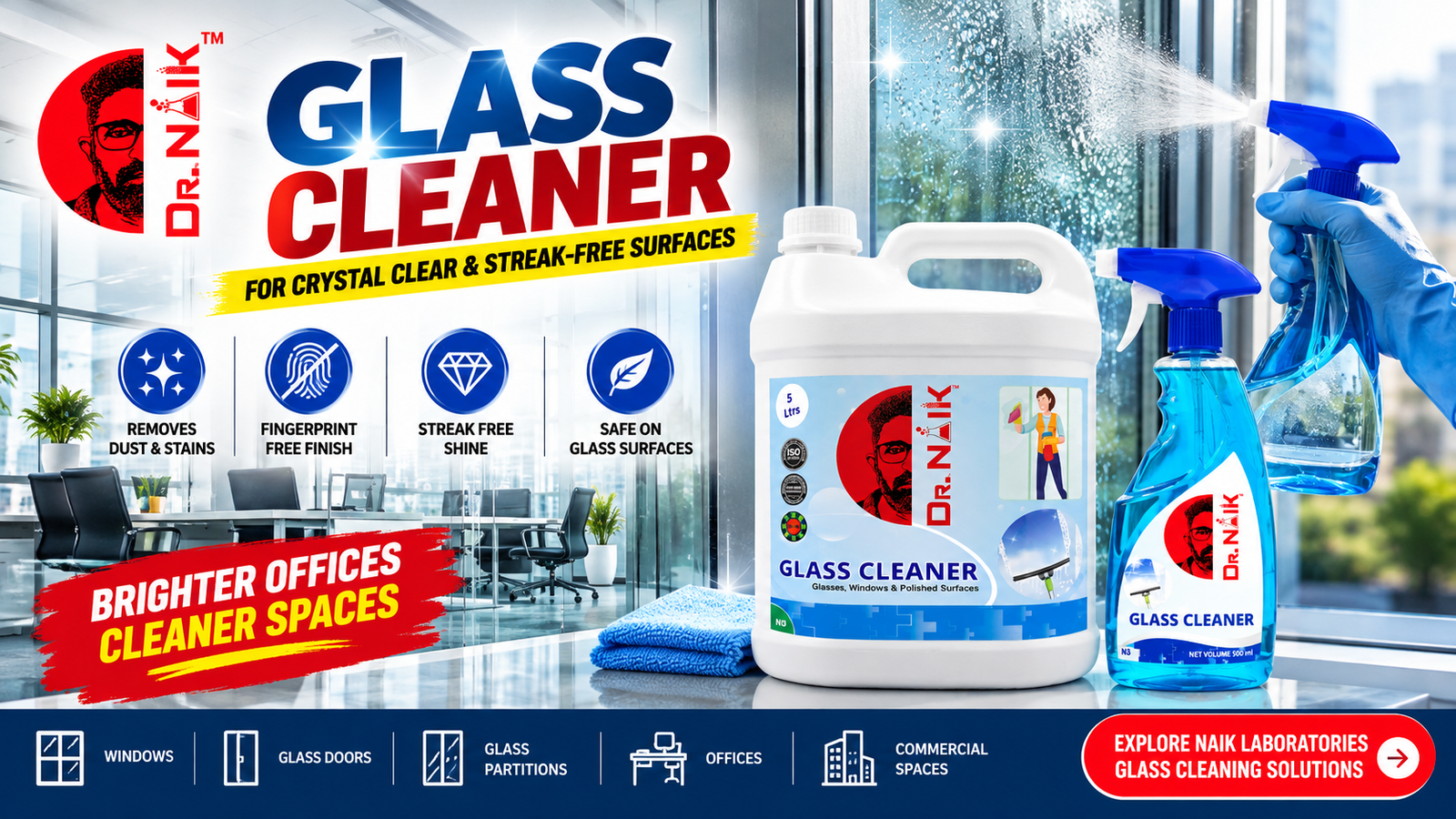
For offices looking to simplify routine maintenance, Naik Laboratories offers cleaning solutions designed for different cleaning requirements.
Conclusion
Maintaining clean windows, doors and glass partitions does not have to be complicated. A consistent process, appropriate cleaning products, clean microfiber cloths and regular inspections can make routine maintenance more manageable.
For facility managers and housekeeping teams, office glass cleaning should be included as a planned part of the wider commercial cleaning program.
From entrance doors to conference-room partitions, keeping glass surfaces clear and well maintained helps create a more polished workplace environment.
Looking for professional cleaning solutions for your facility? Explore Naik Laboratories glass-cleaning solutions and build a more consistent commercial cleaning routine.