
Kitchen Drain Cleaning: Powerful Tips for a Cleaner Sink and Fresher Kitchen
The kitchen sink is one of the busiest areas in any home. From washing dishes and rinsing ingredients to handling everyday food preparation, the sink and its drain are exposed to water, food particles, grease and other residues throughout the day.
Over time, this buildup can affect drainage and contribute to an unpleasant drain odour. A slow-flowing or clogged kitchen sink can also make everyday kitchen work inconvenient.
The good news is that regular kitchen drain cleaning does not have to be complicated. A simple maintenance routine, combined with the right cleaning approach, can help keep the sink area cleaner and make drainage problems easier to manage.
This guide explains practical ways to maintain your kitchen drain and introduces two product formats from Naik Laboratories: Drain Cleaner Powder and Drain Cleaner Liquid.
Why Kitchen Drain Maintenance Matters
A kitchen drain continuously handles water and material washed away from the sink. Even when the drain appears to be working normally, small amounts of residue can accumulate over time.
Common contributors include:
- Food particles
- Grease and oily residue
- Soap or cleaning residue
- Fine debris
- Organic material washed into the sink
- General buildup around the drain opening
When these materials accumulate, water may begin draining more slowly. In some cases, unpleasant smells can also develop.
Regular drain maintenance helps you pay attention to the drain before a minor issue becomes a more inconvenient blockage.
Signs Your Kitchen Drain Needs Attention
You don’t always have to wait until the sink becomes completely blocked.
Watch for these common signs:
1. Slow Drainage
If water takes noticeably longer to disappear from the sink, there may be buildup inside the drainage system.
2. Unpleasant Drain Odour
A persistent smell coming from the drain can indicate accumulated residue that needs attention.
3. Water Pooling Around the Drain
Water that remains around the drain after normal use may indicate restricted flow.
4. Recurring Drain Problems
If the same drainage issue keeps returning, it may be time to review your regular maintenance routine.
5. A Clogged Kitchen Sink
A sink that stops draining properly requires more immediate attention. Avoid continuing to pour additional material into the drain while the blockage remains.
How to Keep a Clean Kitchen Drain
A clean sink starts with simple everyday habits.
Step 1: Remove Food Particles
Avoid allowing food scraps to enter the drain whenever possible.
Use a suitable sink strainer to catch larger particles before they enter the drainage system. Empty the strainer regularly instead of allowing collected material to remain in the sink.
This is one of the easiest habits you can add to your kitchen routine.
Step 2: Don’t Pour Excess Grease Into the Sink
Grease and oily residues can contribute to buildup inside drainage systems.
Instead of deliberately pouring cooking oil or large amounts of grease down the sink, collect it appropriately and dispose of it according to local waste-disposal practices.
Reducing unnecessary grease entering the drain can make ongoing maintenance easier.
Step 3: Rinse the Sink After Use
After washing dishes or preparing food, rinse the sink area thoroughly.
Pay attention to the area around the drain opening, where small particles can remain.
This simple habit helps keep the visible sink area cleaner and reduces the amount of residue left around the drain.
Step 4: Inspect the Drain Regularly
Make drain inspection part of your normal kitchen-cleaning routine.
Check for:
- Visible food particles
- Accumulated residue
- Slow water flow
- Unusual odours
- Water pooling
Early attention is generally easier than dealing with a heavily blocked drain later.
Sink Drain Cleaning: When Should You Do It?
There isn’t one universal schedule that works for every household.
The appropriate frequency can depend on factors such as:
- Number of people using the kitchen
- Frequency of cooking
- Amount of food preparation
- Amount of grease or oily residue handled
- Existing drainage performance
- General kitchen-cleaning habits
Instead of waiting for a major blockage, include sink drain cleaning in your regular kitchen-maintenance plan.
A simple inspection and maintenance routine can help you identify changes before they become disruptive.
Choosing the Right Drain Cleaner
When routine maintenance is not enough, a dedicated drain-cleaning product can be useful.
There are different product formats available, including powders and liquids. Each should be used strictly according to the manufacturer’s instructions.
When choosing a drain cleaner, consider:
Product Format
Some users prefer a powder format, while others may find a liquid format more convenient for their cleaning routine.
Intended Application
Check the product label to understand where and how the product is intended to be used.
Instructions
Always follow the recommended quantity, contact time and safety instructions provided on the packaging.
Compatibility
Check whether the product is suitable for your particular drainage system and application before use.
Drain Cleaner Powder vs Drain Cleaner Liquid
Naik Laboratories offers both Drain Cleaner Powder and Drain Cleaner Liquid, giving users different formats for their drain-maintenance needs.
Drain Cleaner Powder
A powder-format drain cleaner can be considered when you prefer a dry product format for your cleaning routine.
Before use, always read the product label and follow the manufacturer’s directions regarding application, quantity and handling.
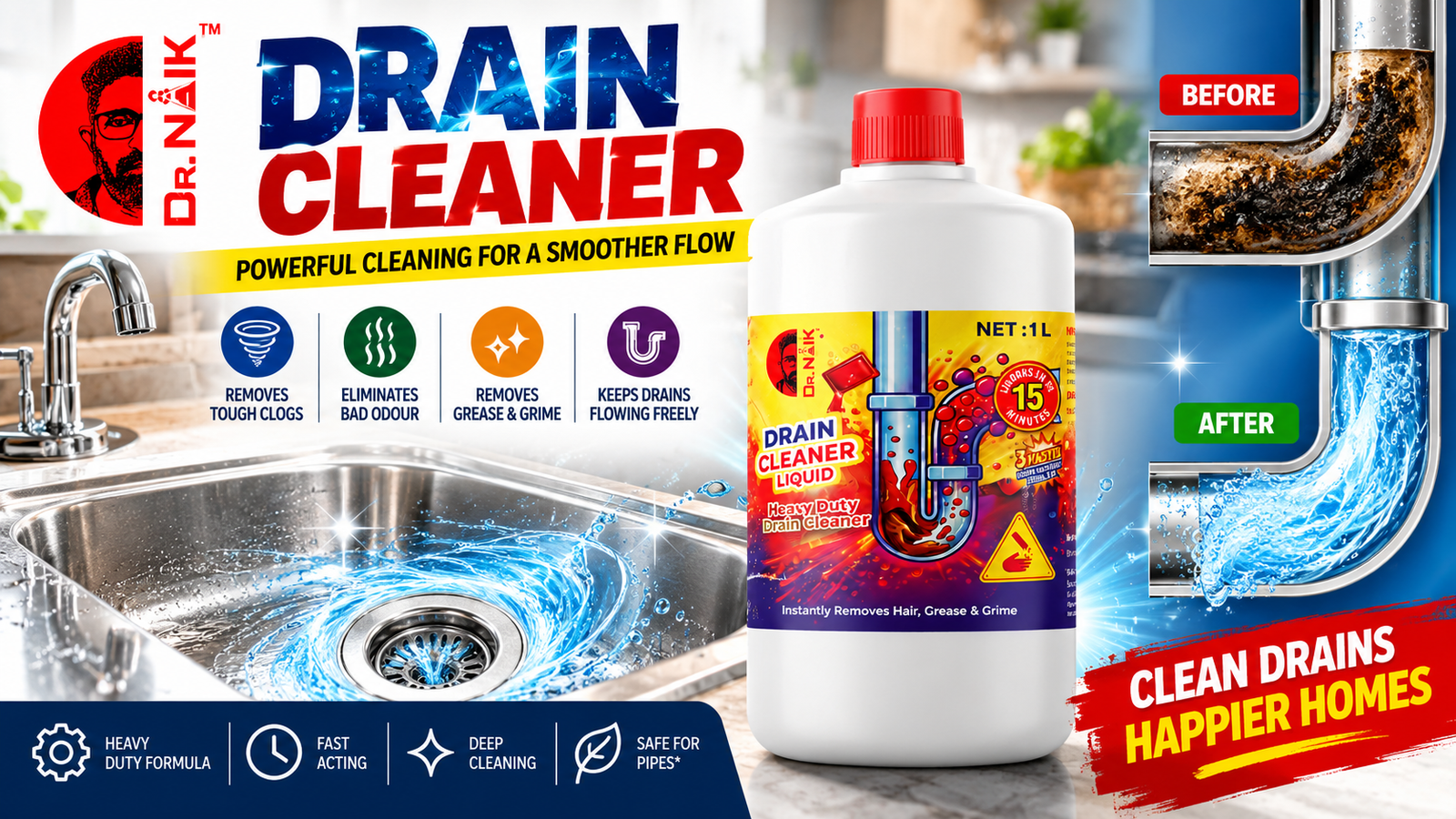
Drain Cleaner Liquid
A liquid-format drain cleaner provides another option for households looking for a ready-to-use liquid cleaning format.
Naik Laboratories’ Drain Cleaner Liquid can be considered as part of a practical drain-maintenance routine, subject to the product’s specific instructions.
The important point is to select the format that suits your requirements and use it exactly as directed.
Important Safety Practices
Drain-cleaning products should always be handled responsibly.
Never Mix Different Cleaning Products
Do not mix drain cleaners with other cleaning chemicals unless the manufacturer specifically states that doing so is safe.
Mixing cleaning chemicals can create dangerous reactions.
Read the Label
Before using any drain-cleaning product, carefully read the manufacturer’s instructions, warnings and recommended application method.
Keep Products Away From Children
Store drain-cleaning products securely and away from children and pets.
Use Appropriate Protection
Follow the product label regarding recommended protective measures during handling.
Use the Recommended Quantity
More product does not automatically mean better cleaning. Follow the quantity specified by the manufacturer.
How to Deal With Drain Odour
A persistent drain odour can make an otherwise clean kitchen feel less pleasant.
Start by checking simple causes:
- Food particles around the drain
- Residue inside or around the drain opening
- Standing water
- Poor drain maintenance
- Accumulated grease or organic material
Regularly removing visible debris and maintaining the drain can help keep the area fresher.
If an odour continues despite routine cleaning, investigate whether there is a deeper plumbing issue. Persistent drainage problems may require professional plumbing assistance rather than repeated use of cleaning products.
Common Kitchen Drain Cleaning Mistakes
Even a regular cleaning routine can become ineffective if certain habits are overlooked.
Pouring Food Waste Into the Drain
Food scraps should not routinely be washed directly into the sink.
Ignoring Slow Drainage
A slow drain can be an early indication of buildup. Don’t wait until water stops flowing completely before addressing it.
Pouring Large Amounts of Grease Into the Sink
This can contribute to residue and buildup within the drainage system.
Mixing Chemicals
Never combine different drain cleaners or household chemicals unless specifically permitted by the manufacturer.
Using Products Without Reading Instructions
Different products can have different application methods. Always follow the label.
Using Excessive Product
Use only the recommended amount. More is not necessarily better.
A Simple Kitchen Drain Maintenance Checklist
Use this checklist as part of your regular kitchen routine:
| Task | Recommended Habit |
|---|---|
| Remove food particles | Before they enter the drain |
| Use a sink strainer | Check and empty regularly |
| Avoid pouring grease | Dispose of it appropriately |
| Rinse the sink | After regular kitchen use |
| Check drainage | Look for slower-than-normal flow |
| Check for odour | Investigate persistent smells |
| Maintain the drain | Follow an appropriate routine |
| Use drain cleaner | Follow the product instructions |
| Never mix chemicals | Keep cleaning products separate |
| Inspect recurring problems | Contact a professional if necessary |
When a Professional Plumber May Be Needed
Cleaning products and regular maintenance can be useful for routine care, but not every drainage problem is a cleaning issue.
Consider professional plumbing assistance when:
- The blockage is severe
- Water repeatedly backs up
- The problem returns frequently
- Multiple drains are affected
- There is a suspected pipe problem
- Drainage remains poor despite appropriate maintenance
A professional can determine whether the problem is related to the plumbing system rather than surface-level buildup.
Make Drain Maintenance Part of Your Kitchen Routine
The most effective approach to maintaining a kitchen drain is consistency.
Rather than waiting for a completely blocked sink, develop simple habits:
Prevent → Inspect → Clean → Maintain
Prevent unnecessary food and grease from entering the drain. Inspect the sink regularly. Clean the drain when required. Maintain it according to your household’s needs and the instructions for any products you use.
This approach can make kitchen maintenance more manageable and help you identify drainage issues earlier.
Naik Laboratories Drain Cleaning Solutions
Naik Laboratories provides drain-cleaning options for households looking to incorporate dedicated products into their kitchen-maintenance routine.
The range includes:
Drain Cleaner Powder
A powder-format option for drain-cleaning applications, to be used according to the product’s instructions.
Drain Cleaner Liquid
A liquid-format option designed for convenient drain-cleaning applications, subject to the manufacturer’s recommended usage.
When selecting between the two formats, consider your cleaning routine, preferred product format and the specific instructions provided on the packaging.
Conclusion
Maintaining a kitchen drain doesn’t require a complicated routine. Simple habits such as keeping food particles out of the drain, avoiding excess grease, checking drainage regularly and responding to early signs of buildup can make everyday kitchen maintenance easier.
Regular kitchen drain cleaning, combined with appropriate product use and good sink habits, can help you maintain a cleaner and more manageable kitchen environment.
If you experience persistent blockages or recurring drainage problems, remember that professional plumbing support may be more appropriate than repeatedly using cleaning products.
Keep Your Kitchen Drains Cleaner
Explore Naik Laboratories drain cleaning solutions and choose the format that fits your kitchen-maintenance routine.