
Commercial Kitchen Cleaning: Complete Hygiene Checklist for Restaurants
A professional kitchen is one of the busiest areas in any restaurant, hotel, café, catering facility or food-service business. Every day, food preparation creates grease, spills, food residue, water deposits and waste that can accumulate across work surfaces, equipment and floors.
That is why commercial kitchen cleaning needs to be approached as a structured routine rather than an occasional deep-cleaning activity.
A well-organized cleaning program helps housekeeping and kitchen teams maintain a more orderly working environment while making cleaning responsibilities easier to manage. From preparation counters and cooking equipment to sinks, drains and frequently touched surfaces, every area should have a defined cleaning schedule.
This complete guide explains how restaurants and food-service businesses can organize commercial kitchen cleaning, create a practical kitchen cleaning checklist and select appropriate cleaning solutions for different areas.
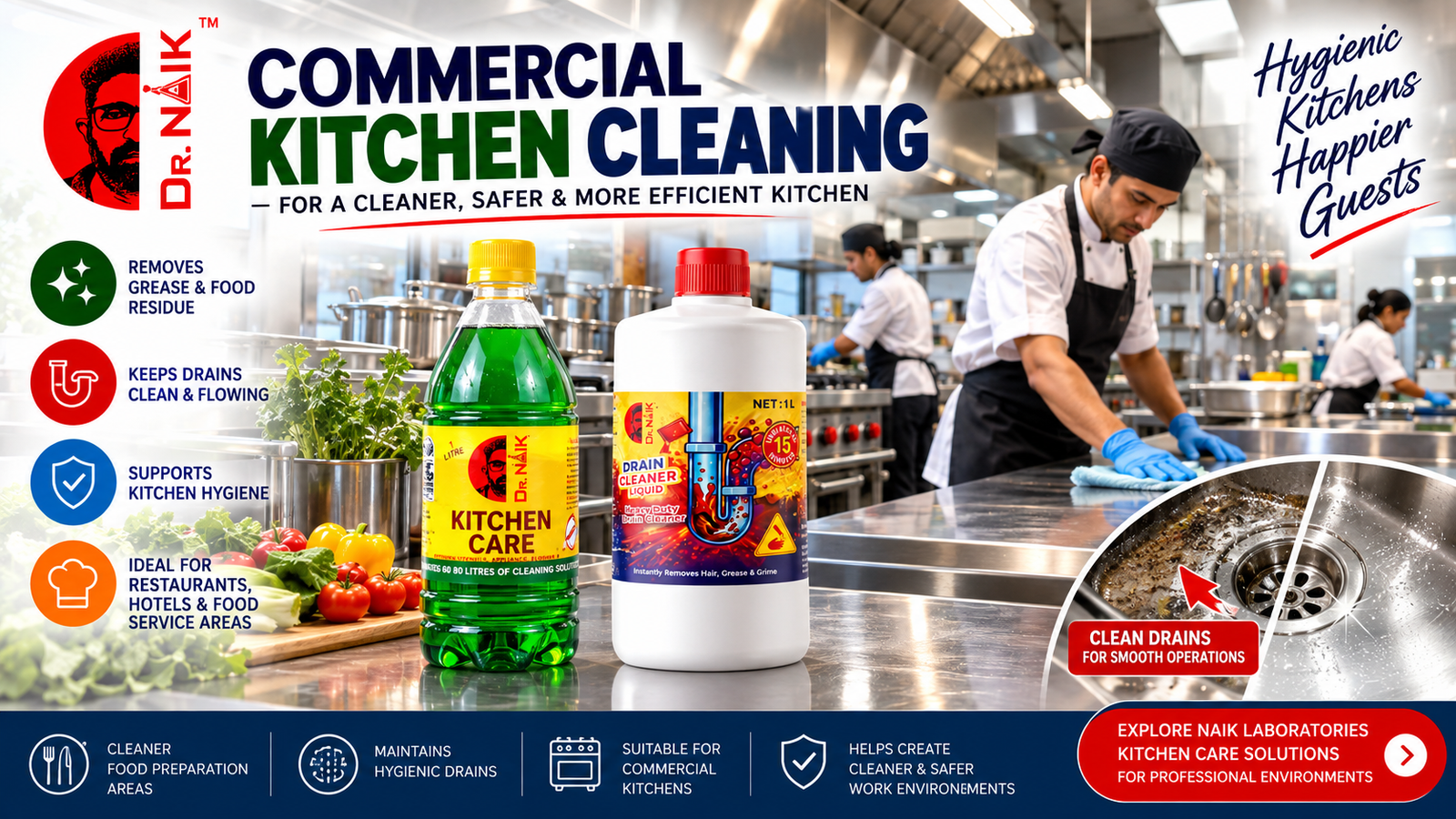
Why Commercial Kitchen Cleaning Matters
Professional kitchens operate under demanding conditions. Multiple employees may work in the same space while ingredients, utensils, cooking equipment and packaging move throughout the day.
Without a consistent cleaning routine, residue can build up in areas that are difficult to notice during busy service periods.
A structured commercial kitchen cleaning program can help teams:
- Maintain cleaner food-preparation areas
- Manage grease and food residue
- Keep frequently touched surfaces cleaner
- Organize cleaning responsibilities
- Reduce the buildup of dirt in difficult areas
- Maintain a more professional working environment
- Support consistent housekeeping procedures
The objective is not simply to make the kitchen look clean. The goal is to establish repeatable cleaning practices across the entire food-service environment.
Commercial Kitchen Cleaning Checklist
A practical checklist makes it easier for managers and staff to divide cleaning tasks into daily, weekly and periodic activities.
The exact frequency should depend on the kitchen’s workload, equipment, operating schedule and internal procedures.
1. Clean Food-Preparation Surfaces
Preparation counters are among the most frequently used areas in a professional kitchen.
At appropriate intervals, teams should clean surfaces used for food preparation, including:
- Worktables
- Preparation counters
- Cutting-area surfaces
- Shelving
- Counter edges
- Frequently touched preparation areas
Remove visible food residue first and then use a suitable cleaning product according to its instructions and the surface manufacturer’s recommendations.
Good commercial kitchen cleaning starts with keeping food-preparation areas organized and consistently maintained.
2. Maintain Cooking Equipment
Cooking equipment can collect grease, oil and food residue throughout the working day.
Depending on the equipment and manufacturer’s instructions, cleaning routines may include:
- Stovetops
- Cooking ranges
- Exterior equipment surfaces
- Control panels
- Handles
- Surrounding areas
- Other accessible cooking surfaces
Heavy-use equipment may require cleaning more frequently than less-used equipment.
Staff should always follow the equipment manufacturer’s instructions before applying any cleaning product.
3. Pay Attention to Floors
Kitchen floors experience constant traffic and can collect food particles, grease, water and dirt.
A useful commercial kitchen cleaning routine should include regular sweeping or removal of loose debris followed by appropriate floor cleaning.
Extra attention should be given to:
- Corners
- Areas underneath equipment
- Around preparation counters
- Near sinks
- Around waste-collection points
- High-traffic pathways
Keeping the floor-cleaning process consistent helps maintain a more organized working environment.
4. Clean Sinks and Washing Areas
Sinks are central to many food-service operations and should be included in every kitchen cleaning checklist.
Clean and inspect:
- Sink basins
- Faucets and handles
- Surrounding counters
- Splash areas
- Drain openings
- Areas underneath the sink
Water, food particles and residue can collect around sink areas, making them important parts of commercial kitchen hygiene.
Where a drain-cleaning product is required, select an appropriate solution and follow the product label and safety instructions carefully. Never mix different chemical products unless the manufacturer specifically states that they are compatible.
5. Include Drains in the Routine
Drains are easy to overlook because they are not always visible during normal kitchen operations.
However, they should have a defined place in the kitchen cleaning schedule.
A drain-maintenance routine can include:
- Checking visible drain areas
- Removing accessible debris safely
- Cleaning surrounding surfaces
- Following an appropriate drain-cleaning schedule
- Using suitable drain-cleaning products according to their instructions
For professional food-service environments, drain care should be treated as part of the overall commercial kitchen cleaning system rather than as a task performed only when a problem becomes noticeable.
6. Clean Refrigerator and Storage Areas
Food-storage areas also require regular attention.
Depending on the facility’s procedures, teams should include:
- Refrigerator handles
- Exterior surfaces
- Storage shelves
- Cabinet handles
- Door edges
- Accessible storage surfaces
Spills should be addressed promptly, while periodic cleaning can help keep storage areas organized.
Always follow equipment and food-storage requirements when cleaning areas that come into contact with food or food packaging.
7. Keep Frequently Touched Surfaces Clean
Some surfaces receive repeated contact throughout the day.
Examples include:
- Door handles
- Refrigerator handles
- Equipment handles
- Switches
- Drawer pulls
- Faucet handles
- Cabinet handles
Including these areas in a regular restaurant cleaning schedule prevents them from being forgotten while staff concentrate on larger surfaces.
A simple checklist can assign responsibility for these high-contact areas to specific team members or shifts.
8. Clean Glass and Transparent Surfaces
Commercial kitchens may also contain glass doors, windows, display panels or other transparent surfaces.
Dust, fingerprints, water spots and cooking residue can make these areas appear dull.
A suitable glass-cleaning solution can be used according to the product instructions and the surface requirements.
Adding glass surfaces to the commercial kitchen cleaning checklist helps maintain a more professional appearance throughout the facility.
9. Manage Waste Areas
Waste-management areas need their own cleaning routine.
Staff should pay attention to:
- Waste bins
- Bin lids
- Surrounding floors
- Waste-collection points
- Areas where food waste may accumulate
Bins should be emptied according to the facility’s operating procedures, while surrounding areas should be cleaned whenever spills or visible residue occur.
Waste-area maintenance is an important part of broader kitchen sanitation practices.
10. Clean Walls, Backsplashes and Hard-to-Reach Areas
Grease and cooking residue can gradually settle on walls, backsplashes and surfaces surrounding cooking equipment.
During routine commercial kitchen cleaning, staff should inspect:
- Backsplashes
- Wall sections behind cooking areas
- Corners
- Edges behind equipment
- Lower wall areas
- Areas around ventilation and cooking zones
The frequency of cleaning should reflect the kitchen’s cooking volume and the type of food preparation taking place.
Daily vs. Weekly Kitchen Cleaning
Not every task needs to be performed at the same frequency.
Creating separate daily and weekly checklists can make the process easier for restaurant teams.
Daily Cleaning Tasks
A typical daily routine may include:
- Food-preparation surfaces
- Cooking-area surfaces
- Frequently touched handles
- Sinks and surrounding areas
- Floors
- Waste areas
- Visible spills and residue
- Frequently used equipment exteriors
Weekly Cleaning Tasks
Depending on the kitchen setup, weekly tasks may include:
- Deeper cleaning of storage areas
- Hard-to-reach surfaces
- Wall and backsplash cleaning
- Detailed equipment cleaning
- Less frequently used areas
- More thorough drain-area maintenance
The exact schedule should be customized according to the facility’s operating procedures and equipment requirements.
Choosing Cleaning Products for Professional Kitchens
Selecting cleaning supplies should be based on the surface, type of residue, frequency of use and manufacturer’s recommendations.
Instead of choosing one product for every task, professional kitchens can organize their supplies by cleaning requirement.
For example:
Kitchen cleaner:
Useful for appropriate kitchen surfaces where a dedicated kitchen-cleaning product is required.
Drain cleaner:
Used for appropriate drain-maintenance applications according to the product label and safety instructions.
Glass cleaner:
Suitable for appropriate glass surfaces such as doors, windows and display areas.
Hand wash:
Useful for handwashing stations as part of everyday workplace hygiene procedures.
This approach makes commercial kitchen cleaning more organized because employees know which type of cleaning solution belongs to each task.
Create a Kitchen Cleaning Checklist for Every Shift
A written kitchen cleaning checklist can improve consistency across different shifts.
A simple checklist can include:
| Area | Task | Frequency | Assigned To | Completed |
|---|---|---|---|---|
| Preparation Area | Clean work surfaces | Daily | Staff | ☐ |
| Cooking Area | Clean accessible surfaces | Daily | Staff | ☐ |
| Sink Area | Clean sink and surroundings | Daily | Staff | ☐ |
| Floors | Sweep and clean | Daily | Staff | ☐ |
| Waste Area | Clean bins and surrounding area | Daily | Staff | ☐ |
| Drains | Follow maintenance schedule | Routine | Assigned Staff | ☐ |
| Storage | Clean accessible surfaces | Weekly | Staff | ☐ |
| Walls/Backsplash | Remove accumulated residue | Weekly | Staff | ☐ |
| Glass | Clean appropriate surfaces | Routine | Staff | ☐ |
Managers can adapt this checklist according to the size and operating requirements of the facility.
Common Commercial Kitchen Cleaning Mistakes
Even when a restaurant has cleaning products available, inconsistent processes can reduce the effectiveness of the overall routine.
Using One Product for Every Surface
Different surfaces and cleaning requirements may require different products. Always check the intended use and instructions.
Ignoring Hard-to-Reach Areas
Areas behind equipment, around drains and underneath counters can easily be missed.
Cleaning Only at Closing
Some tasks should be performed during operations when spills or visible residue occur rather than waiting until the end of the day.
Not Following Product Instructions
Dilution, application method, contact time and surface compatibility can vary between products. Staff should follow the manufacturer’s instructions.
Mixing Cleaning Chemicals
Cleaning products should not be mixed unless the manufacturer specifically confirms compatibility.
Forgetting the Cleaning Equipment
Mops, brushes, cloths, buckets and other cleaning tools also need proper maintenance and storage.
Build a Better Commercial Kitchen Hygiene Routine
Effective commercial kitchen hygiene depends on more than the products stored inside a cleaning cupboard.
It requires three elements working together:
Right Product + Right Surface + Right Routine
When staff understand which product should be used, where it should be used and how frequently the task should be completed, cleaning becomes easier to organize.
Restaurant managers can also review their checklist regularly and update it when equipment, kitchen layouts, operating hours or cleaning requirements change.
How Naik Laboratories Can Support Professional Kitchen Care
For restaurants, hotels, catering businesses and other food-service environments, having a structured range of cleaning solutions can simplify routine maintenance.
Naik Laboratories offers cleaning solutions that can be considered for different areas of professional environments, including kitchen-care and drain-care requirements.
The focus should always remain on selecting the appropriate product for the intended application and following its usage and safety instructions.
Whether your facility requires routine surface cleaning, kitchen-care solutions or drain-maintenance products, an organized supply system can make day-to-day commercial kitchen cleaning easier to manage.
Conclusion
A professional kitchen requires a cleaning system that is practical, consistent and easy for staff to follow.
From preparation counters and cooking equipment to sinks, drains, floors, storage areas and frequently touched surfaces, every part of the kitchen should have a defined place in the cleaning schedule.
A clear commercial kitchen cleaning checklist helps teams understand what needs to be cleaned, how frequently tasks should be completed and who is responsible for each activity.
For restaurants and food-service businesses, the next step is to review the current cleaning routine, identify overlooked areas and select suitable cleaning solutions for each application.
Make professional kitchen care more organized with the right cleaning routine and suitable cleaning solutions.
Explore Naik Laboratories kitchen-care solutions for professional environments.