
Hotel Cleaning Products: Essential Solutions for Modern Housekeeping Teams
In the hospitality industry, cleanliness is an important part of the overall guest experience. From hotel rooms and bathrooms to restaurants, reception areas and frequently touched surfaces, housekeeping teams manage a wide range of cleaning requirements every day.
Choosing suitable hotel cleaning products can help housekeeping departments organize their cleaning routines according to different surfaces, areas and operational needs. Instead of relying on one general-purpose solution for every task, hotels can build a practical cleaning system that includes dedicated solutions for bathrooms, kitchens, glass surfaces, hand hygiene and everyday maintenance.
For hotels, resorts, restaurants and other hospitality businesses, the right cleaning approach is not only about keeping visible areas clean. It is also about creating consistent processes that housekeeping teams can follow efficiently.
This guide explains the major cleaning categories hospitality businesses should consider when building a professional housekeeping setup.
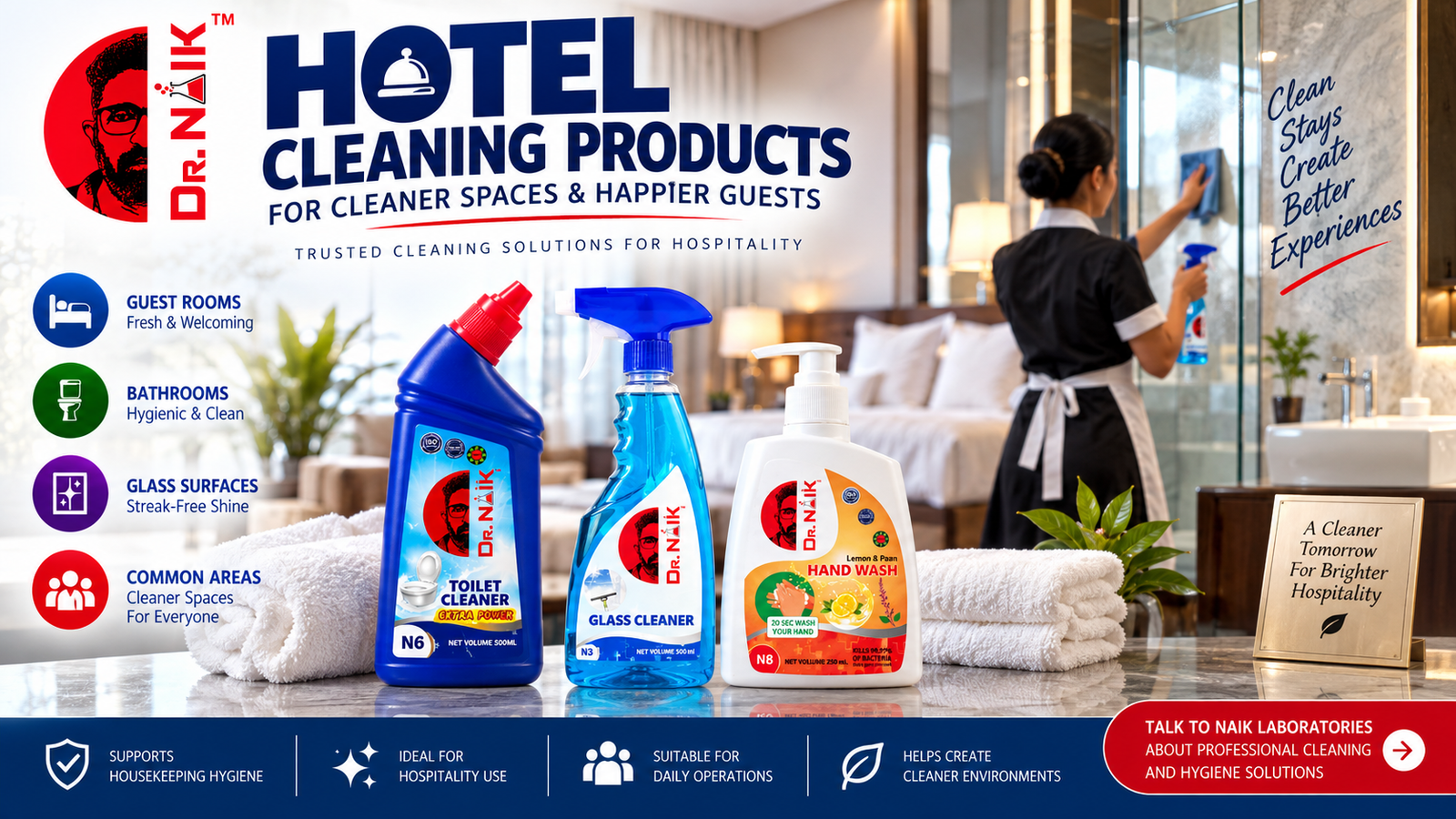
Why Cleaning Product Selection Matters in Hospitality
A hotel has many different environments, and each area can present different cleaning challenges.
Guest bathrooms may require regular attention to toilets, sinks, tiles and other wet surfaces. Kitchens and food-service areas can experience grease and food-related residue. Glass doors, windows and mirrors require techniques that minimize streaks. Guest rooms need routine surface maintenance, while reception and common areas require frequent cleaning throughout the day.
Using appropriate hotel cleaning products for specific tasks can make it easier for housekeeping teams to create organized cleaning procedures.
A good product-selection strategy should consider:
- The surface being cleaned
- The type of dirt or residue involved
- Frequency of cleaning
- Ease of application
- Packaging and storage
- Staff handling requirements
- Usage instructions
- Operational cost
- Consistency across different locations
For larger hospitality businesses, standardizing these requirements can also simplify purchasing and inventory management.
Essential Cleaning Categories for Hotels
Rather than focusing on a single product, hospitality businesses can create a complete cleaning system based on the different areas of their property.
1. Hotel Bathroom Cleaning Solutions
Bathrooms are among the most important areas in any hotel because guests directly evaluate their cleanliness.
Hotel bathroom cleaning can involve toilets, sinks, floors, tiles, mirrors, fixtures and other frequently used surfaces.
A suitable toilet-care solution can be used as part of a regular bathroom maintenance routine. Teams should follow the manufacturer’s instructions regarding application, contact time, surface compatibility and safety precautions.
For housekeeping departments, consistency is particularly important. A defined bathroom-cleaning process can help employees cover the same areas during every room-cleaning cycle.
2. Kitchen Cleaning Solutions
Hotel kitchens, restaurant kitchens and food-service areas have different cleaning requirements from guest rooms.
Cooking activities can result in grease, oil, food residue and buildup on suitable surfaces. Kitchen-care solutions can therefore form an important part of a hospitality cleaning program.
When selecting commercial cleaning products for kitchen areas, businesses should consider the surfaces involved and the type of residue they are designed to address.
Regular cleaning may include:
- Stovetops and cooking areas
- Kitchen counters
- Floors
- Walls and splash areas
- Equipment exteriors
- Sinks and surrounding surfaces
- Frequently handled kitchen areas
Cleaning schedules should be adapted to the property’s operating hours and individual kitchen requirements.
3. Glass and Mirror Cleaning
Glass surfaces are common throughout modern hotels.
Windows, mirrors, glass doors, reception areas, partitions and decorative surfaces can quickly show fingerprints, dust and streaks.
A dedicated glass-cleaning solution can support routine maintenance when combined with appropriate cloths and wiping techniques.
Housekeeping teams should also pay attention to the tools they use. A dirty or unsuitable cloth can leave residue behind even when the cleaning solution is appropriate.
For visible guest-facing surfaces, a consistent glass-care process can help maintain a cleaner appearance throughout the property.
4. Hand Hygiene Products
Hand hygiene is another important component of housekeeping and guest-area maintenance.
Liquid hand wash can be used in guest bathrooms, staff facilities, reception areas and other suitable locations where handwashing facilities are provided.
For hospitality businesses, product selection can involve factors such as:
- Format and dispenser compatibility
- Ease of replenishment
- Fragrance preference
- Packaging size
- Usage frequency
- Storage requirements
- Overall operational convenience
Hand-wash stations should also be checked regularly as part of routine housekeeping and facility-maintenance procedures.
5. General Surface Cleaning
Hotels contain numerous everyday surfaces that require routine maintenance.
Tables, counters, doors, handles, furniture surfaces and other compatible areas may need regular cleaning depending on usage and material.
A property can benefit from establishing a clear surface-cleaning schedule rather than waiting until dirt becomes highly visible.
This is particularly useful in high-traffic areas such as:
- Hotel lobbies
- Reception desks
- Corridors
- Elevators
- Waiting areas
- Restaurants
- Conference rooms
The exact cleaning frequency should depend on traffic, surface type and the hotel’s operating procedures.
How to Choose Hotel Housekeeping Supplies
Selecting hotel housekeeping supplies should go beyond simply comparing product prices.
Housekeeping managers and procurement teams should evaluate whether a product fits their actual operational requirements.
1. Consider the Cleaning Area
Start by identifying where the product will be used.
A bathroom solution, glass-cleaning solution and kitchen-care product may have very different intended applications. Choosing products according to their intended use can make the housekeeping process more structured.
2. Review Product Instructions
Always check the manufacturer’s instructions before introducing a cleaning product into a housekeeping routine.
Pay attention to dilution requirements, compatible surfaces, application instructions, storage recommendations and safety information.
3. Consider Packaging Requirements
Hotels can have significant daily cleaning requirements. Depending on the property size, businesses may need different pack sizes for housekeeping rooms, service areas and centralized storage.
Larger formats can be useful for certain operations, while ready-to-use formats may be convenient for specific tasks.
4. Think About Staff Convenience
A housekeeping product should fit naturally into the workflow of the employees using it.
Easy identification, practical packaging and clear usage instructions can help simplify daily operations.
5. Evaluate Overall Value
The lowest purchase price does not always represent the lowest operational cost.
Procurement teams can consider factors such as product concentration where applicable, packaging, frequency of use, wastage, storage and overall suitability for the property’s requirements.
Building a Practical Hospitality Cleaning Routine
Effective hospitality cleaning requires more than having multiple products available. The products need to be incorporated into a repeatable process.
A hotel can divide cleaning activities into different schedules.
Daily Cleaning
Daily housekeeping activities may include:
- Guest-room cleaning
- Bathroom cleaning
- Surface wiping
- Glass and mirror maintenance
- Lobby cleaning
- Hand-wash station checks
- Kitchen and restaurant cleaning
- Waste-area maintenance
Periodic Cleaning
Some areas may require deeper or less frequent cleaning based on property requirements.
These may include:
- Detailed floor maintenance
- Hard-to-reach areas
- Wall and fixture cleaning
- Deep kitchen maintenance
- Detailed glass cleaning
- Storage and housekeeping areas
Creating written checklists can help teams maintain consistency across shifts.
The Importance of Housekeeping Hygiene
Housekeeping hygiene depends heavily on consistency.
A hotel may have excellent cleaning products, but inconsistent application can result in uneven cleaning standards.
Managers can support better housekeeping processes by establishing:
- Clearly defined cleaning responsibilities
- Area-specific procedures
- Product-use instructions
- Regular inventory checks
- Cleaning schedules
- Staff training
- Periodic quality checks
A documented process can also make it easier for supervisors to identify areas that require additional attention.
Common Mistakes Hotels Should Avoid
Even with a well-planned cleaning program, certain mistakes can reduce efficiency.
Using One Product for Every Surface
Different surfaces may require different cleaning approaches. Products should be used only according to their intended application and instructions.
Ignoring Product Instructions
Using incorrect quantities, dilution ratios or application methods can affect cleaning performance and may create unnecessary risks.
Neglecting Frequently Touched Areas
Doors, handles, switches and other frequently handled surfaces can be overlooked during busy housekeeping schedules.
Poor Tool Maintenance
Cleaning cloths, brushes, mops and other equipment should themselves be maintained properly. Dirty tools can transfer residue between areas.
Inconsistent Housekeeping Processes
If every employee follows a different process, cleaning results may vary from room to room.
Standard operating procedures and checklists can help improve consistency.
Creating a More Efficient Commercial Cleaning System
For hotels and hospitality businesses, commercial cleaning products should be viewed as part of a broader operational system.
Procurement teams can organize their requirements by category instead of purchasing products individually without a plan.
For example, a property may create separate categories for:
Guest Rooms:
Surface cleaning, bathroom care, glass cleaning and hand hygiene.
Bathrooms:
Toilet care, surface cleaning, glass and mirror maintenance.
Kitchen & Restaurant:
Kitchen-care solutions, surface cleaning and floor maintenance.
Common Areas:
Glass cleaning, surface care and general housekeeping requirements.
Staff Areas:
Hand hygiene and routine cleaning products.
This category-based approach can make inventory planning and product selection more straightforward.
What Should Hospitality Businesses Look for in a Cleaning Partner?
Hotels often need reliable supply rather than occasional product purchases.
When evaluating a cleaning-product supplier, businesses can consider:
- Range of cleaning categories
- Availability of required pack sizes
- Product documentation
- Usage instructions
- Supply consistency
- Business-to-business support
- Product suitability for different areas
- Ability to support growing requirements
A supplier that understands hospitality operations can help businesses organize their cleaning requirements around their actual property needs.
Naik Laboratories for Hospitality Cleaning Solutions
Naik Laboratories offers cleaning solutions that can support different areas of commercial and hospitality maintenance.
Its product categories can be considered for requirements such as toilet care, kitchen cleaning, glass cleaning and hand hygiene.
For hotels, resorts, restaurants, housekeeping departments and facility-management teams, the objective should be to create a practical cleaning system based on the property’s specific requirements.
Rather than selecting products randomly, businesses can build a structured range covering the areas that require regular attention.
Conclusion
A professional hospitality cleaning program starts with understanding the different cleaning requirements across a property.
From guest bathrooms and kitchens to glass surfaces, common areas and hand-washing stations, each space can benefit from an appropriate cleaning approach.
The right hotel cleaning products can become part of a consistent housekeeping system when they are selected according to surface, application, frequency and operational requirements.
For hotels, restaurants, resorts and facility-management teams looking to organize their cleaning requirements, a category-based approach can make procurement and daily housekeeping routines easier to manage.
Ready to build a more organized cleaning routine for your hospitality business?