
Cleaning Products: 10 Essential Choices for a Complete Modern Home
Keeping a home clean is not only about cleaning more often. It is also about choosing the right products for different surfaces, rooms and everyday cleaning requirements. A bathroom, kitchen, glass surface and frequently touched area may all require different approaches.
A well-planned collection of cleaning products can make household maintenance more organized and efficient. Instead of using one product for every task, homeowners can build a practical cleaning routine around specific cleaning needs.
From toilet care and kitchen cleaning to glass maintenance and hand hygiene, the right selection can simplify everyday chores while helping different areas of the home stay fresh and presentable.
This guide covers 10 essential choices that can form the foundation of a practical home cleaning kit.
Why Choosing the Right Cleaning Products Matters
Every area of a home collects different types of dirt and residue.
Kitchen surfaces can develop grease and food-related buildup. Bathrooms may experience mineral deposits, stains and everyday residue. Glass surfaces can collect fingerprints, dust and water marks, while hands require products designed specifically for personal hygiene.
Using suitable cleaning products for each purpose makes the cleaning process more systematic.
It also helps avoid a common mistake: expecting one general-purpose product to deliver the same results on every surface.
A better approach is to identify the areas that need regular attention and select products according to their intended use.
10 Essential Cleaning Choices for a Modern Home
1. Toilet Cleaner for Bathroom Maintenance
The toilet is one of the most frequently cleaned areas in a household. Regular maintenance can help manage visible stains, residue and buildup before they become more difficult to handle.
A dedicated toilet-cleaning solution is therefore an important part of a home-care routine.
When selecting a toilet-care product, consider:
- The type of surface being cleaned
- The type of stains commonly found
- The product’s intended application
- Usage instructions provided by the manufacturer
- The frequency of bathroom cleaning
A consistent toilet-cleaning routine is generally easier to maintain than waiting until heavy buildup becomes visible.
2. Kitchen Cleaner for Everyday Cooking Areas
The kitchen is another area that requires specialized attention. Cooking can leave behind grease, food residue and splashes on countertops, appliances, walls and other surfaces.
A suitable kitchen-care product can become an important part of regular cleaning supplies.
When planning kitchen maintenance, remember areas such as:
- Countertops
- Stovetops
- Appliance surfaces
- Cabinet exteriors
- Kitchen walls
- Frequently touched handles
The exact product and method should always match the surface and the manufacturer’s instructions.
3. Glass Cleaner for Windows and Mirrors
Windows, mirrors and other glass surfaces can quickly show fingerprints, dust and streaks.
A dedicated glass-cleaning product can make these areas easier to maintain as part of a regular household routine.
For clearer results, combine the appropriate product with a clean microfiber cloth and a consistent wiping technique.
Avoid using excessively dirty cloths, because they can simply redistribute dust and residue across the surface.
Glass care is particularly useful in homes where windows and mirrors are prominent visual features.
4. Liquid Hand Wash for Everyday Hand Hygiene
Hand hygiene is another important part of household care. A liquid hand wash can be conveniently placed near commonly used sinks in bathrooms, kitchens and other areas.
When choosing a hand-care product, consider:
- Ease of dispensing
- Everyday usability
- Fragrance preference
- Packaging convenience
- Suitability for the intended setting
A practical hand-washing routine can complement the broader cleaning routine of the home.
For households and shared spaces, keeping hand wash readily available can also make regular hand hygiene more convenient.
5. Surface Cleaning Solutions
Different household surfaces can collect dust, marks and everyday residue. Tables, selected countertops, furniture surfaces and other washable areas may require regular attention.
Before choosing a surface-care product, identify the material first.
Wood, glass, metal, laminate, tile and other materials may have different care requirements. Always check whether the product is suitable for the intended surface.
The goal is not simply to clean more often but to establish an appropriate routine for each material.
6. Bathroom Cleaning Solutions
Bathroom maintenance involves more than just the toilet.
Sinks, tiles, faucets, shower areas and other frequently used surfaces can accumulate soap residue, water marks and everyday dirt.
A complete bathroom routine should therefore include several steps:
- Remove loose dust and debris.
- Apply the appropriate cleaning solution.
- Follow the product’s recommended contact or usage instructions.
- Clean using a suitable cloth or tool.
- Rinse or wipe according to the surface and product directions.
- Allow the area to dry appropriately.
Using dedicated cleaning products for specific bathroom tasks can make the overall routine easier to organize.
7. Kitchen Grease-Cleaning Products
Grease is one of the most common challenges in cooking areas.
Repeated cooking can leave oily residue around stovetops, counters, backsplashes and nearby surfaces. If this residue is not addressed regularly, it can become more noticeable and harder to remove.
A kitchen grease-cleaning product can be included in a targeted kitchen-maintenance routine.
For better results, avoid allowing heavy residue to accumulate unnecessarily. Regular cleaning generally makes individual cleaning sessions more manageable.
8. Multi-Area Home-Care Products
Some households prefer having versatile cleaning solutions that can be used across appropriate areas.
However, versatility should not mean using the same product indiscriminately on every surface.
Always check the label and intended applications before using a product.
A useful home-care collection can combine specialized products with suitable multi-area solutions, giving you flexibility without ignoring individual surface requirements.
9. Products for Frequently Touched Areas
Some areas receive constant contact throughout the day.
Door handles, cabinet handles, switches and other frequently touched household surfaces can become part of the regular cleaning checklist.
These areas are easy to overlook because they may not appear visibly dirty.
Adding them to a weekly or routine cleaning schedule can make household maintenance more comprehensive.
A simple checklist can include:
- Door handles
- Cabinet handles
- Light switches
- Appliance controls
- Frequently used surfaces
The specific product used should always be appropriate for the material being cleaned.
10. A Practical Cleaning Kit for Routine Maintenance
The final essential is not necessarily a single product. It is a well-organized cleaning kit.
Instead of purchasing products without a plan, identify the main areas of your home and build your supplies around those requirements.
A practical basic collection could include:
- Toilet-care solution
- Kitchen-care solution
- Glass cleaner
- Liquid hand wash
- Suitable surface-cleaning products
- Microfiber cloths
- Cleaning brushes
- Sponges or suitable cleaning tools
- Gloves where appropriate
- Storage for organizing supplies
This approach makes it easier to know what is available when a particular cleaning task comes up.
How to Build a Simple Home Cleaning Checklist
Having the right supplies is only one part of household maintenance. A cleaning checklist can help ensure that important areas are not forgotten.
Daily Tasks
Depending on household usage, daily tasks may include:
- Cleaning frequently used kitchen surfaces
- Keeping sinks tidy
- Wiping visible spills
- Maintaining hand-washing areas
- Removing obvious bathroom residue
Weekly Tasks
Weekly maintenance can include:
- Toilet cleaning
- Deeper kitchen cleaning
- Glass and mirror cleaning
- Cabinet and appliance surface cleaning
- Cleaning frequently touched areas
Monthly Tasks
Less frequent tasks may include:
- Detailed appliance cleaning
- Hard-to-reach areas
- Storage-area cleaning
- Deep cleaning of selected surfaces
- Reviewing and restocking cleaning supplies
The exact frequency should depend on household size, usage and individual cleaning requirements.
Common Mistakes When Choosing Household Cleaning Products
Even a well-stocked cleaning cabinet can become inefficient if products are selected without considering their intended purpose.
Using One Product for Everything
Different materials and surfaces have different care requirements. Always check the product label before applying it to a new surface.
Ignoring Product Instructions
More product does not automatically mean better cleaning. Follow the recommended usage instructions.
Choosing Only by Fragrance
A pleasant fragrance can improve the cleaning experience, but product selection should also consider intended use, surface compatibility and practical requirements.
Forgetting Cleaning Tools
The product is only part of the process. Dirty cloths, unsuitable brushes and worn-out tools can affect the cleaning routine.
Buying Without a Plan
A large collection of unused supplies does not necessarily create a better cleaning system. Focus on the areas and tasks that actually matter in your home.
How to Choose the Right Cleaning Products
When comparing cleaning products, consider these five practical questions:
1. What surface am I cleaning?
Identify the material before selecting a product.
2. What type of dirt or residue needs attention?
Grease, dust, water marks, stains and everyday residue may require different approaches.
3. How frequently will I use it?
A product intended for routine maintenance should fit naturally into your regular schedule.
4. Is the product designed for this purpose?
Read the label and follow the manufacturer’s intended-use instructions.
5. Does it fit into my overall cleaning routine?
The best home-care setup is one that is practical enough to use consistently.
Creating a Complete Home Cleaning Routine
A good household cleaning routine does not need to be complicated.
Start by dividing your home into key areas:
Bathroom → Kitchen → Glass & Mirrors → Hand Hygiene → General Surfaces
Then identify the products and tools required for each area.
This creates a simple system where every product has a clear purpose.
Over time, a well-organized collection of household cleaning products can reduce the guesswork involved in everyday maintenance and make cleaning tasks easier to plan.
Naik Laboratories for Everyday Home Care
Choosing suitable cleaning products is an important part of creating a practical household maintenance routine.
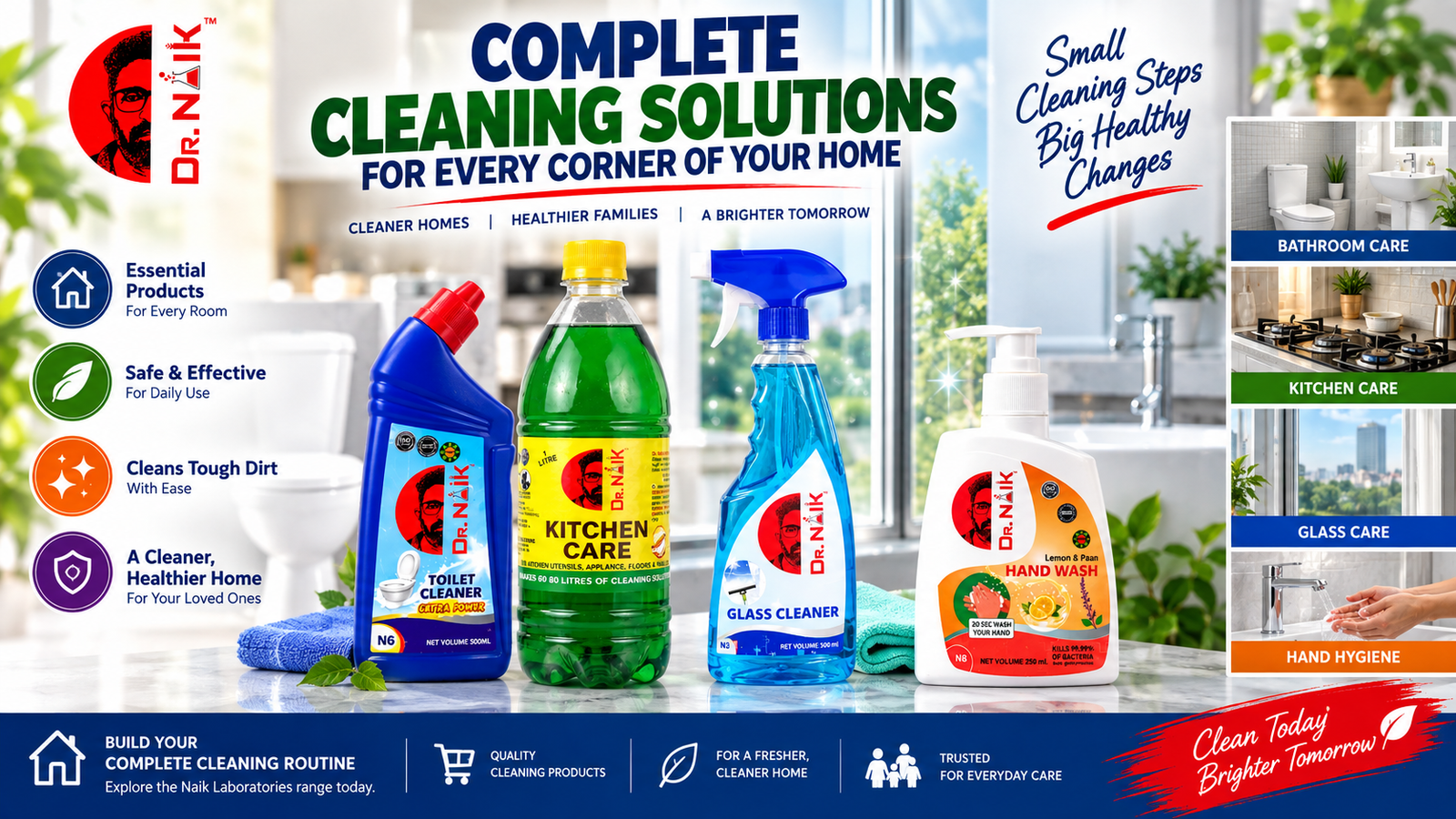
Naik Laboratories offers home-care solutions designed around different everyday cleaning requirements, including toilet care, kitchen care, glass cleaning and hand hygiene.
From maintaining kitchen surfaces to keeping bathrooms and glass areas clean, selecting products according to their intended purpose can help create a more organized cleaning routine.
If you are building or improving your household cleaning kit, consider the areas you clean most often and choose solutions that fit those specific needs.
Explore Naik Laboratories’ Home-Care Range
Build a more practical and organized household cleaning routine with solutions for different areas of your home.
Explore the Naik Laboratories range and build your complete cleaning routine.
Conclusion
A clean home is easier to maintain when the cleaning routine is organized around the right tasks and suitable products.
Rather than relying on one product for every situation, consider building a balanced collection covering bathroom care, kitchen cleaning, glass maintenance, hand hygiene and general household surfaces.
Use a simple cleaning checklist, keep your supplies organized and always follow product instructions and surface-care recommendations.
With the right approach, everyday home maintenance can become more structured, convenient and manageable.