
Cleaning Mistakes: 10 Surprising Habits That Make Home Cleaning Harder
Keeping a home clean is part of everyday life, but having a regular cleaning routine does not always mean you are cleaning efficiently. Sometimes, small habits can make household cleaning take longer, use more products than necessary or leave certain areas overlooked.
From using too much cleaning product to using the wrong cloth for a particular surface, seemingly minor mistakes can affect the overall efficiency of your cleaning routine. The good news is that many of these habits are easy to identify and change.
In this guide, we explore 10 cleaning mistakes that can make home maintenance harder and share practical ways to approach everyday cleaning more effectively.
Whether you clean your entire home on a schedule or prefer smaller cleaning tasks throughout the week, these simple home cleaning tips can help you create a more organized and manageable approach.
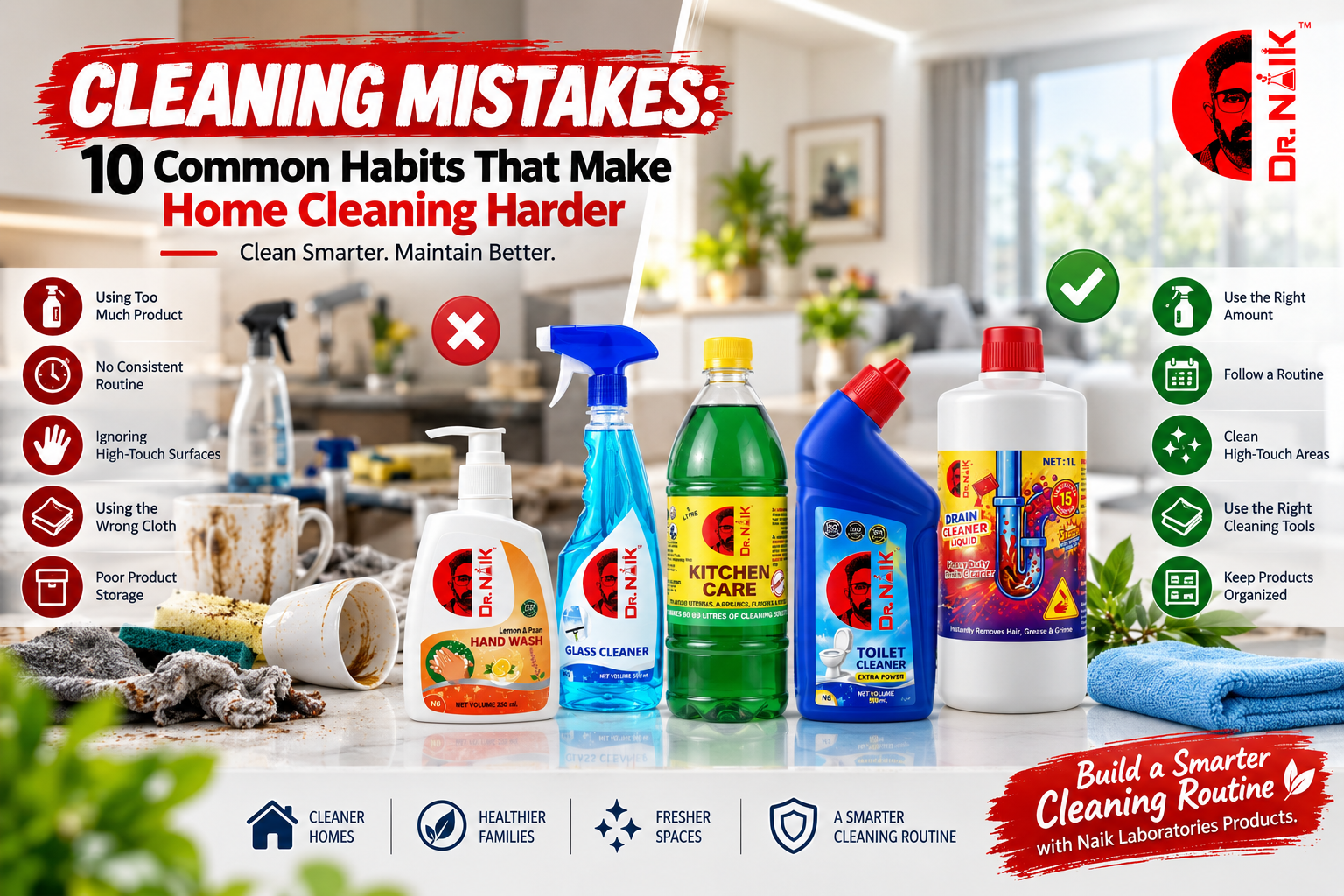
Why Your Cleaning Habits Matter
Cleaning is not simply about making surfaces look spotless. A good routine should also be practical, consistent and appropriate for the surfaces and products being used.
Some cleaning mistakes happen because people try to finish tasks as quickly as possible. Others develop because of habits that have been repeated for years without considering whether there is a better method.
For example, using excessive product may seem like a way to achieve better results, but more product does not automatically mean better cleaning. Similarly, cleaning only the most visible areas can leave frequently touched surfaces forgotten.
By recognizing these habits, you can make your cleaning routine more efficient without making it unnecessarily complicated.
10 Common Cleaning Mistakes to Avoid
1. Using Too Much Cleaning Product
One of the most common habits is assuming that more cleaning product will produce better results.
It is easy to think that adding extra cleaner will help remove dirt faster. However, using more than the recommended amount can leave excess residue on some surfaces and may make wiping or rinsing more difficult.
The better approach is simple: follow the product label and use the recommended quantity for the intended application.
Different surfaces and cleaning products may require different amounts, so avoid using the same quantity everywhere.
Better approach
- Read the product instructions before use.
- Follow the recommended quantity.
- Use a suitable product for the intended surface.
- Avoid unnecessarily repeating applications.
Using products correctly is one of the simplest ways to make everyday household cleaning more manageable.
2. Cleaning Without a Consistent Routine
Cleaning everything only when the house becomes visibly dirty can make maintenance feel overwhelming.
When small tasks are repeatedly postponed, several cleaning jobs can accumulate at the same time. A kitchen may need attention, bathroom surfaces may require cleaning and dust may have settled across multiple rooms.
A consistent cleaning routine helps divide these tasks into manageable steps.
You do not necessarily need to spend hours cleaning every day. Instead, consider creating a routine based on frequency.
For example:
Daily:
Handle visible spills, kitchen messes and frequently used areas.
Several times a week:
Clean commonly used surfaces and maintain bathrooms and kitchen areas.
Weekly:
Give greater attention to floors, dust-prone areas and other household surfaces.
Periodically:
Clean less frequently addressed areas such as behind appliances, storage spaces and hard-to-reach surfaces.
A routine that fits your household is more useful than an unrealistic schedule that is difficult to maintain.
3. Ignoring High-Touch Surfaces
Floors and countertops are usually obvious cleaning priorities, but many frequently touched surfaces can be overlooked.
Door handles, cabinet handles, light switches, drawer pulls, remote controls and frequently handled fixtures can easily disappear from your regular checklist.
This does not mean every surface needs to be cleaned constantly. Instead, high-touch areas should be included in your regular household cleaning plan.
Better approach
Create a quick high-touch checklist for your home and include these areas when appropriate.
This small change can make your cleaning routine more thorough without adding a significant amount of work.
4. Using the Wrong Cloth for the Job
Not every cloth is equally suitable for every cleaning task.
Using a cloth that leaves lint on glass, spreads dust instead of collecting it or is unsuitable for a particular surface can make cleaning more frustrating.
For example, glass and mirrors generally benefit from a suitable lint-free or microfiber cloth when used with an appropriate glass-cleaning method.
For other household surfaces, choose a cloth based on the type of dirt and the surface being cleaned.
A simple rule
Match the cleaning tool to the task.
Keep separate cloths or clearly designated cleaning materials for different areas where practical. This can make cleaning more organized and reduce unnecessary rework.
5. Cleaning in the Wrong Order
Another easily overlooked habit is cleaning without a logical sequence.
If you clean the floor before dusting furniture, for example, dust and debris may fall onto the floor afterward, creating extra work.
A more efficient approach is to work from higher surfaces to lower surfaces whenever practical.
For example:
- Dust higher surfaces.
- Clean furniture and other surfaces.
- Clean countertops and similar areas.
- Finish with the floor.
The exact order can vary depending on the room, but having a sequence helps prevent you from repeatedly cleaning the same area.
This is one of those simple cleaning hacks that can save time without requiring additional products.
6. Forgetting Frequently Used Kitchen Areas
The kitchen often receives plenty of attention, but certain areas can still be missed during everyday cleaning.
Handles, appliance controls, cabinet fronts, sink surroundings and areas around cooking zones can collect residue through regular use.
Instead of focusing only on large visible surfaces, include smaller frequently used areas in your routine.
Practical kitchen-care habit
After completing your main kitchen cleaning, take a few extra moments to check:
- Cabinet handles
- Appliance handles and controls
- Sink and faucet areas
- Countertop edges
- Backsplash areas
- Frequently touched surfaces
This approach helps create a more complete household cleaning routine.
7. Cleaning Only When Something Looks Dirty
Visible dirt is an obvious signal that a surface needs attention, but it should not always be the only trigger for cleaning.
Dust, fingerprints, everyday residue and buildup can accumulate gradually. Some areas may not look particularly dirty until a noticeable layer has already developed.
Instead of waiting for every problem to become obvious, incorporate routine maintenance into your schedule.
This does not mean cleaning every surface every day. It simply means using a combination of regular maintenance and as-needed cleaning.
A balanced approach is easier to maintain and can help prevent cleaning tasks from becoming unnecessarily large.
8. Using One Product for Every Surface
A common misconception is that one household cleaner can be used everywhere.
Different surfaces can have different cleaning requirements. Glass, kitchen surfaces, bathroom fixtures and other materials may require different products or cleaning methods.
Using the wrong product can lead to poor results and, depending on the surface and formulation, may potentially cause unwanted surface effects.
Better approach
Before using a cleaning product:
- Check what surfaces it is designed for.
- Read the manufacturer’s instructions.
- Follow dilution or usage directions where applicable.
- Test an unfamiliar product or method in an inconspicuous area when appropriate.
Choosing products according to their intended purpose is an important part of effective household cleaning.
9. Mixing Cleaning Products
This is one of the most important cleaning mistakes to avoid.
Combining different cleaning products may seem like a shortcut, but household cleaning formulations can contain different ingredients that are not intended to be mixed.
Some combinations can produce harmful reactions or unexpected fumes.
Never mix cleaning products unless the manufacturer specifically states that they are compatible.
Instead, use one appropriate product according to its instructions and give it the required application time before wiping or rinsing.
If you are unsure about compatibility, check the product label or manufacturer’s guidance rather than experimenting.
Good cleaning should always include safe product handling.
10. Poor Storage of Cleaning Products
Cleaning products are often stored wherever there is available space. Over time, this can result in cluttered cabinets, misplaced products or containers being stored without their labels.
Poor storage can also make cleaning less efficient because you spend extra time searching for the product or tool you need.
Create a smarter cleaning-storage system
Keep products:
- In their original containers.
- Properly closed when not in use.
- Clearly labelled.
- Stored according to the manufacturer’s instructions.
- Away from areas or conditions where the label advises against storage.
Organize products by purpose where practical—for example, kitchen care, bathroom care, glass care and general household cleaning.
A well-organized storage area can make your entire cleaning routine easier to follow.
How to Build a Smarter Cleaning Routine
Avoiding cleaning mistakes is only one part of creating a better approach. The next step is developing a routine that works realistically for your home.
A useful routine should be:
Simple
If your schedule is too complicated, it becomes difficult to maintain. Start with essential tasks and add others gradually.
Consistent
Small amounts of regular maintenance can be easier to manage than leaving every task until the weekend.
Organized
Keep commonly used products and tools easy to locate while storing them safely according to their instructions.
Surface-Specific
Use products and tools according to the surface and cleaning requirement rather than applying the same approach everywhere.
Flexible
Your household’s needs can change. A good routine should allow you to adjust cleaning frequency based on usage, season and individual circumstances.
Useful Home Cleaning Tips for Better Results
Along with avoiding the habits discussed above, a few simple practices can improve everyday cleaning efficiency.
Start With Decluttering
Remove unnecessary items from the surface before cleaning. A clearer workspace makes it easier to clean thoroughly.
Work Systematically
Move through a room in a logical direction instead of repeatedly moving between different areas.
Keep Cleaning Tools Ready
Having suitable cloths, brushes and products available can reduce interruptions during a cleaning session.
Follow Product Instructions
Instructions exist for a reason. Check the label for intended surfaces, usage directions and precautions.
Clean Spills Promptly
Addressing spills and messes when practical can prevent them from becoming more difficult to remove later.
Don’t Turn Every Task Into a Deep Clean
Not every cleaning session needs to involve every surface in the home. Separate routine maintenance from occasional deep-cleaning tasks.
These small home cleaning tips can help make household maintenance more practical.
Cleaning Hacks vs. Good Cleaning Practices
The internet is full of cleaning hacks, but not every popular shortcut is suitable for every home or surface.
A quick trick may appear convenient, but it is important to consider whether the method is appropriate for the material, product and cleaning task.
Instead of following every viral cleaning hack, prioritize:
- Manufacturer instructions
- Suitable cleaning products
- Appropriate tools
- Correct usage
- Safe handling
- Consistent maintenance
The best cleaning strategy is not necessarily the one with the most complicated technique. It is the one that produces reliable results while fitting naturally into your routine.
How Naik Laboratories Can Support Your Cleaning Routine
Having the right cleaning products can make everyday household maintenance more convenient.
Naik Laboratories offers cleaning solutions designed for different areas and cleaning requirements. From kitchen-care products to solutions for other parts of the home, choosing products according to their intended application can help you create a more organized cleaning system.
Rather than collecting unnecessary products or using one cleaner for everything, consider what your home actually needs.
A smarter product selection combined with good habits can make your overall cleaning routine easier to manage.
A Simple Cleaning Checklist
Use this quick checklist when reviewing your household cleaning habits:
☐ Am I using the recommended amount of product?
☐ Am I following the instructions on the label?
☐ Am I cleaning high-touch areas regularly?
☐ Am I using the right cloth or tool for the surface?
☐ Do I clean from higher areas toward lower areas?
☐ Am I maintaining the kitchen and bathroom regularly?
☐ Am I avoiding mixing cleaning products?
☐ Are my cleaning products stored properly?
☐ Do I have a realistic cleaning schedule?
☐ Am I addressing small messes before they become larger tasks?
If several answers are “no,” you may have identified areas where your cleaning routine can be improved.
Conclusions
An effective home-cleaning routine is not about using more products or spending more hours cleaning. It is about using the right methods, tools and habits consistently.
The cleaning mistakes discussed in this guide—from overusing products and ignoring high-touch surfaces to using unsuitable cloths and storing products poorly—can make ordinary household maintenance more difficult than it needs to be.
The solution is often surprisingly simple: follow product instructions, organize your supplies, clean systematically and establish a routine that fits your home.
By replacing inefficient habits with practical methods, you can make everyday household cleaning more organized and manageable.
And remember, the goal of a good cleaning routine is not perfection. It is creating a system that helps you maintain your home consistently and efficiently.
Build a Smarter Cleaning Routine with Naik Laboratories
Ready to make your household cleaning routine more practical? Explore Naik Laboratories’ range of cleaning products and choose suitable solutions for your everyday home-care needs.