
Kitchen Cleaner: 7 Areas You Should Never Ignore During Kitchen Cleaning
The kitchen is one of the busiest spaces in any home. From preparing everyday meals to handling oil, spices, sauces and other ingredients, kitchen surfaces are exposed to different types of dirt throughout the day.
While most people regularly clean visible areas such as countertops and stovetops, several other surfaces can quietly collect grease, food residue, dust and grime. These overlooked areas can affect the overall cleanliness of the kitchen and make regular maintenance more difficult.
Using the right kitchen cleaner and following a consistent cleaning routine can help keep these areas cleaner and support better kitchen hygiene.
But where should you actually focus your attention?
Here are seven commonly missed areas that should never be ignored during kitchen cleaning.
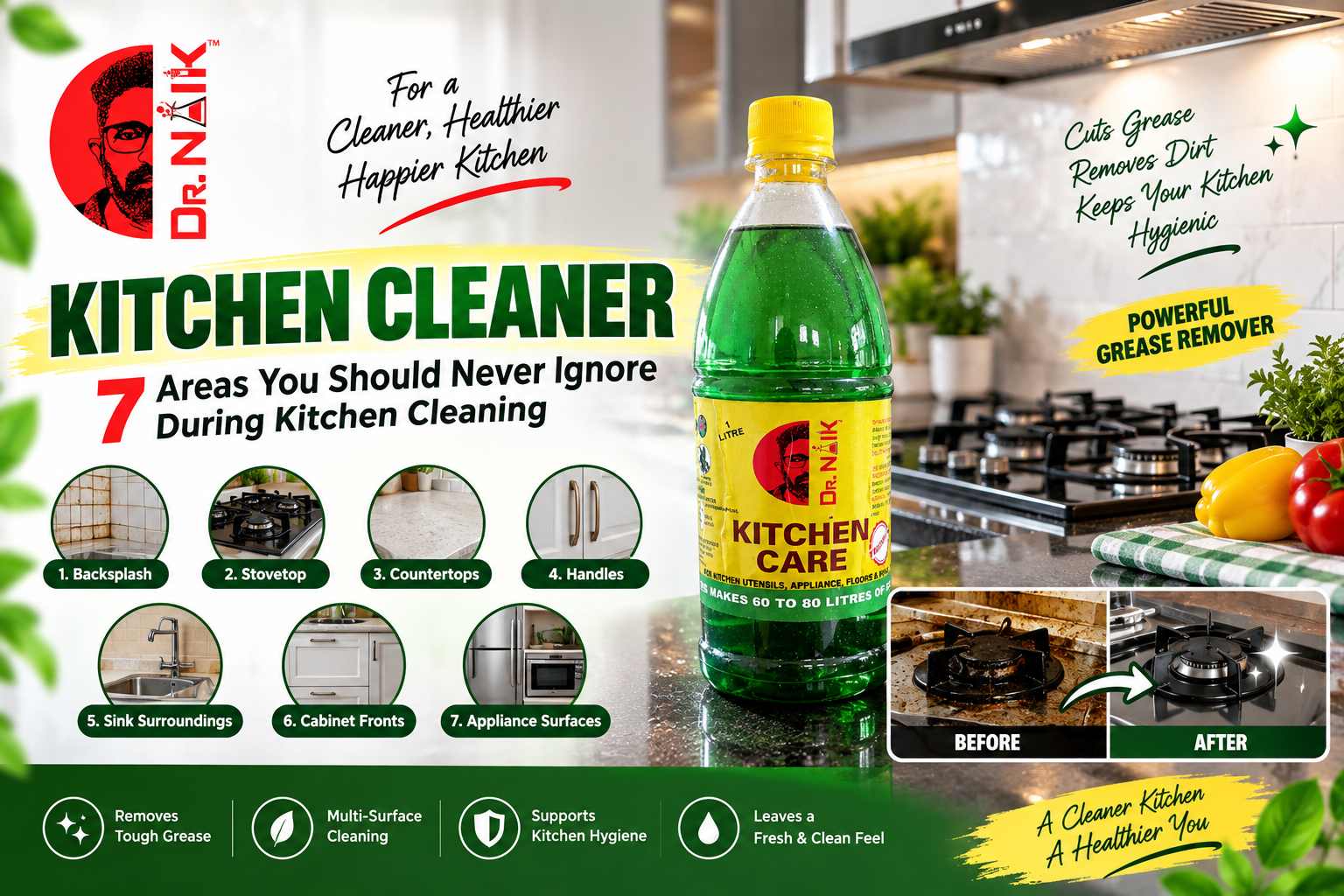
Why Regular Kitchen Cleaning Matters
Kitchen cleaning is about more than making surfaces look neat. Cooking activities can leave behind oil splashes, food particles, grease and residue that may accumulate over time.
Areas close to the cooking zone are particularly vulnerable to grease buildup. Frequently touched surfaces such as handles and appliance controls can also require regular attention.
A practical kitchen-cleaning routine should therefore cover both visible and easily overlooked surfaces.
The right kitchen cleaner can help make routine maintenance easier, especially when dealing with everyday grease and surface residue.
1. Backsplash Behind the Cooking Area
The backsplash is one of the most overlooked areas during everyday kitchen cleaning.
Located directly behind the stovetop or cooking area, the backsplash can receive tiny splashes of oil, sauces, spices and food particles during cooking. Over time, these residues can create a sticky layer that attracts additional dust and grime.
How to Clean the Backsplash
Start by removing loose dust and food particles. Apply a suitable kitchen cleaning solution according to its instructions and wipe the surface with an appropriate cloth or cleaning tool.
Pay particular attention to areas directly behind burners and around corners where grease can accumulate.
Kitchen Cleaning Tip
Don’t wait until the backsplash develops a visible greasy layer. Wiping it regularly can make deep cleaning easier later.
2. Stovetop and Around the Burners
The stovetop is naturally one of the highest-priority areas in a kitchen, yet cleaning often focuses only on the main surface.
Grease and food residue can collect around burners, edges, knobs and other small sections. These areas can be difficult to notice until buildup becomes significant.
A suitable grease remover or kitchen-cleaning product can help tackle everyday grease and residue, depending on the surface and product instructions.
Better Stovetop Cleaning
Before cleaning, allow hot surfaces to cool completely. Remove loose debris and clean the surface using a product suitable for the material.
Don’t overlook:
- Burner surroundings
- Stovetop edges
- Control knobs
- Corners
- Areas between cooking zones
- Splash-prone sections
Regular stovetop cleaning can help prevent grease from becoming harder to remove.
3. Countertops and Work Surfaces
Countertops are among the most frequently used surfaces in the kitchen.
They come into contact with vegetables, ingredients, utensils, containers and food preparation equipment throughout the day. Even when a countertop appears clean, small amounts of residue can remain on the surface.
This makes countertop cleaning an important part of everyday kitchen hygiene.
Countertop Cleaning Tips
Remove crumbs and food particles first. Use an appropriate surface cleaner based on the countertop material and follow the manufacturer’s instructions.
Avoid assuming that one cleaning product is suitable for every countertop material. Always check whether the product is recommended for the specific surface.
Regular cleaning can help maintain a cleaner preparation area while preventing residue from accumulating.
4. Cabinet Handles and Drawer Pulls
When thinking about kitchen cleaning, cabinet doors may come to mind—but their handles are often forgotten.
Cabinet handles, drawer pulls and knobs are touched repeatedly throughout the day. During cooking, people may touch them with hands that have come into contact with oil, spices, ingredients or food residue.
As a result, handles can gradually develop a layer of grime even when the surrounding cabinet looks clean.
How to Keep Handles Cleaner
Include handles and drawer pulls in your regular cleaning routine.
Wipe them with an appropriate cleaning solution and cloth, paying attention to grooves, edges and joins where residue can accumulate.
This small step can make a noticeable difference to overall kitchen hygiene.
5. Sink Surroundings and Faucet Area
The kitchen sink is another area that requires more attention than simply washing the basin.
Water, food particles and cleaning residue can collect around the sink edges, faucet base and surrounding countertop.
Moisture can also make these areas more likely to develop visible residue if they are not cleaned and dried regularly.
Don’t Forget These Areas
When cleaning around the kitchen sink, check:
- Faucet base
- Sink edges
- Countertop around the basin
- Drain area
- Corners behind the faucet
- Areas where water frequently collects
Keeping the surrounding area clean and dry can complement your overall kitchen-cleaning routine.
6. Cabinet Fronts
Cabinet fronts can easily become coated with a thin layer of cooking grease, particularly cabinets located close to the stovetop.
Because the buildup may develop gradually, it isn’t always immediately noticeable.
Over time, however, greasy cabinet fronts can become difficult to clean if they are neglected for long periods.
Cleaning Cabinet Surfaces
First identify the cabinet’s surface material. Then use a cleaning solution that is suitable for that surface and follow the recommended application instructions.
Avoid soaking wooden or sensitive surfaces unless the manufacturer specifically recommends it.
For kitchens where cooking takes place frequently, giving cabinet fronts regular attention can help prevent heavy grease accumulation.
7. Appliance Surfaces and Controls
Kitchen appliances are another commonly overlooked cleaning area.
Microwaves, refrigerators, ovens, mixers, chimneys and other appliances can collect fingerprints, grease splashes, food residue and dust.
The areas that receive the most contact—such as handles and buttons—may need particular attention.
Include Appliance Surfaces in Your Routine
Clean appliance exteriors according to the manufacturer’s care instructions. Avoid applying cleaning products directly to electrical controls, openings or sensitive components unless specifically permitted.
A cloth and suitable kitchen cleaner can help with routine surface maintenance when used as directed.
Remember that different appliances may have different surface materials, so product compatibility matters.
What Makes a Good Kitchen Cleaner?
Choosing the best kitchen cleaner depends on what you need to clean.
A product designed for general surface maintenance may have different uses from one designed specifically for heavy grease removal.
When selecting a kitchen cleaning solution, consider:
1. The Type of Dirt
Are you dealing with everyday dust and food residue, or heavier grease buildup?
2. The Surface
Countertops, tiles, stainless steel, glass and painted surfaces can have different cleaning requirements.
3. Ease of Use
A convenient product that fits easily into your regular routine is more likely to be used consistently.
4. Cleaning Performance
Look for a formulation appropriate for the type of residue you regularly encounter.
5. Usage Instructions
Always read the product label and follow the recommended method of application.
The best kitchen cleaner is ultimately one that matches the cleaning task and can be used safely and effectively on the intended surface.
Kitchen Cleaning Tips for Better Results
A few simple habits can make kitchen cleaning more manageable.
Clean Spills Quickly
Oil, sauces and food residue are generally easier to remove when they are fresh rather than after they have dried and accumulated.
Clean from Top to Bottom
When doing a deeper kitchen clean, start with higher surfaces before moving toward lower areas. This helps prevent dust and residue from falling onto areas that have already been cleaned.
Separate Cleaning Tasks
Not every surface requires the same cleaning method. Use products according to their intended application and the surface being cleaned.
Don’t Forget High-Touch Areas
Handles, knobs and appliance controls deserve regular attention because they are frequently touched.
Keep Cleaning Tools Clean
Cloths, brushes and sponges can themselves accumulate residue. Clean or replace them regularly as appropriate.
Follow Product Directions
More cleaning product does not necessarily mean better cleaning. Follow the recommended quantity, application method and precautions provided on the label.
Grease Removal: Why Regular Maintenance Is Better
Grease is one of the biggest challenges in kitchen cleaning.
Cooking oils can settle on nearby surfaces and gradually create a sticky layer. Once dust and other particles adhere to that layer, cleaning can become more difficult.
This is why regular grease removal is important.
Instead of allowing grease to accumulate for weeks, incorporate high-risk areas such as stovetops, backsplashes, cabinet fronts and nearby appliance surfaces into your regular cleaning schedule.
A suitable grease remover or kitchen-cleaning solution can then become part of a more manageable maintenance routine.
Common Kitchen Cleaning Mistakes to Avoid
Even a regular cleaning routine can be less effective if certain mistakes are repeated.
Using the Same Product on Every Surface
Different materials may require different cleaning approaches. Always check product compatibility.
Ignoring the Less Visible Areas
A kitchen isn’t fully maintained if only the countertop and floor are cleaned while handles, backsplash areas and appliance surfaces are neglected.
Applying Too Much Cleaner
Excess product doesn’t automatically improve cleaning. Follow the recommended usage instructions.
Mixing Cleaning Products
Never mix cleaning chemicals unless the manufacturer specifically states that they are compatible. Unexpected chemical reactions or harmful fumes can occur.
Cleaning Electrical Appliances Incorrectly
Avoid allowing cleaning liquids to enter electrical components, controls or openings.
Forgetting to Dry Moist Areas
After cleaning around sinks and other wet areas, appropriate drying can help maintain a cleaner environment.
Building a Better Kitchen Hygiene Routine
Good kitchen hygiene doesn’t depend on one major cleaning session.
Instead, it comes from combining small cleaning habits consistently.
A simple routine can include:
Daily:
- Wipe food preparation surfaces
- Clean obvious spills
- Maintain the stovetop
- Clean frequently touched handles
Regularly:
- Clean backsplash areas
- Clean cabinet fronts
- Clean appliance exteriors
- Clean around the sink and faucet
Periodically:
- Perform a deeper kitchen clean
- Check areas behind and around appliances
- Address accumulated grease and residue
The exact frequency depends on how often the kitchen is used, the type of cooking performed and the level of grease or residue generated.
Choosing the Right Kitchen Cleaning Solution
A good kitchen-cleaning routine starts with understanding your surfaces and cleaning challenges.
If your kitchen regularly experiences oil splashes and grease buildup, prioritize a solution suited to those requirements. For everyday surface maintenance, choose a product designed for the surfaces you clean most frequently.
The aim is to create a practical routine that keeps your kitchen cleaner without making cleaning unnecessarily complicated.
This is where having an effective kitchen cleaner as part of your household cleaning supplies can make routine maintenance more convenient.
Naik Laboratories: Supporting Everyday Kitchen Care
Maintaining a cleaner kitchen requires the right combination of regular cleaning, suitable products and consistent habits.
Naik Laboratories provides cleaning solutions designed to support everyday cleaning and hygiene requirements. Incorporating an appropriate kitchen-care solution into your cleaning routine can help you address common challenges such as surface residue and everyday grease while keeping kitchen maintenance more manageable.
Whether you’re cleaning countertops, stovetops, cabinet surfaces or other suitable areas, always select a product according to the intended application and follow the manufacturer’s instructions.
Conclusions
A truly clean kitchen involves more than wiping the countertop after cooking.
The backsplash, stovetop, countertops, handles, sink surroundings, cabinet fronts and appliance surfaces can all collect dirt, grease and residue throughout everyday kitchen use.
By paying attention to these seven commonly missed areas and following practical kitchen cleaning tips, you can create a more consistent approach to kitchen maintenance.
Choosing the right kitchen cleaner, using a suitable grease remover when needed and maintaining regular cleaning habits can support a cleaner and more hygienic cooking environment.
Make Kitchen Cleaning Easier
Discover effective kitchen-care solutions from Naik Laboratories and choose the right cleaning products for your everyday kitchen-care routine.